NPR has published the results of an 18-month investigation into the June 2020 shooting death of Antonio Mays Jr., a Black teenager killed inside Seattle’s Capitol Hill Occupied Protest (CHOP) zone by other protesters who mistook him for a threat. The investigation analyzed hours of previously unreleased video footage and provides, for the first time, a detailed, evidence-based reconstruction of the sequence of events that led to his death. His father has been seeking accountability for six years. The investigation is the most complete public accounting yet of one of the most disputed incidents from the 2020 protest era.
2-MINUTE CONTEXT — WHAT WAS CHOP?
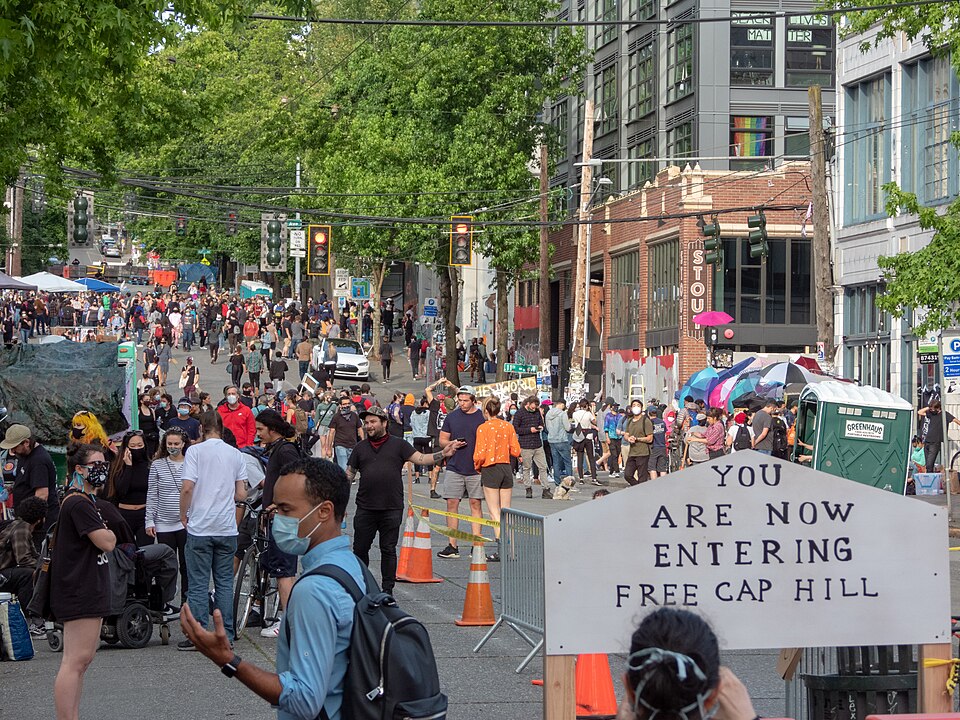
The Capitol Hill Occupied Protest was an area of approximately six blocks in Seattle’s Capitol Hill neighborhood that protesters occupied in June 2020, following the murder of George Floyd and amid nationwide protests about police violence. Seattle police withdrew from the area, and for several weeks it existed as a self-governing autonomous zone with its own security structure, community events, and informal governance.
The CHOP became a flashpoint in national political debate about protest, policing, and public safety. Conservative media used it extensively as evidence of lawlessness and the consequences of reduced police presence. Liberal media tended to frame it as an experiment in community self-governance. The reality was more complex than either narrative: it was simultaneously a genuine community space and a location where the absence of formal law enforcement created real safety gaps.
Two people were killed inside the CHOP during its existence: Horace Anderson Jr. (19) on June 20, 2020, and Antonio Mays Jr. (16) on June 29, 2020. Both were Black teenagers. Both were killed by gunfire. Neither death received the sustained national media attention their circumstances warranted.
WHAT THE NPR INVESTIGATION FOUND
NPR’s investigation, based on hours of previously unreleased video footage, reconstructs the specific chain of events that led CHOP security members to perceive Antonio Mays Jr. as a threat and shoot him. The investigation specifically examines how a Black teenager came to be mistakenly identified as an armed attacker by people who had gathered in the CHOP partly to protest the exact kind of racial misidentification and police violence that killed George Floyd.
ONYX is not summarizing the specific findings of the video evidence in detail — readers should access NPR’s full investigation directly. What can be said is that the investigation provides new factual information that was not previously available publicly, and that the new evidence meaningfully changes the existing public understanding of the sequence of events.
A teenager went to a protest zone. He was Black. People who were there to oppose racial injustice mistook him for a threat. He was 16 years old.
Antonio Mays Jr.’s father has spent six years seeking accountability for his son’s death. The criminal case produced no convictions of the people who shot Antonio. The civil case has had its own complex history. For his father, the NPR investigation is not the conclusion of the accountability process — it is, he hopes, evidence that might finally move it forward.
WHY THIS MATTERS
The CHOP shooting of Antonio Mays Jr. was used heavily in political debate in 2020 and afterward — as evidence that the CHOP was dangerous, as evidence that protest movements carry risks, and in some cases as evidence that certain communities are incapable of self-governance. Most of those political uses happened without the detailed factual foundation that NPR’s investigation now provides.
The investigation matters because it provides that foundation. It does not simplify the story into a politically convenient shape. It provides evidence about what actually happened to a 16-year-old boy who was killed in a place that was supposed to be an expression of the movement against racial injustice. His death deserves an accurate account.
The investigation also matters as a demonstration of what 18-month, video-based investigative journalism can produce years after an event. Many incidents from the 2020 protest period remain inadequately documented. The NPR investigation is a model of what sustained accountability reporting looks like.
POLITICAL IMPACT
▸ For Antonio Mays Jr.’s family: the investigation is the most complete public accounting of his death — it creates new public pressure for accountability that was absent before
▸ For the criminal justice system: new video evidence in a case where no convictions resulted may create grounds for renewed legal proceedings
▸ For the political legacy of CHOP: the investigation provides evidence that should replace politically motivated narratives on both left and right with documented facts
▸ For the media: demonstrates the ongoing value of long-form investigative journalism in documenting 2020-era events whose full truth has not yet been told
WHAT HAPPENS NEXT
▸ Antonio Mays Jr.’s father and legal team will assess the new video evidence for any actionable legal basis
▸ Seattle city authorities may face renewed public pressure to respond to the investigation’s findings
▸ The NPR investigation will be cited in ongoing academic and policy discussions about self-governance, community safety, and the 2020 protest era
| CONFIDENCE: HIGH | NPR’s investigation is a documented, 18-month journalistic inquiry with video evidence. ONYX reports its existence and significance without summarizing specific evidentiary details that readers should encounter in the original investigation. Factual background on CHOP and Antonio Mays Jr. is established public record. |
| ⚖️ BIAS CHECK — WHO IS SAYING WHAT | |
| NPR | 18-month investigation presented as accountability journalism; evidence-based, not politically framed |
| Conservative Media | Will likely use the investigation to reinforce CHOP-as-dangerous narrative; may or may not engage with the full evidentiary complexity |
| Left / Progressive Media | Will likely emphasize the tragedy of a Black teenager killed inside an anti-racism protest zone by fellow protesters; complex accountability |
| Seattle Local Media | Sustained coverage expected; this story has local political significance beyond the national narrative |
| Antonio Mays Jr.’s Father | Seeking justice; has been publicly consistent in pursuing accountability through every available channel for six years |
| Seattle City Government | Has not commented on the NPR investigation as of publication; likely to face media inquiries following publication |
SOURCES
▸ NPR — 18-month investigation, previously unreleased video evidence, published August 2026
▸ Seattle CHOP historical record — June 2020 events
▸ Antonio Mays Jr. case records — Seattle courts
▸ Horace Anderson Jr. case — context for CHOP violence pattern
QUESTIONS YOU MAY STILL HAVE
Q: Were the people who shot Antonio Mays Jr. ever charged?
A: No charges were filed against the individuals who shot Antonio Mays Jr. The investigation of his death by Seattle police produced no criminal prosecutions.
Q: Is the NPR investigation the first time new video has been analyzed?
A: It is the first comprehensive public analysis of previously unreleased video evidence. Some footage was available to investigators at the time, but the NPR investigation describes accessing and analyzing footage not previously in the public record.
Q: What does “mistook him for a threat” mean specifically?
A: The investigation addresses this question directly — ONYX strongly recommends reading NPR’s full investigation for the specific evidentiary reconstruction rather than a summary. The mechanism of misidentification is a core finding of the investigation that should be encountered in its full context.