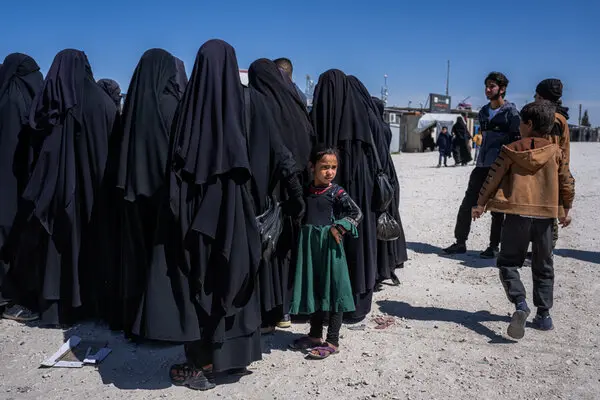
A young Canadian mother shared her memories of being an ISIS bride and her harrowing escape from the extremist group in an NPR feature. She is telling her story publicly for the first time. Her account provides a specific first-person perspective on what life inside ISIS looked like, what drove her decision to leave, and how she escaped — a rare direct account from a former ISIS member speaking voluntarily.
THE ATRC PARALLEL
ONYX covered the US Alien Terrorist Removal Court deportation of Nazira Haji Zada on September 14 — the first-ever use of the secret 1996 tribunal. The specific parallel: Haji Zada’s case and the Canadian ISIS bride’s story represent two very different relationships to ISIS-affiliated extremism and two very different outcomes for the people involved:
▸ Haji Zada: accused of supporting an ISIS-inspired plot; deported to Afghanistan without seeing the evidence against her; her lawyers never saw it either
▸ The Canadian mother: a former ISIS member who escaped, is in Canada, and is voluntarily telling her story to NPR as a cautionary account
▸ The distinction: one person is being held legally accountable through a secret process; the other is providing voluntary public testimony about the same movement from the inside
WHAT VOLUNTARY TESTIMONY PROVIDES
First-person accounts from people who were inside ISIS and escaped provide specific intelligence and public understanding that prosecutorial processes cannot: the social dynamics that draw people in, the specific coercions that keep them there, the specific conditions that make escape possible or impossible, and the human reality beneath the organizational designation. The Canadian mother’s story is a specific contribution to understanding the movement that the Haji Zada deportation’s secrecy cannot provide.
Two women. Both with ISIS connections. One deported to Afghanistan under a secret 1996 law, her lawyers never saw the evidence. One telling her story voluntarily to NPR to warn people. Both are part of the same movement’s human reality. The secret process and the public testimony are both responses to the same extremism.
WHAT HAPPENS NEXT
▸ Canadian ISIS bride — whether her account produces any formal political response in Canada
▸ ATRC — AG Blanche said ‘won’t be the last’; whether the secret tribunal is used again
▸ ISIS accountability — whether voluntary testimony programs are developed to complement prosecution
| CONFIDENCE: HIGH | Canadian mother ISIS bride escape story NPR first time public account from NPR confirmed reporting. |
SOURCES
▸ NPR — Canadian ISIS bride escape story September 14 2026