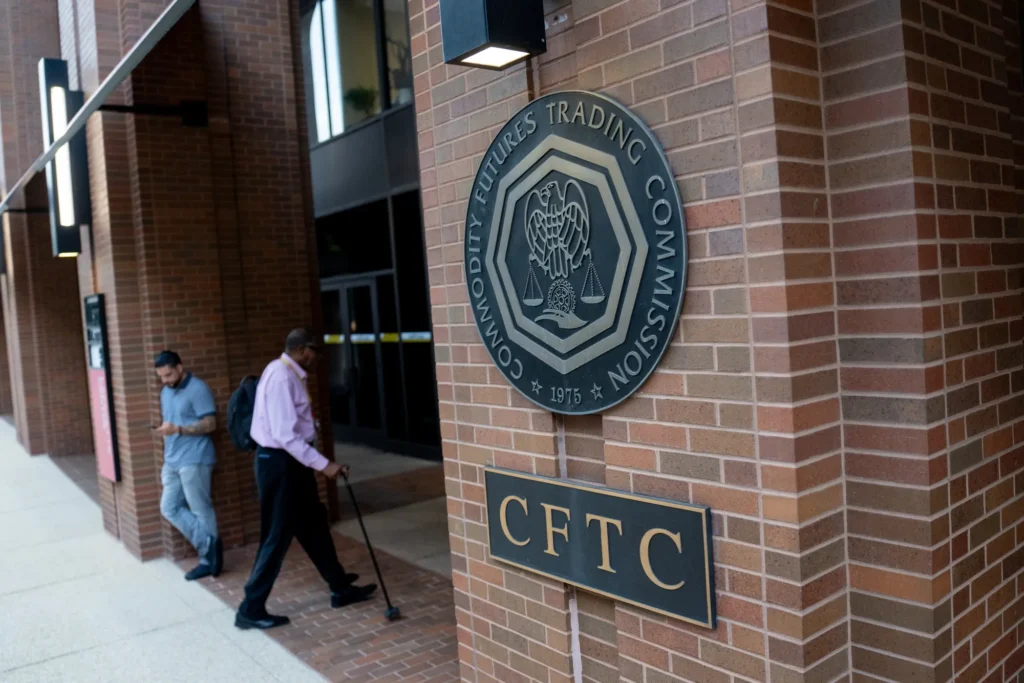
The Commodity Futures Trading Commission has presented its first major package of crypto-market regulations after the Senate failed to advance broader legislation. The proposal aims to clarify oversight of digital assets and derivatives. This is the regulatory backstory of the proposal: Congress could not pass comprehensive crypto legislation, so the executive-branch regulator moved on its own authority.
WHY CONGRESS FAILED AND THE CFTC MOVED
The Senate’s failure to advance broader crypto legislation is the specific political context that produced this CFTC action. The documented reasons Congress could not pass crypto legislation:
▸ Jurisdictional dispute: the SEC and CFTC have competing claims over crypto regulation; the SEC argues many tokens are securities (its jurisdiction); the CFTC argues many are commodities (its jurisdiction); Congress has not resolved which agency has primary authority
▸ Industry lobbying: the crypto industry spent hundreds of millions lobbying Congress; multiple senators and representatives received documented campaign contributions from crypto companies; the legislation that emerged reflected industry preferences that split support
▸ Bipartisan complexity: crypto regulation has unusual cross-party dynamics; some Republican libertarians oppose any regulation; some progressive Democrats want aggressive consumer protection; reaching 60 votes in the Senate is structurally difficult
▸ CFTC action: with legislation stalled, the CFTC used its existing commodity authority to propose rules covering the crypto derivatives market — a narrower footprint than comprehensive legislation but a documented regulatory action
WHAT THE RULES COVER
The CFTC’s proposed rules focus on specific documented areas of the crypto derivatives market:
▸ Digital asset derivatives: futures, options, and swaps based on cryptocurrencies; the CFTC’s core jurisdiction
▸ Exchange registration: platforms that offer crypto derivatives must register with the CFTC; this creates a documented regulatory presence where none existed
▸ Market manipulation: documented rules against wash trading, front-running, and other manipulation practices specific to crypto markets
▸ Margin requirements: minimum collateral requirements for leveraged crypto positions; the documented mechanism behind several 2022 crypto sector collapses
The CFTC moved because Congress didn’t. The SEC and CFTC have been fighting over who regulates crypto for years. The Senate couldn’t pass a bill. So the commodity regulator is using its derivative authority to put rules on what it can reach. It is not comprehensive. It does not cover the token classification question. It does not resolve the SEC-CFTC dispute. But it is the first documented major federal regulatory package for crypto markets in 2026 — and it arrived on the same October 6 when global markets are navigating a naval blockade, a euro at a 17-month low, and an S&P 500 record.
WHAT HAPPENS NEXT
▸ Comment period — industry and public comments on the proposed rules
▸ SEC response — whether the SEC challenges CFTC’s jurisdictional reach
▸ Congressional restart — whether the CFTC action provides a framework that breaks the legislative stalemate
| CONFIDENCE: HIGH | CFTC presented first major package of crypto-market regulations; Senate failed to advance broader legislation proposal aimed at clarifying oversight of digital asset derivatives, from AA.com.tr Morning Briefing, confirmed October 6, 2026 reporting. |
SOURCES
▸ AA.com.tr — Morning Briefing October 6, 2026