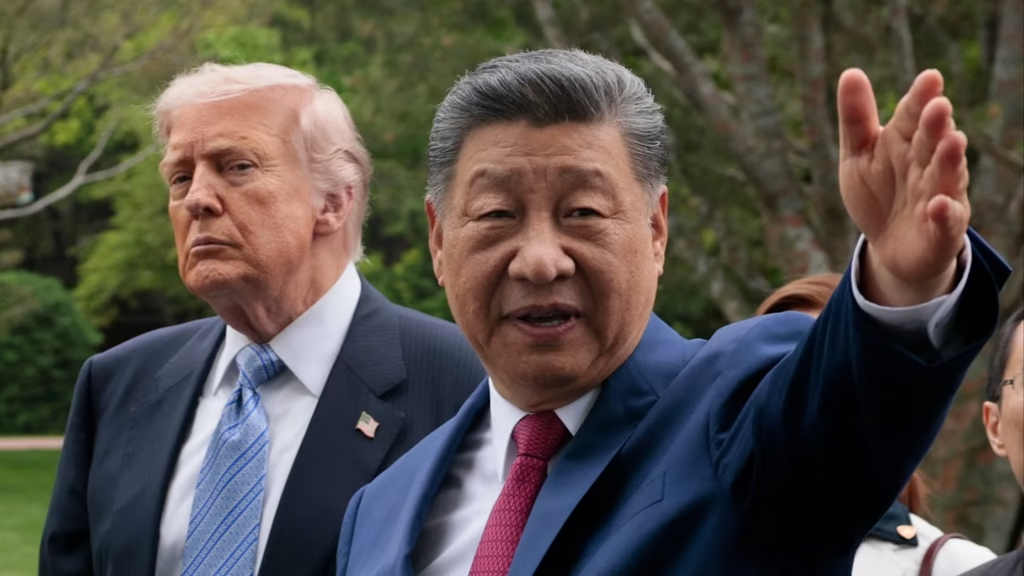
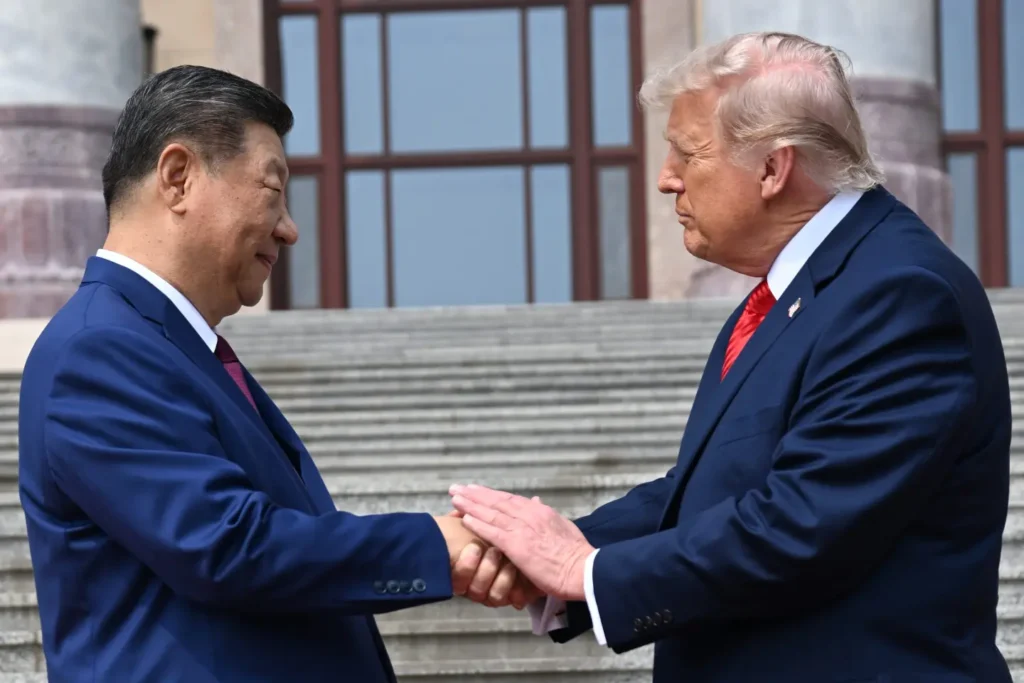
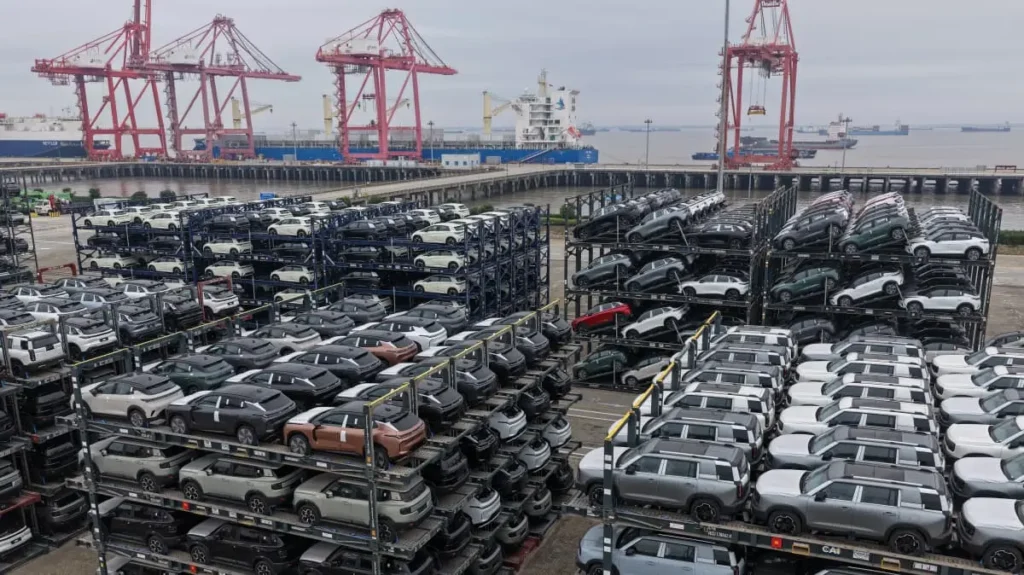
Chinese export data for September showed a 36.3 percent year-over-year increase — the largest export growth figure since the COVID rebound period. AI-related demand for electronics, components, and manufacturing output is cited as a significant driver. The data lands in a global trade environment characterized by US tariffs on Chinese goods, European trade investigations, and sustained political pressure to decouple supply chains from Chinese dependence.
🇨🇳 BEIJING / SHANGHAI · OCTOBER 14, 2026 · CHINA SEPTEMBER EXPORT DATA
Chinese customs data released Tuesday showed exports growing 36.3 percent year-over-year in September 2026. Al Jazeera confirmed the figure. It is the largest single-month export growth reading since the COVID-era rebound period, when a combination of suppressed-then-released global consumer demand and Chinese manufacturing advantages produced a similar spike. The AI-related demand driver is new: global buildout of AI data center infrastructure has created sustained demand for the servers, chips (where permitted), cooling systems, electronics, and associated components that Chinese manufacturing produces in enormous volumes.
The 36.3 percent figure will land differently depending on the audience. For the Chinese government, it is evidence that the economy is growing into the AI era and that manufacturing competitiveness remains strong despite Western decoupling pressure. For the Trump administration, it will intensify the argument for additional tariffs and trade restrictions — a 36.3 percent export surge is not the picture of a Chinese economy suffering under existing trade pressure. For the European Union, which is conducting its own trade investigations into Chinese electric vehicles and other sectors, the data arrives as supporting evidence for those who argue that Chinese export capacity is expanding faster than protective measures can manage.
THE AI DEMAND DRIVER
Artificial intelligence infrastructure buildout is the defining capital expenditure story of 2025 and 2026. US tech companies — Google, Microsoft, Amazon, Meta, and the hyperscaler tier generally — are spending hundreds of billions of dollars on data centers. Those data centers require servers, networking equipment, power infrastructure, cooling systems, and supporting electronics. Chinese manufacturers, particularly in Shenzhen and the Pearl River Delta, are deeply embedded in those supply chains even where advanced semiconductors are restricted. The components that are not restricted — everything below the most advanced logic chips — are flowing in enormous volumes. That is part of what is driving the September export number.
The semiconductor restriction picture is complex. TSMC and other advanced foundries are not in China. But the ecosystem of printed circuit boards, memory components, chassis systems, cables, optics, and manufacturing services that surrounds advanced chips is predominantly Chinese. Companies attempting to build AI infrastructure quickly discover that their supply chain leads back to Chinese suppliers for a substantial fraction of their bill of materials, even when they have consciously tried to diversify. The 36.3 percent export figure is partly a measure of how thoroughly Chinese manufacturing is embedded in the AI buildout.
THE TRADE WAR TENSION
A 36.3 percent Chinese export surge landing in October of a US midterm year, while the Trump administration is running on trade competitiveness and manufacturing repatriation, is a significant political data point. The administration will face questions about whether its tariff regime is producing its intended effect — or whether it is generating consumer price increases while Chinese export capacity grows to its highest levels since COVID. The answer is genuinely complex: tariffs have shifted some supply chains, but the overall Chinese export trajectory has not been bent downward. That nuance will not survive contact with campaign advertising.
“China exports grew 36.3 percent in September. The biggest jump since COVID. AI infrastructure demand is part of it. The trade war is ongoing. The tariffs are in place. The number is 36.3 percent.”
WHAT HAPPENS NEXT
► October export data — whether the September surge is a spike or the beginning of a trend
► US trade response — whether the Trump administration announces additional measures in response
► EU trade investigation — whether the September data accelerates European protective action
► AI supply chain — whether US tech companies publicly address Chinese supply chain dependence
► Currency response — whether the yuan moves in response to the export data
| CONFIDENCE: HIGH | Al Jazeera confirmed China’s September exports at 36.3 percent year-over-year growth, described as the biggest surge since the COVID period, with AI-related demand cited as a driver. |
| BIAS CHECK | ASSESSMENT |
| Source weight | Al Jazeera confirmed headline figures; Chinese customs as primary data source |
| AI driver | Characterized as cited driver in reporting; mechanism described from documented supply chain analysis |
| Trade war framing | Administration position and counterfactual described as analytical question; not editorially resolved |
| Political framing | Midterm political impact characterized as data point; not used editorially against administration |
SOURCES
► Al Jazeera — China exports 36.3 percent surge September 2026, biggest since COVID, October 14, 2026