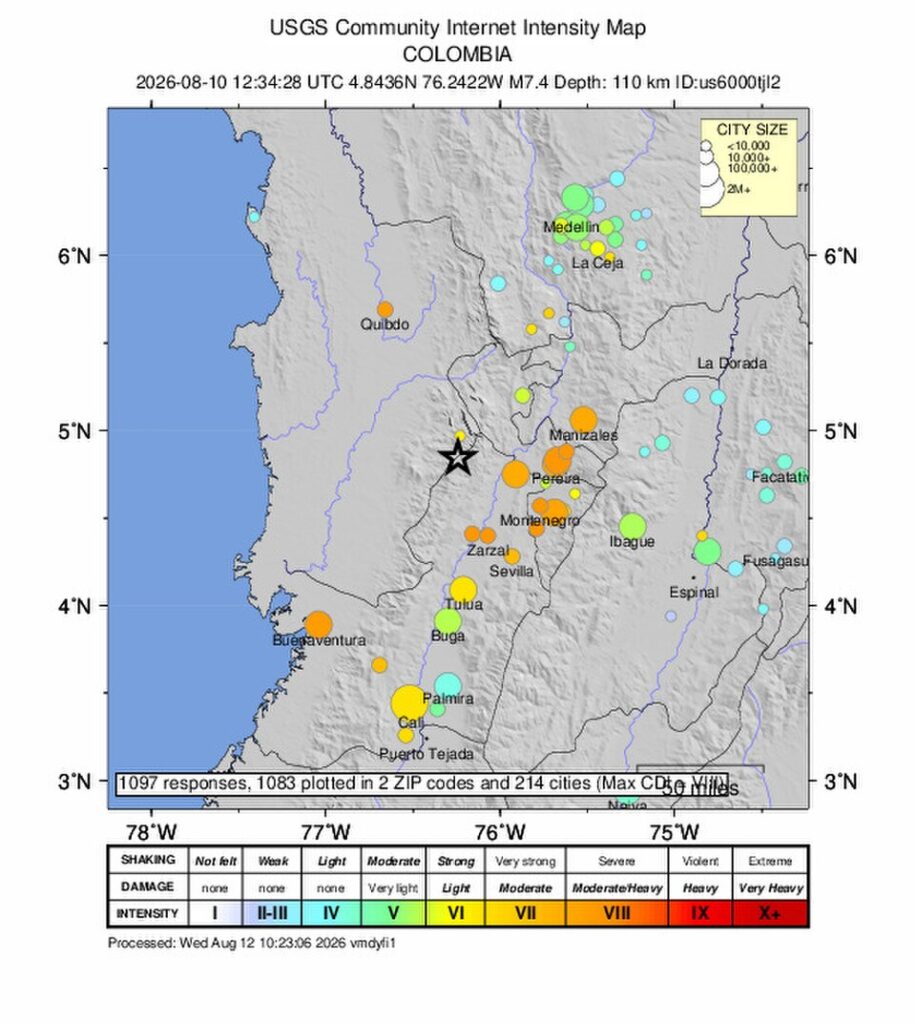
Six days after the 7.4-magnitude earthquake struck Chocó, Colombia’s death toll continues rising as debris clearance reveals additional fatalities not yet formally counted. The rescue-to-recovery transition is complete: search teams are no longer primarily looking for living survivors, though operations continue wherever people remain unaccounted for. The missing count reconciliation is underway, with communications slowly restoring in remote areas. De la Espriella’s government is now managing the shift from emergency response to reconstruction planning — the harder, longer, costlier phase that will determine whether Colombia’s earthquake becomes a story of recovery or a story of chronic displacement.
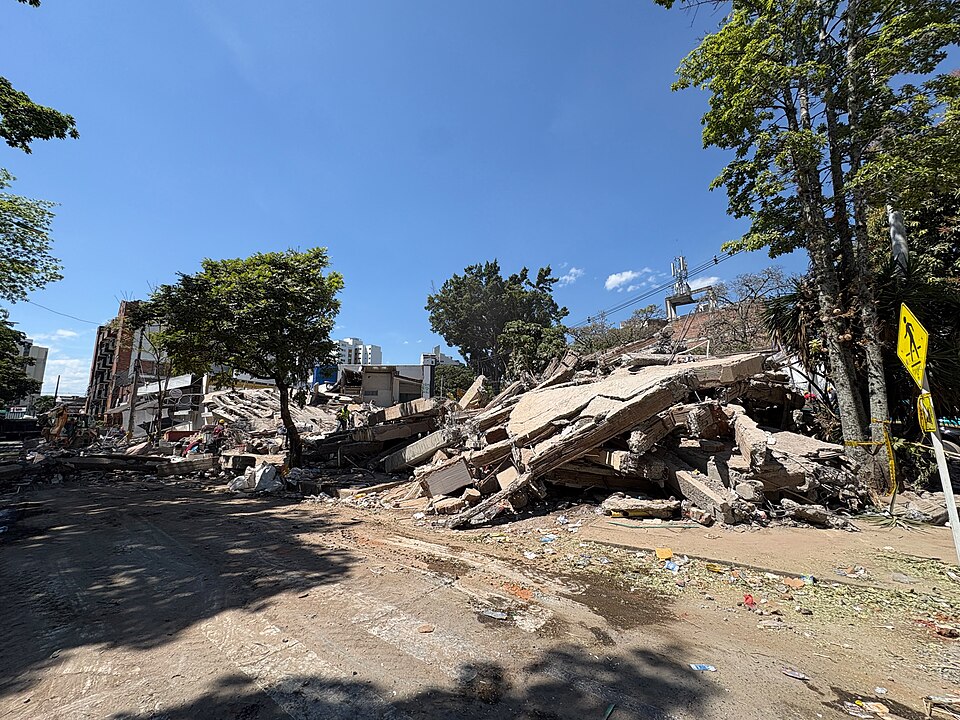
THE RECONSTRUCTION CHALLENGE IN NUMBERS
| Homes destroyed 12,000+ each requiring assessment, demolition or repair, and reconstruction | Buildings leveled 100+ commercial and public infrastructure included |
| Estimated reconstruction cost TBD formal assessment not yet published; scale is months to years | Damage assessment timeline (Manizales) 1 month+ to assess thousands of individual requests — other cities similar |
| Missing persons (official) 320 reconciliation continuing; civilian databases tracking higher | International funding gap Significant WFP and OCHA appeals below adequate response level |
THE THREE PHASES OF EARTHQUAKE RECOVERY — WHERE COLOMBIA IS NOW
Earthquake recovery unfolds in three overlapping phases:
▸ PHASE 1 (Emergency response, Days 1-5): search and rescue; immediate shelter; emergency medical; water and food delivery. Colombia is leaving this phase.
▸ PHASE 2 (Recovery, Weeks 1-8): damage assessment; temporary housing; infrastructure repair; debris removal; initial economic relief. Colombia is entering this phase.
▸ PHASE 3 (Reconstruction, Months 2-Years): permanent housing reconstruction; infrastructure rebuilding; economic recovery; community restoration. Colombia is beginning to plan this phase.
The transition from Phase 1 to Phase 2 is where many disaster recoveries stall. International media attention declines after the acute rescue phase; donor funding follows media attention; communities are left in a sustained limbo between emergency and normalcy that can last years. ONYX commits to continuing Colombia coverage as it enters Phase 2.
THE SPECIFIC RECONSTRUCTION CHALLENGES FOR CHOCÓ
Chocó — the hardest-hit department and the most remote — presents specific reconstruction challenges that go beyond the scale of damage:
▸ Access logistics: construction materials, workers, and equipment must reach Chocó by boat or air; the same access constraints that complicated rescue will complicate reconstruction
▸ Land assessment: earthquake damage can alter soil stability; building on land that may be subject to future landslides or soil instability requires geological assessment before reconstruction
▸ Building codes: Chocó’s existing housing stock was largely not earthquake-resistant; reconstruction to earthquake-resistant standards requires different materials and techniques than what was there before
▸ Community displacement during reconstruction: families displaced to temporary shelter may remain displaced for months or years while their homes are rebuilt; prolonged temporary shelter creates its own social and economic disruption
DE LA ESPRIELLA’S GOVERNANCE METRIC
The earthquake will be a defining event of de la Espriella’s presidency not based on the emergency response — which has been adequate if imperfect — but on whether the reconstruction produces genuine recovery for the affected communities. The coffee region economic relief package (August 13) and the Manizales damage assessment process (August 13) are the first documented steps. Whether they translate into rebuilt homes, restored livelihoods, and functioning communities in 12-24 months is the governance test.
WHAT HAPPENS NEXT
▸ Death toll — will continue to rise through Days 7-14 as debris clearance proceeds
▸ Missing count reconciliation — will narrow over the next week as communications restore
▸ Formal reconstruction plan — de la Espriella government expected to publish a formal reconstruction framework within 30 days
▸ International donor conference — Colombia will likely convene an international donor meeting to address the funding gap for a 12,000-home reconstruction program
▸ ONYX tracking commitment: sustained coverage through Phase 2 and into Phase 3
| CONFIDENCE: HIGH | Day 6 status and reconstruction figures are from ONYX cumulative documentation (August 12-16). Three-phase recovery framework is from established disaster recovery research. Chocó-specific reconstruction challenges are ONYX editorial based on documented geographic and infrastructure facts. |
| ⚖️ BIAS CHECK — WHO IS SAYING WHAT | |
| De la Espriella Government | Managing Phase 1 exit and Phase 2 entry; political incentive to demonstrate visible progress as emergency attention fades |
| International Donors | Phase 1 funding is easier to mobilize than Phase 2 reconstruction funding; donor conference will test whether international commitment is sustained |
| Chocó Communities | Most directly affected; their experience of Phase 2 will be the ground truth of whether the earthquake recovery is working |
| ONYX | Coverage commitment sustained through Phase 2; this article explicitly names the commitment |
SOURCES
▸ ONYX August 12-16 cumulative documentation — earthquake tracking
▸ Colombia disaster recovery research — established framework