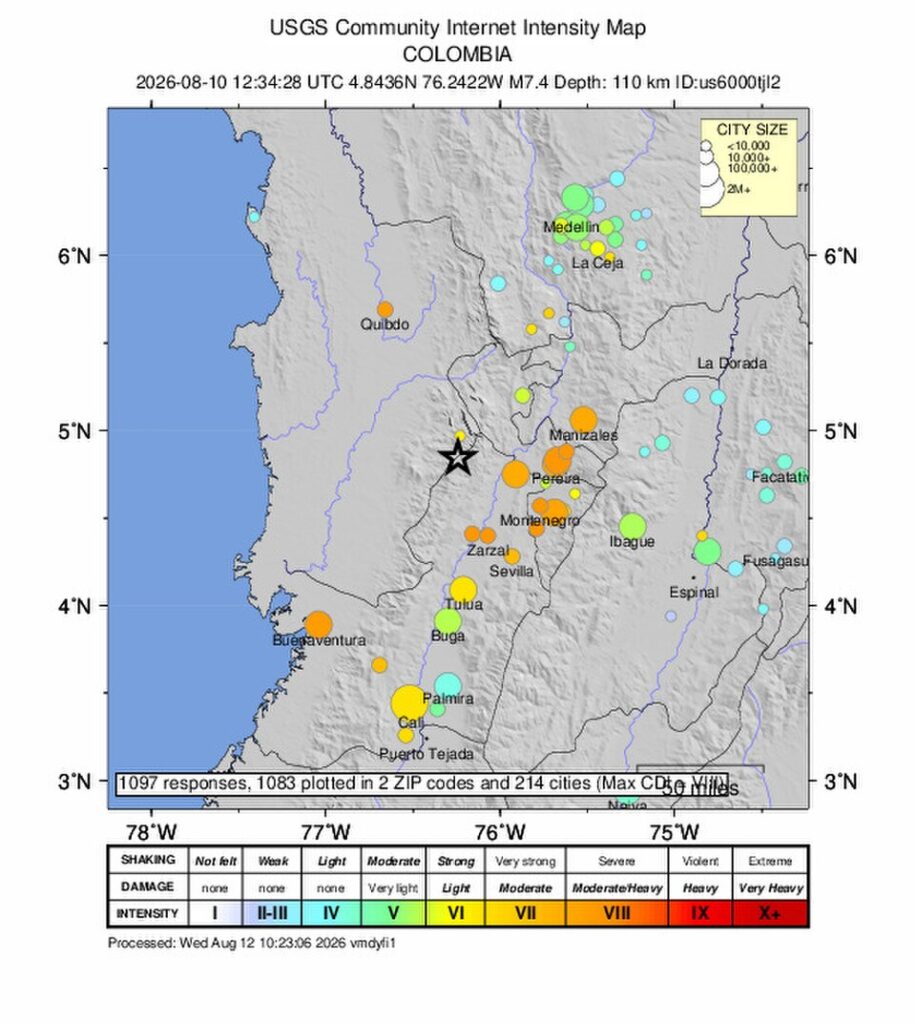
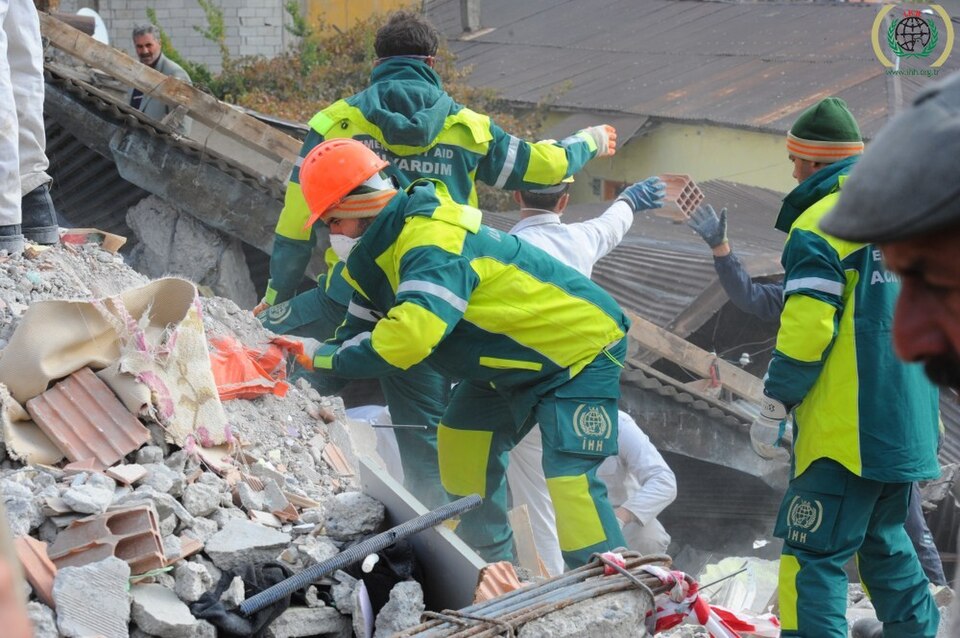
Colombia’s earthquake rescue operations are pushing against the critical 48-to-72-hour survival threshold — the documented window within which trapped survivors are most likely to be found alive. Search teams have pulled genuine miracles from the rubble: a dust-covered baby extracted through a crack in a collapsed wall; Diana Troncoso, a woman in Cali, lifted onto a stretcher alive as onlookers cheered. But for the thousands still missing, the arithmetic of survival is turning against them. President de la Espriella’s government is simultaneously managing a live rescue operation and the growing scrutiny of a missing-persons gap that civilian databases put 20 times higher than the official count of 195.
THE MISSING-PERSONS DISCREPANCY — THE MOST IMPORTANT NUMBER
The gap between the Colombian government’s official missing persons count (195) and the civilian-run missing-persons databases tracking approximately 4,000 unaccounted-for people is the most analytically significant element of today’s Colombia coverage. ONYX identifies this as the number that will determine whether this earthquake is remembered as a serious regional disaster or one of the deadliest natural catastrophes in Colombia’s modern history.
Understanding why the gap exists: official missing-persons figures in disaster contexts require a formal report, typically filed by a family member with police or emergency management. Civilian databases — social media coordination, WhatsApp groups, community organizations — track people whose families are unable to reach them by any means. The gap represents people who are unaccounted for in the civilian tracking but have not yet been formally reported missing through official channels.
In Chocó and other remote areas of the earthquake zone, the official reporting mechanism requires reaching emergency management infrastructure that may itself be damaged or inaccessible. The civilian databases are capturing the actual human accounting; the official count is capturing only the subset of that accounting that has successfully navigated damaged communication and official reporting infrastructure.
| OFFICIAL COUNT (195 missing) | CIVILIAN DATABASE (~4,000 missing) |
| Requires formal police/emergency report filed | Tracks anyone family cannot reach by any means |
| Accessible only through functioning infrastructure | Operates through social media, WhatsApp, community networks |
| Slow to update in remote/damaged areas | Real-time; any family member can add a report |
| Legally definitive but practically limited | More comprehensive; includes many false positives as comms restore |
| Government accountability metric | Closer to true scale; requires reconciliation over days/weeks |
THE 72-HOUR WINDOW — WHAT IT MEANS
The 48-to-72-hour survival threshold is the documented medical reality of collapsed-structure rescue operations. Trapped survivors can survive without water for approximately 72 hours under normal conditions; heat, injury, and structural compression reduce that window. The probability of finding survivors alive drops sharply after 72 hours and approaches near-zero after 96 hours in most structural collapse scenarios.
For Colombia’s earthquake, that window opened Monday morning. It closes Wednesday night into Thursday morning. The baby pulled from the rubble and Diana Troncoso’s rescue in Cali are happening within the window. Every hour that passes without reaching the approximately 4,000 unaccounted-for people in the civilian databases reduces the probability that those people will be found alive.
The baby pulled from the rubble is the reason rescue teams keep working. The 4,000 missing people are why they cannot stop.
THE SMALL MIRACLES — AND WHAT THEY REPRESENT
The dust-covered baby extracted through a crack in a collapsed wall, and Diana Troncoso lifted onto a stretcher in Cali to onlookers’ cheers: these are not feel-good postscripts to a tragedy. They are the specific evidence that sustains rescue team morale and public resolve through the exhausting, dangerous, emotionally grueling hours of a structural collapse search operation. Every person pulled alive is confirmation that the next excavation might also find someone alive. That is why teams continue even after the mathematical probability drops.
DE LA ESPRIELLA’S FIRST CRISIS TEST
Colombian President Abelardo de la Espriella, who assumed office earlier this year, is navigating his first major national disaster. His government’s response is being assessed on multiple dimensions: speed of emergency declaration, allocation of military and civil defense resources, honesty of official casualty communication, and coordination with international humanitarian organizations. The gap between the official 195 missing count and the civilian 4,000 is already a political accountability question — whether his government is being transparent about the disaster’s scale or managing the numbers.
WHAT HAPPENS NEXT
▸ The 72-hour window closes Wednesday night — the transition from rescue to recovery (searching for bodies rather than survivors) is the moment that changes the emotional and operational character of the disaster response
▸ The missing-persons count reconciliation will take days to weeks as communications are restored and formal reports catch up to civilian tracking
▸ De la Espriella’s government will face increasing pressure to explain the discrepancy between official and civilian missing counts
▸ International search and rescue teams from multiple countries are operating or inbound; their assessments will be independent data points on the official vs. civilian count gap
▸ ONYX will continue tracking as the toll develops
| CONFIDENCE: HIGH | De la Espriella government figures (181 confirmed dead, 2,595 injured, 195 official missing) are from NPR government sourcing. Civilian database estimate (~4,000 unaccounted) is from NPR reporting comparing official and community tracking. Baby rescue and Diana Troncoso rescue are from AP wire documentation. 72-hour survival window is from established search-and-rescue medical literature. |
| ⚖️ BIAS CHECK — WHO IS SAYING WHAT | |
| Colombian Government | Presenting official figures that are legally precise but practically undercounting; this is structural, not deliberate deception — official systems cannot capture what informal civilian networks track |
| Civilian Missing-Persons Databases | More comprehensive but include people who will eventually be confirmed safe as communications restore; will be reconciled downward |
| NPR / International Media | Reporting both figures with appropriate framing; not treating the discrepancy as scandal but as analytical complexity |
| International Search and Rescue Teams | Operating independently; their casualty estimates will be the most authoritative external validation of the true scale |
| De la Espriella Government (political) | Under pressure to demonstrate competent crisis management; the missing count discrepancy is a political vulnerability |
SOURCES
▸ NPR — Colombia earthquake Day 2-3 update, missing persons discrepancy, August 2026
▸ AP photography — baby rescue, Diana Troncoso rescue documentation
▸ ONYX August 12 Section B — initial earthquake coverage (224+, 3,700+ missing baseline)
Q: Why do the death figures seem lower than yesterday?
A: Different reporting sources and methodologies. The August 12 ONYX figure (224+) came from broader wire reporting. Today’s figure (181 confirmed) is from the Colombian government’s official confirmed count, which requires formal documentation. The confirmed count can temporarily appear lower than broader estimates while documentation catches up to physical reality. The toll is continuing to rise, not falling.
Q: What is the 48-72 hour threshold specifically?
A: Human survival without water is approximately 3 days. In structural collapse situations, trapped survivors typically have some access to trapped air and possibly small amounts of water. The 72-hour threshold reflects when the probability of finding living survivors drops below 50% in most scenarios. After 96 hours, it approaches 10%. These are probabilities, not hard cutoffs — remarkable survivals have occurred after 7-10 days in exceptional circumstances.
Q: What does “civilian-run missing-persons database” mean?
A: These are community-organized tracking systems — WhatsApp groups, Google forms, social media pages — where families can post the names of people they cannot reach. They’re faster than official systems but less precise: they include people who are safe but unreachable by phone, people in hospitals who haven’t yet communicated, and genuinely missing people. They overcount missing but capture scale more accurately than official systems that undercount.