A Colombian congresswoman tried to suspend President Petro days before Sunday’s runoff. The move collapsed, and now she’s the one suspended.
| AT A GLANCE | |
| Reading Time | 7 minutes |
| Topic | Colombia’s constitutional crisis ahead of the June 21 runoff election |
| What’s New | A congresswoman ordered President Gustavo Petro suspended; the order collapsed within hours, and Colombia’s Attorney General has now suspended her instead. |
| Why It Matters | It tests the limits of executive power and congressional oversight just days before Colombia picks its next president in a tightly contested runoff. |
| Status | Confirmed |
| Confidence | High — Both the original suspension order and its reversal, along with the Attorney General’s subsequent action against the lawmaker, are confirmed by multiple independent outlets and official statements. |
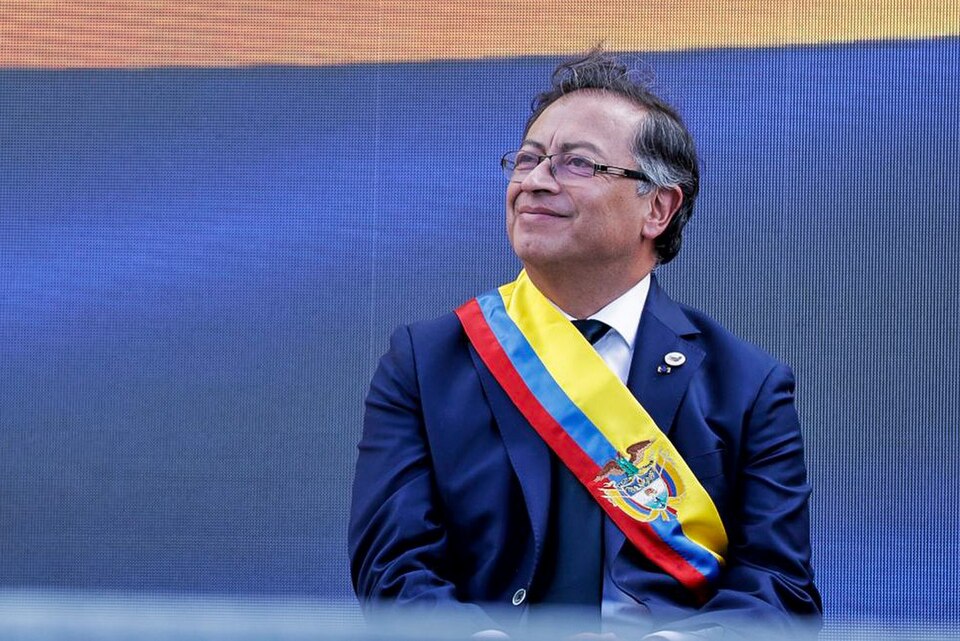
Inauguration of Gustavo Petro by USAID 2 CRP.jpg
A Colombian congresswoman ordered President Gustavo Petro provisionally suspended from office on June 10, in what legal experts and government officials immediately called an order with no constitutional basis. Within a day, the suspension was treated as having no legal effect, and Petro continued exercising his duties without interruption.
Representative Gloria Arizabaleta, who chairs the House of Representatives’ Investigation and Accusation Commission, signed the order as part of a probe into allegations that Petro improperly intervened in Colombia’s presidential campaign. She set the suspension to run until the afternoon of June 21, the exact date and hour Colombians vote in a runoff to choose Petro’s successor.
On June 11, Colombia’s Attorney General’s Office provisionally suspended Arizabaleta herself, opening a disciplinary investigation into her conduct and citing a possible “very serious misdemeanor.” Her suspension is set to run through July 20, the end of her term as a representative.
The episode unfolded as Petro chaired a previously scheduled session of the United Nations Security Council in New York under Colombia’s rotating presidency, continuing his official duties without pause.
| Key Fact Under Colombia’s Constitution, only the Senate can suspend a sitting president from office, and only after the House’s full Accusation Commission, not a single member, refers formal charges. Arizabaleta acted alone. |
Quick Summary
- Representative Gloria Arizabaleta ordered President Gustavo Petro suspended from office on June 10, set to run until June 21, the day of Colombia’s presidential runoff.
- Colombia’s Constitution gives suspension power over a sitting president only to the Senate, not to a single member of a House investigative commission.
- Government officials, opposition lawmakers, and constitutional scholars across the political spectrum rejected the order as legally baseless within hours.
- Petro continued performing his duties without interruption, including chairing a UN Security Council session in New York the same week.
- Colombia’s Attorney General’s Office provisionally suspended Arizabaleta on June 11, opening a disciplinary case against her.
- The episode lands three days before Colombians choose between right-wing candidate Abelardo de la Espriella and leftist candidate Iván Cepeda in Sunday’s runoff.
What We Know / What We Don’t Know
What We Know
- Arizabaleta signed a written order on June 10 purporting to suspend Petro from his presidential duties until June 21 at 4 p.m. local time, according to the document and multiple outlets that reviewed it.
- The order was tied to an investigation opened May 26 into allegations that Petro engaged in improper political participation during the campaign.
- Petro carried out his official functions without interruption throughout the episode, including presiding over the UN Security Council.
- Colombia’s Attorney General’s Office confirmed it provisionally suspended Arizabaleta on June 11 and opened a disciplinary investigation.
What We Don’t Know
- Why Arizabaleta, a member of Petro’s own Historic Pact coalition, issued an order that seemed certain to fail and that several analysts said could end up helping Petro by drawing sympathy ahead of the runoff.
- Whether Arizabaleta will face additional criminal charges beyond the disciplinary case opened by the Attorney General’s Office.
- The full evidentiary basis for the underlying investigation into Petro’s alleged campaign interference, since the Commission’s case remains open.
- Whether Arizabaleta’s own account, in which she reportedly told a journalist she had not personally filed the order and was still deciding what to do, will be substantiated or contradicted as the disciplinary case proceeds.
How the Suspension Order Collapsed Within Hours
Arizabaleta’s order cited what she called the seriousness of the alleged offense and the high rank of the official involved, arguing that Petro’s continued presence in office could interfere with the ongoing investigation, according to the text of the ruling reported by multiple outlets.
The reaction was immediate. Colombia’s Interior Minister, Armando Benedetti, wrote on social media that only the Senate can suspend a president, and only after the full House Accusation Commission, not a single representative, refers the matter as an accuser. He called the order legally nonexistent.
Criticism crossed party lines. Former congressman Jorge Robledo, an opposition figure, called it “blatantly illegal” for a single congresswoman to suspend the president, and noted pointedly that Arizabaleta belongs to Petro’s own governing coalition.
Members of the Accusation Commission itself said any decision of that magnitude should have been debated and voted on by the full body rather than issued unilaterally by its president. Within the Commission, several members publicly stated that Petro had not, in practice, been suspended and continued to exercise the office normally.
Arizabaleta’s own position grew murky. In a call to journalist Daniel Coronell’s program, she reportedly denied having filed the decree and said she was still deciding what action to take, even as the signed order had already become public.
Why Petro Was Under Investigation in the First Place
The case stems from accusations that Petro, who is constitutionally barred from seeking a second consecutive term, improperly used his office to support Iván Cepeda, the candidate of his own Historic Pact coalition, during the campaign for his successor.
Colombia’s Constitution and electoral laws prohibit public officials, including the president, from using their office or public resources to influence elections or back specific candidates. The House Accusation Commission opened its investigation into Petro on May 26.
This is not the first time Petro’s relationship with Colombia’s institutions has reached crisis levels in his final stretch in office. In January, the Constitutional Court provisionally suspended one of his economic emergency decrees, prompting Petro to accuse the judiciary of acting against his government and warning of what he called a “real rupture of the constitutional order.”
Petro has also clashed repeatedly with the United States. In October 2025, the US Treasury Department’s Office of Foreign Assets Control designated Petro himself, along with his wife, son, and interior minister, under sanctions targeting people involved in the global drug trade, following the State Department’s decertification of Colombia as a cooperating counternarcotics partner.
How This Fits Petro’s Pattern of Institutional Clashes
Analysts have tracked a recurring dynamic throughout Petro’s term: the president pushes an ambitious agenda, faces resistance from Congress or the courts, and responds by questioning the legitimacy of the institution that blocked him.
The Atlantic Council’s Latin America program has separately raised concerns about what it calls risk of democratic backsliding, pointing to Petro’s calls for a constituent assembly to rewrite the constitution after Congress and courts blocked elements of his reform agenda, even though Colombia’s Constitution requires Congress, not the president alone, to authorize such a process.
Most recently, Petro has alleged without evidence that hundreds of thousands of voters were improperly added to the rolls ahead of the first round. Both the European Union’s and the Organization of American States’ election observation missions rejected the fraud claims, describing the May 31 vote as orderly and the official count as consistent with preliminary results to within a fraction of a percentage point.
The suspension order fits this same pattern in reverse: this time, an investigative commission, not Petro, was the one accused of overstepping its constitutional authority.
| Institutional Clash | When | Outcome |
| Constitutional Court suspends Petro’s economic emergency decree | January 2026 | Decree blocked; Petro accused judiciary of “prejudging” his government |
| US Treasury sanctions Petro personally under OFAC | October 2025 | Petro’s US assets blocked; relations with Washington deteriorated further |
| Petro alleges first-round voter fraud without evidence | June 2026 | EU and OAS observer missions rejected the claims; official count confirmed |
| Arizabaleta orders Petro suspended | June 10, 2026 | Order treated as legally void within a day; Arizabaleta suspended instead |
What Officials and Experts Are Saying
Interior Minister Armando Benedetti, representing the government’s position, said in Spanish that under the law, the Accusation Commission cannot suspend the president, since it is purely an investigative body, and that only the Senate holds that power after a formal accusation from the full House Commission.
Opposition figures, despite broad disagreement with Petro’s policies, also rejected the order. Former congressman Jorge Robledo called the move flatly illegal and highlighted the irony that a member of Petro’s own coalition had issued it.
Constitutional law experts cited by Colombia One said the Commission’s role is limited to investigation and fact-finding, and that the Colombian Constitution does not grant it independent sanctioning power over the president, a position echoed by multiple academics and former judges in the hours after the order became public.
The Organization of American States’ General Secretariat has previously and separately stated, in response to earlier threats to Petro’s term, that it requests all state actors and institutions in Colombia to respect democratic principles and ensure constitutional governability for elected authorities.
Some analysts following the case noted an unusual political wrinkle: Arizabaleta’s former husband, Roy Barreras, ran in the first round of the presidential race and has since backed Cepeda, Petro’s chosen successor, raising questions among commentators about the order’s underlying political motivations even though its practical effect, if anything, generated sympathy for Petro rather than undermining him.
Why This Matters Beyond Colombia
For Colombia’s democracy, the episode tests whether investigative and oversight bodies can be used, intentionally or not, to destabilize an elected government in its final days, even when the legal basis for doing so is widely disputed.
For the runoff election, the timing was especially sensitive. The suspension order would have applied during the exact window when Petro could still influence the campaign’s final days, and its collapse means Petro retains his platform through Sunday’s vote between de la Espriella and Cepeda.
For US-Colombia relations, the incident adds to an already strained relationship, with Washington having sanctioned Petro personally last year and conditioned security assistance on counternarcotics cooperation. Colombia remains a major recipient of US security assistance and one of Washington’s closest security partners in Latin America, with policy implications regardless of who wins Sunday.
For regional democratic norms, the episode arrives as Latin American democracies more broadly grapple with the boundaries between legitimate oversight and politically motivated attempts to remove elected leaders, a tension playing out from Brazil to Peru in recent years.
For ordinary Colombians, the controversy has added uncertainty to an already polarized election, following the assassination of presidential candidate Miguel Uribe Turbay last year, the first killing of a Colombian presidential candidate in more than three decades.
Fact vs. Claim
Confirmed: Arizabaleta signed a written order on June 10 purporting to suspend Petro until June 21. Confirmed: Colombia’s Attorney General’s Office suspended Arizabaleta on June 11 and opened a disciplinary case against her.
Confirmed by legal consensus across the political spectrum, including government and opposition figures: only the Senate, acting on a referral from the full House Accusation Commission, has constitutional authority to suspend a sitting president, not a single commission member.
Disputed or unclear: Arizabaleta’s own account of events. She reportedly told a journalist she had not personally filed the decree and was still deciding on a course of action, a claim that sits uneasily alongside the signed, dated order that had already become public.
Unverified: the underlying allegation that prompted the original investigation, that Petro improperly participated in the campaign on Cepeda’s behalf, remains an open matter before the Commission and has not been independently adjudicated.
Independent verification has confirmed: international election observers from the EU and OAS found no evidence supporting Petro’s separate claims of fraud in the May 31 first round.
Timeline
- May 26, 2026 — The House Accusation Commission opens an investigation into Petro over alleged improper political participation.
- May 31, 2026 — Colombia holds the first round of its presidential election; de la Espriella finishes first with 43.7%, Cepeda second with 40.9%.
- June 4, 2026 — Colombian authorities certify the first-round results.
- June 10, 2026 — Arizabaleta signs an order purporting to suspend Petro from office until June 21; Petro chairs a UN Security Council session in New York the same day.
- June 11, 2026 — Colombia’s Attorney General’s Office provisionally suspends Arizabaleta and opens a disciplinary investigation against her.
- June 21, 2026 — Colombia’s presidential runoff between de la Espriella and Cepeda is scheduled to take place.
Three Questions This Episode Leaves Open
Did the order help or hurt Petro politically? Several analysts argue a widely seen-as-illegitimate attempt to remove him days before the runoff may generate sympathy for Petro’s coalition rather than damage it, the opposite of what a politically motivated move would presumably intend.
Will Arizabaleta face further consequences? Her current suspension runs only through July 20, the end of her congressional term, and it remains unclear whether additional criminal or disciplinary proceedings will follow.
What happens to the underlying investigation into Petro? The Accusation Commission’s original probe into his alleged campaign involvement remains open even though the suspension order tied to it collapsed, leaving its ultimate outcome unresolved heading into the new administration.
What Happens Next
- Colombia holds its presidential runoff on June 21 between de la Espriella and Cepeda, with the winner taking office August 7.
- Arizabaleta’s disciplinary case before the Attorney General’s Office continues, with her suspension currently set to last through July 20.
- The House Accusation Commission’s underlying investigation into Petro’s alleged campaign conduct remains open and unresolved.
- Petro is due to leave office August 7 regardless of the runoff outcome, since Colombia’s Constitution bars him from a second consecutive term.
- Observers will watch whether the Commission, now under scrutiny itself, revisits how it handles future high-profile investigations involving sitting officials.
Bottom Line
A Colombian congresswoman’s attempt to suspend President Gustavo Petro days before a pivotal runoff collapsed within hours for lacking any constitutional basis, and the lawmaker who issued it has since been suspended herself. Petro never lost the ability to exercise his office throughout the episode.
The biggest unanswered question is intent: why a member of Petro’s own coalition issued an order that legal experts across the political spectrum immediately rejected, and that may end up helping the very government it targeted. With the runoff just days away, the episode adds one more flashpoint to an already turbulent final stretch of Petro’s presidency.
Sources Used
- Colombia One
- Colombia Reports
- Newsroom Panama
- Ground News (Meridiano 70 summary)
- Reuters (via Colombia One and Latin America Daily Briefing)
- Al Jazeera
- Americas Quarterly / Americas Society and Council of the Americas (AS/COA)
- Congressional Research Service, Library of Congress
- Finance Colombia
- Atlantic Council, Adrienne Arsht Latin America Center
- Organization of American States (OAS), official statements
- Colombia’s Attorney General’s Office (Procuraduría General de la Nación), official statements
- Colombian Interior Minister Armando Benedetti, public statements
- Former Representative Jorge Robledo, public statements
- U.S. Department of the Treasury, Office of Foreign Assets Control (OFAC), official designations