Trade unions and students are organizing demonstrations over education conditions, public services, and government policy. Tens of thousands of people are expected to join protests in Paris and other cities. This is the documented confluence of pressures that produced a national mobilization:
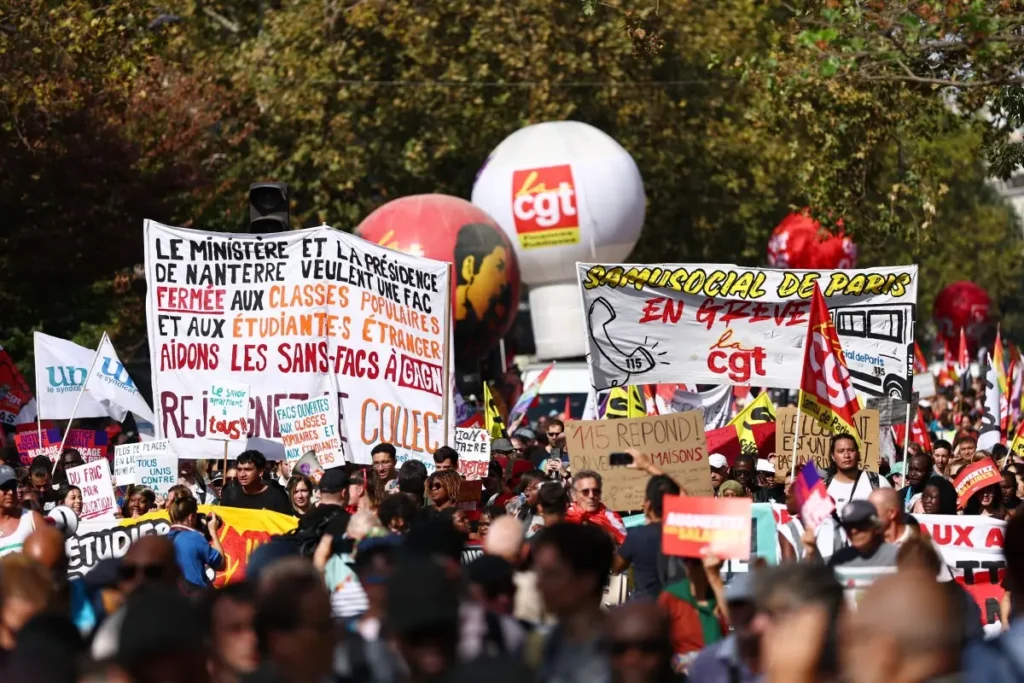
▸ Education: university and secondary school students cite overcrowded classrooms, underpaid teachers, and deteriorating campus infrastructure; the specific trigger is a proposed education budget reduction under the government’s fiscal consolidation plan
▸ Public services: unions representing healthcare, transport, and civil service workers are joining students to protest staffing reductions and wage freezes in public sector employment
▸ Government policy: France’s fiscal consolidation plan — the same plan that has pushed the euro to a 17-month low and unsettled French bonds — requires spending cuts that directly hit education and public services
▸ The fiscal-protest chain: French fiscal problems put pressure on the euro (Story 13); French unions and students protest the cuts that produced those fiscal problems on the same October 6
THE FRENCH FISCAL CONTEXT
The October 6 protests do not exist in isolation. They are the street-level expression of the same fiscal crisis ONYX is tracking through the financial markets:
▸ French government debt as a percentage of GDP: among the highest in the eurozone after Italy and Greece
▸ The budget plan: France’s government is attempting to reduce its deficit to comply with EU fiscal rules; the specific measures include education budget cuts, civil service wage restraint, and pension reform extensions
▸ Bond and equity pressure: French bonds and equities are under documented selling pressure as investors question whether the government can build support for its austerity plan
▸ The protest feedback loop: mass protests against the austerity measures that investors are already doubting make the plan’s political viability appear even weaker, which further pressures French bonds
FRANCE’S PROTEST HISTORY: CONTEXT
France has a documented tradition of mass street mobilization that has produced policy reversals at the government level. The arc’s relevant precedents:
▸ 2023: Yellow Vest movement; pension reform protests that drew over a million people; the government pushed through the reform under Article 49.3 but sustained significant political damage
▸ 2024: continued education and public service protests; teachers’ strikes affecting exam seasons
▸ 2026: October 6 protests are the latest mobilization; their scale and whether they produce policy concessions is the documented question
France is protesting its own fiscal consolidation plan. The unions and students in the streets on October 6 are protesting the same budget that pushed the euro to a 17-month low and spooked French bond investors. The fiscal crisis and the political crisis are the same crisis. Austerity produces protests. Protests produce political instability. Political instability produces bond pressure. Bond pressure produces more austerity demands. France is in the documented feedback loop of a country whose debt level and political culture are pulling in opposite directions.
WHAT HAPPENS NEXT
▸ Protest turnout — whether tens of thousands becomes hundreds of thousands
▸ Government response — whether Paris makes concessions on the education budget
▸ Bond and euro reaction — whether political instability deepens the French fiscal premium
▸ Spain election connection — whether French instability affects Sanchez’s campaign framing around European fiscal policy
| CONFIDENCE: HIGH | Trade unions students organising demonstrations education conditions public services government policy tens of thousands expected join protests Paris other cities from Europe Intelligence Brief Rio Times Online confirmed October 6 2026 reporting. |
| ⚖️ BIAS CHECK — WHO IS SAYING WHAT | |
| Trade unions | Organizing and leading the protests; represent public sector workers most directly affected by the fiscal consolidation |
| French government | Defending the fiscal plan; must manage the political cost of austerity while satisfying EU fiscal rules and bond markets simultaneously |
| Bond markets / investors | Watching whether the government can sustain political support for cuts; protests are a direct signal of political viability |
| Students | The documented specific grievance is education budget; their mobilization adds a generation-defining dimension to the fiscal debate |
| ONYX | Covering at HIGH confidence; documenting the fiscal-protest chain that connects the street demonstrations to the euro’s 17-month low |
SOURCES
▸ Rio Times Online — Europe Intelligence Brief Tuesday October 6, 2026
▸ Open Chronicle — Global News Brief October 6, 2026