
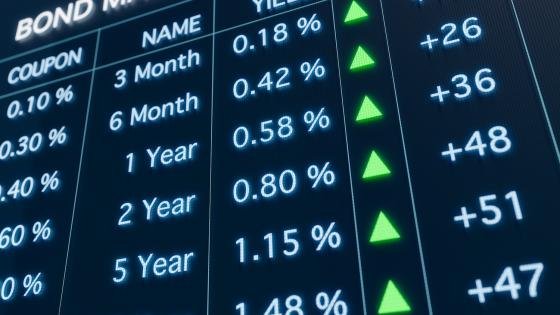
Government borrowing costs in the United States, Germany, Japan, and other major economies have reached multi-decade highs simultaneously. European shares fell, with the STOXX 600 dropping approximately 1% to open Q4. Banks led losses. The synchronized nature of the sell-off — spanning US Treasuries, German Bunds, and Japanese Government Bonds simultaneously — is the specific documented signal that this is a global repricing, not a country-specific event.
WHAT MULTI-DECADE HIGHS MEAN
US bond yields at multi-decade highs: approaching levels not seen since approximately 2006-2007. German Bund yields at multi-decade highs: approaching or exceeding levels not seen since before the 2008 financial crisis, which pushed German yields into negative territory for years. Japanese Government Bond yields at multi-decade highs: the most historically significant data point, because Japan has maintained near-zero or negative interest rates since the late 1990s — JGB yields at multi-decade highs represent a documented end to Japan’s prolonged zero-rate era.
THE THREE DOCUMENTED DRIVERS
ONYX documented on September 30 the two forces driving global bonds higher: energy inflation (Iran war) and AI investment capital demand. October 1 adds the third driver cited in today’s confirmed reporting:
▸ Driver 1: Energy-driven inflation — Hormuz disruption maintaining elevated oil and diesel prices; EU emergency reserves being mobilized; October 6 five-day countdown
▸ Driver 2: AI investment capital demand — technology companies seeking trillions in AI infrastructure funding; Anthropic IPO; Nvidia $235 billion buyback; SK Hynix $150 billion IPO
▸ Driver 3: Rising debt concerns — investors concerned about the scale of government borrowing across major economies; the US national debt crossed $40 trillion during the arc; deficit spending at elevated Iran war operation costs ($37.5 billion confirmed)
WHY JAPAN SPECIFICALLY MATTERS
Japanese Government Bond yields at multi-decade highs are the arc’s most globally significant single bond market data point. Japan’s prolonged zero-rate policy has been the global financial system’s most important anomaly for 25 years. Japanese investors, offered essentially zero return at home, have been the world’s largest buyers of higher-yielding foreign bonds — US Treasuries, European bonds, Australian bonds. When Japanese domestic yields rise meaningfully, Japanese investors repatriate capital: selling foreign bonds to buy higher-yielding domestic bonds. This repatriation is the specific mechanism by which JGB yield increases amplify bond sell-offs globally.
THE Q4 OPENING SIGNAL
October 1 is the first day of Q4 2026. Portfolio managers rebalance at quarter-ends. The Q4 opening sell-off in bonds — simultaneously across US, German, and Japanese markets — is the documented signal that institutional investors are entering the quarter with a specific view: rates stay higher for longer; the Hormuz five-day window is not priced as resolved; the Iran war’s energy inflation persists into Q4.
US, German, and Japanese government bonds all sold off simultaneously to open Q4. Japanese bond yields are at their highest in decades. When Japanese yields rise, Japanese investors sell foreign bonds to buy domestic ones. Those foreign bond sales drive yields higher everywhere. Three drivers simultaneously: Iran war energy inflation, AI investment capital demand, and government debt concerns. October 6 is the specific event the market is pricing, with five days to go.
WHAT HAPPENS NEXT
▸ October 6 — the specific event the bond market is pricing; resolution reduces yields; expiration intensifies them
▸ Japanese yen — JGB yield rises typically strengthen the yen as capital repatriates
▸ European equities — whether STOXX 600 continues its Q4 opening decline
▸ Fed November meeting — whether Q4 bond yields confirm the second hike
| CONFIDENCE: HIGH | Government borrowing costs in the US, Germany, and Japan are at multi-decade highs; investors are concerned about rising debt, energy inflation, and interest rates staying high longer. European STOXX 600 fell 1%; banks led losses from confirmed reporting. |
| ⚖️ BIAS CHECK — WHO IS SAYING WHAT | |
| Bond markets globally | Pricing three simultaneous drivers; the synchronization is the specific signal that this is a global repricing event |
| Japan specifically | Its yield movement is the amplifier; JGB investors repatriating from foreign bonds intensify the global sell-off |
| European banks | Led equity losses; they face specific pressure from higher funding costs and reduced loan margins |
| ONYX | Covering the three-driver framework; naming the Japan amplification mechanism; connecting the bond sell-off explicitly to the October 6 five-day countdown |
SOURCES
▸ Confirmed reporting — global bond sell-off multi-decade highs Q4 October 1, 2026