Washington has asked Berlin and Paris to draw down emergency diesel stocks to help reduce global fuel prices. The specific pressure mechanism confirmed in reporting: Washington reportedly warned Germany and France that failure to release reserves could affect US diesel exports. A US threat to restrict diesel exports to NATO allies over their emergency reserve release decisions is a specific documented use of energy leverage within the Western alliance.
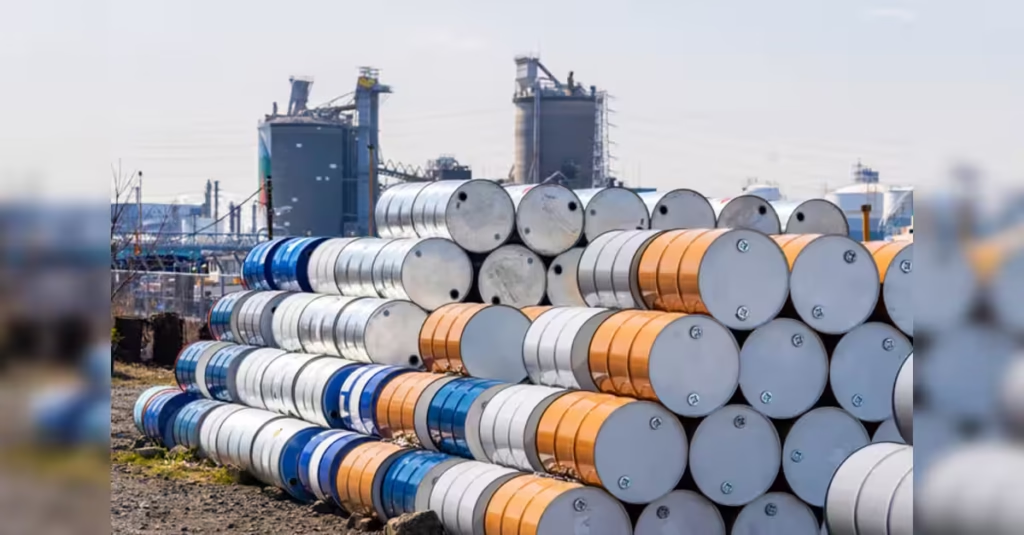
WHY DIESEL SPECIFICALLY
Diesel is the fuel that powers the global real economy:
▸ Trucking: virtually all freight movement by road runs on diesel; elevated diesel prices directly increase the cost of every good transported
▸ Agriculture: tractors, harvesters, and irrigation pumps run on diesel; elevated diesel prices increase food production costs
▸ Construction: heavy equipment runs on diesel; elevated diesel prices increase construction costs
▸ Shipping: marine diesel powers cargo vessels; elevated diesel prices increase shipping costs globally
▸ Power generation: backup generators in hospitals, data centers, and critical infrastructure run on diesel
When diesel is expensive, everything it moves becomes more expensive. The Iran war’s Hormuz disruption has elevated global diesel prices. The US pressure on Germany and France is an attempt to increase diesel supply by releasing strategic reserves, reducing prices before the Q4 heating season begins.
THE EU’S 120 MILLION BARREL CONSIDERATION
European officials said the EU could release emergency diesel supplies as governments respond to high energy prices and concerns over fuel shortages linked to the Middle East war. 120 million barrels is a specific documented quantity:
▸ The US Strategic Petroleum Reserve at its peak was approximately 714 million barrels
▸ The IEA’s coordinated emergency release after Russia’s Ukraine invasion in 2022 was 120 million barrels across member states
▸ 120 million barrels at 21 million barrels per day of normal Hormuz throughput is approximately 5.7 days of Hormuz replacement capacity
▸ In other words: the EU is considering releasing the equivalent of approximately one week’s worth of Hormuz throughput as emergency supply
The reserve release is a bridge measure — five days of Hormuz replacement to cover the five days until October 6. Whether that is a coincidence or a designed emergency buffer for the October 6 deadline window is from the specific decision-making context.
THE NATO ALLIANCE DIMENSION
Washington pressuring Germany and France — two of the three largest NATO allies — on energy reserve releases, with a threat about US diesel exports as the enforcement mechanism, is a specific documented use of economic coercion within the alliance. ONYX documents this because:
▸ The alliance is founded on mutual defense and shared interest
▸ Member states are not typically threatened by other member states over domestic reserve decisions
▸ Germany’s Bundeswehr has specific diesel reserve requirements for its own military operations
▸ France’s strategic reserves are a sovereign decision tied to France’s own energy security calculations
▸ Washington threatening to restrict diesel exports to enforce compliance is economic leverage applied to allies
THE FIVE-DAY ENERGY BRIDGE
The convergence of the 120 million barrel EU consideration and the five-day October 6 countdown is the arc’s most specific single documented attempt to manage the Hormuz disruption’s economic consequences through the diplomatic window. If October 6 produces a ceasefire extension, the reserve release buys time without being needed. If October 6 produces expiration, the reserves reduce the immediate price spike. Both scenarios are being prepared for simultaneously.
Washington told Germany and France: release your emergency diesel, or we might restrict diesel exports to you. Both are NATO allies. Germany and France were not the cause of the Hormuz disruption. They are being pressured because the disruption is economically severe enough that Washington needs their reserves to manage global prices for the five days remaining until October 6. The EU is considering 120 million barrels. That is approximately five days of Hormuz replacement capacity. Five days to October 6. The timing is documented.
WHAT HAPPENS NEXT
▸ Germany and France response — whether Berlin and Paris announce reserve releases
▸ EU formal decision — whether the 120 million barrel release is formally authorized
▸ IEA coordination — whether the International Energy Agency coordinates a broader reserve release
▸ October 6 — whether the reserves are a bridge to a deal or a buffer against expiration
| CONFIDENCE: HIGH | Washington asked Berlin and Paris to draw down emergency diesel stocks to reduce global fuel prices; warned failure could affect US diesel exports. EU 120 million barrels emergency diesel supply governments respond high energy prices fuel shortages Middle East war from confirmed reporting. |
| ⚖️ BIAS CHECK — WHO IS SAYING WHAT | |
| Washington | Applying economic pressure to NATO allies over domestic reserve decisions; its energy security interest is in reducing prices during the October 6 window |
| Germany / France | Being pressured; their specific reserve decisions are sovereign energy security choices; their response will be the documented outcome |
| EU | Considering a coordinated release; the 120 million barrel figure frames the scale of the emergency response being contemplated |
| ONYX | Covering the NATO alliance pressure dimension; naming the 120 million barrel-to-five-day coincidence; not asserting the timing is designed |
SOURCES
▸ Confirmed reporting — US, Germany, France diesel reserves EU October 1, 2026