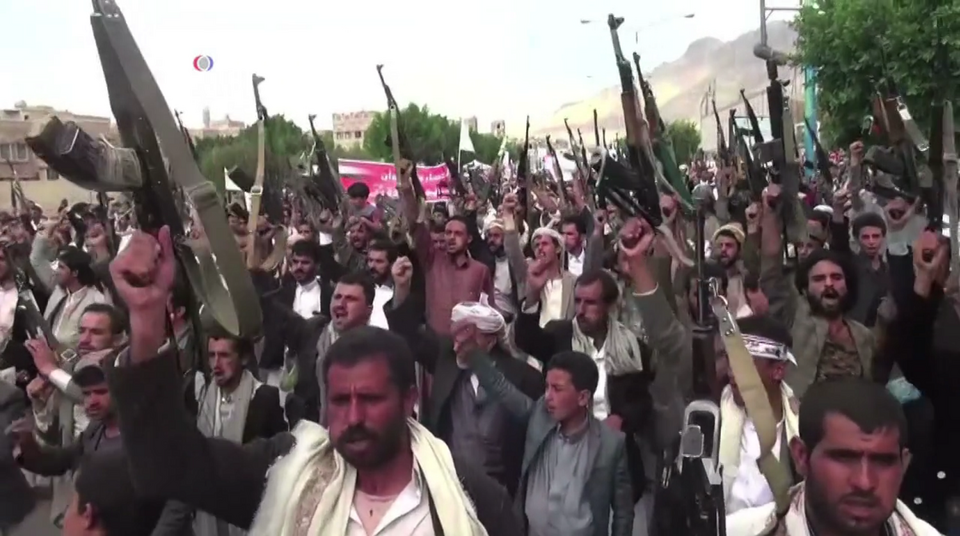
Houthi rebels struck Saudi Aramco’s Jazan refinery, according to CNN — the latest in a sustained campaign against Saudi energy infrastructure that has already included attacks on the Abqaiq facility and the kingdom’s water desalination plants. This strike occurs five days into the Iran-US ceasefire deal. The reason it continues: the ceasefire is a bilateral US-Iran agreement. It does not govern Houthi operations, which are a separate, Iranian-backed but independently operating military force in Yemen. The ceasefire ended the direct US-Iran military conflict; it did not end the regional proxy war.
WHY THE CEASEFIRE DOESN’T COVER THIS
The US-Iran ceasefire signed August 7 has two parties: the United States and the Islamic Republic of Iran. The Houthis — the Ansar Allah movement controlling much of Yemen — are an Iran-backed, Iran-armed, Iran-trained militia. They are not a party to the ceasefire. Iran does not formally acknowledge operational control over Houthi military decisions, and in the ceasefire context, maintaining that deniability is specifically useful: Iran can benefit from Houthi pressure on Saudi Arabia while claiming the ceasefire’s terms are being honored.
The specific legal and diplomatic construct: the ceasefire prevents direct US military strikes on Iran and Iran’s direct military operations against US forces and allies. It does not prevent Houthi operations — which Iran officially describes as independent decisions of a Yemeni political-military movement. Whether this is legally coherent matters less than whether the US accepts the distinction. So far, it does.
Iran signed a ceasefire. Iran’s proxy army did not. These are, formally, different things. Whether they are actually different things is a question the next Houthi strike will answer.
THE JAZAN STRIKE — WHAT IT HIT AND WHY IT MATTERS
Saudi Aramco’s Jazan refinery is a major refining complex on Saudi Arabia’s southern Red Sea coast, near the Yemeni border. It processes crude oil into refined products for both domestic consumption and export. A successful strike on a refinery is categorically different from a strike on oil production infrastructure: refineries are harder to quickly repair than pipelines, and refined product disruptions affect domestic Saudi supply chains as well as export revenues.
The strike is part of a documented Houthi campaign targeting Saudi infrastructure that has included: the Abqaiq processing facility (the world’s largest crude oil stabilization complex); Aramco’s Ras Tanura export terminal; water desalination plants serving Saudi cities; and now the Jazan refinery. Each strike individually produces a specific disruption; collectively, they represent a sustained campaign to impose economic costs on Saudi Arabia for its role in the Yemen conflict.
THE BAB AL-MANDEB DIMENSION
Alongside the refinery strike, Houthis continue their campaign to disrupt commercial shipping through the Bab al-Mandeb Strait — the narrow waterway connecting the Gulf of Aden to the Red Sea, and the primary route for shipping moving between Asia and Europe via the Suez Canal. This creates a dual chokepoint situation: Hormuz (where the ceasefire is holding and traffic is normalizing) and Bab al-Mandeb (where Houthi operations continue to disrupt commercial shipping). The two chokepoints are geographically separate; the ceasefire addresses only the Hormuz situation.
WHAT HAPPENS NEXT
▸ Saudi Arabia will respond with air strikes on Houthi positions in Yemen — consistent with the ongoing pattern
▸ The US will not formally break the ceasefire over Houthi proxy operations; this is a feature, not a bug, of the ceasefire’s scope limitations
▸ Iran faces pressure from the ceasefire diplomacy to reduce Houthi operational intensity — whether it exercises that influence is the key variable
▸ Oil markets are watching both the Hormuz normalization (positive) and Bab al-Mandeb/Houthi disruption (negative) simultaneously
| CONFIDENCE: HIGH | Houthi Jazan refinery strike is from CNN confirmed reporting. Prior Houthi attacks on Abqaiq and water desalination plants are from established prior coverage. Ceasefire scope limitations (bilateral US-Iran, not covering Houthi proxies) are from ceasefire deal terms analysis in prior ONYX coverage. |
| ⚖️ BIAS CHECK — WHO IS SAYING WHAT | |
| Houthis | Will describe the strike as resistance to Saudi aggression; will not acknowledge Iranian direction |
| Saudi Arabia | Will respond with military strikes; will press the US to address Houthi operations as part of ceasefire expectations |
| Iran | Will maintain the ceasefire formally while allowing Houthi operations to continue; dual-track strategy |
| US | Will not break the ceasefire over proxy operations; will apply diplomatic pressure on Iran to reduce Houthi activity |
| Oil Markets | Pricing the Bab al-Mandeb disruption into Red Sea shipping costs; somewhat separate from the Hormuz normalization pricing |
SOURCES
▸ CNN — Houthi strike Saudi Aramco Jazan refinery, August 2026
▸ Prior Houthi campaign documentation — Abqaiq, water desalination plants
▸ ONYX ceasefire coverage — scope limitations on proxy operations