The Hungarian National Assembly passed amendments to the 2021 law that restricted LGBTQ+ content and representation, a piece of legislation that the European Union has been challenging through infringement proceedings for three years. The amendments represent a partial modification under sustained EU pressure, though civil society organizations immediately questioned whether the changes are substantive or cosmetic.
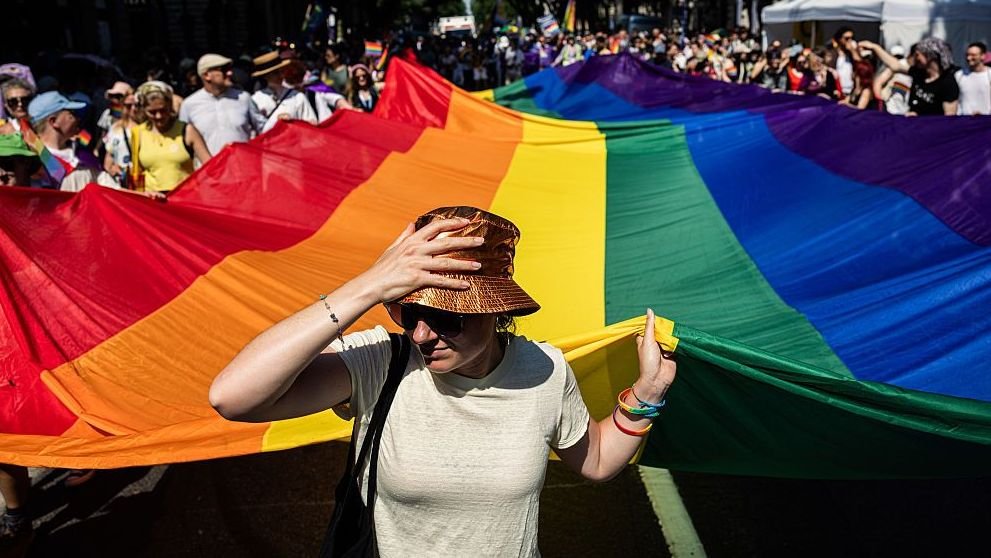
🇭🇺 BUDAPEST · OCTOBER 13, 2026 · HUNGARY LGBTQ LAW AMENDMENT
The Hungarian National Assembly passed amendments to the 2021 law that restricted the depiction and representation of LGBTQ+ people and content in contexts accessible to minors. The amendments were confirmed by DW and Wikipedia’s current events tracking. The 2021 law was passed by the Orban government and immediately drew a legal challenge from the European Commission, which opened infringement proceedings against Hungary because the law violated EU non-discrimination principles and the free movement of services.
The EU infringement process is the context in which these amendments must be understood. Hungary has been facing the prospect of significant financial penalties and the potential suspension of EU cohesion funding over the 2021 law. The amendments passed by the National Assembly are Hungary’s response to that pressure — an attempt to modify the law sufficiently to satisfy or deflect the EU legal challenge while preserving as much of the original policy as possible. Whether the amendments are sufficient to close the infringement proceedings is a question the European Commission will now assess.
WHAT THE 2021 LAW DID
The 2021 law — officially framed as a child protection measure — prohibited the portrayal of homosexuality and gender transition in educational contexts, television programs broadcast before 10 PM, and media accessible to minors. Critics, including the European Commission, characterized it as using child protection as a pretext to restrict LGBTQ+ visibility and expression broadly. The law generated immediate comparison to Russia’s 2013 “gay propaganda” law, and it prompted an unusual public rebuke from all other EU heads of government at a European Council meeting.
The policy debate it reflects — how to define and legislate around the exposure of minors to LGBTQ+ content and representation — is active across multiple European countries and reflects a genuine political division between socially conservative and liberal camps within the EU. Hungary under Orban has positioned itself as the most prominent defender of the socially conservative position within the bloc, using legislative action to create constitutional and statutory frameworks that conflict with EU non-discrimination law. The amendments are a tactical retreat within that broader strategic posture.
CIVIL SOCIETY RESPONSE
Hungarian LGBTQ+ civil society organizations and opposition figures expressed skepticism about whether the amendments represent genuine change or cosmetic modification designed to manage EU legal pressure without substantially altering the law’s practical effects. That assessment will be tested by how the amended law is applied in practice: whether schools, broadcasters, and publishers actually face different enforcement outcomes after the amendments, or whether the same restrictions operate under new statutory language. DW reporting suggests the amendments addressed some of the most legally vulnerable provisions while leaving the core restrictions in place.
“Hungary amended the law the EU has been suing over for three years. The question is whether the amendment changes anything real — or whether it just changes the language well enough to slow down the lawsuit.”
WHAT HAPPENS NEXT
► EU Commission assessment — whether the amendments satisfy the infringement proceeding conditions
► Civil society review — Hungarian LGBTQ+ organizations and legal analysis of the amended text
► Enforcement monitoring — whether the practical application of the law changes after amendments
► Court of Justice of the EU — whether pending ECJ proceedings continue or are suspended
| CONFIDENCE: HIGH | DW via Wikipedia current events confirmed the Hungarian National Assembly passed amendments to the 2021 anti-LGBTQ child protection law. EU infringement proceedings are established context. |
| BIAS CHECK | ASSESSMENT |
| Source weight | DW via Wikipedia current events — confirmed passage; DW is strong on European affairs |
| EU framing | Infringement proceedings characterized accurately; Commission position described from official record |
| Civil society | Skepticism attributed to organizations; not adopted editorially as conclusion |
| Orban characterization | Strategic posture described based on documented legislative and EU Council record |
SOURCES
► DW via Wikipedia current events — Hungary LGBTQ law amendments, National Assembly, October 13, 2026