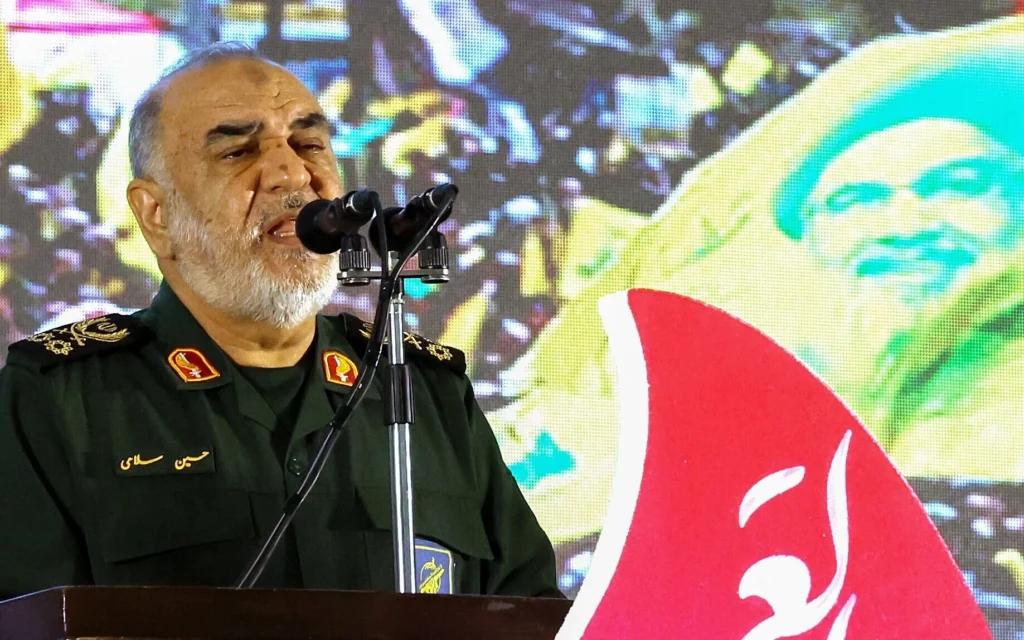
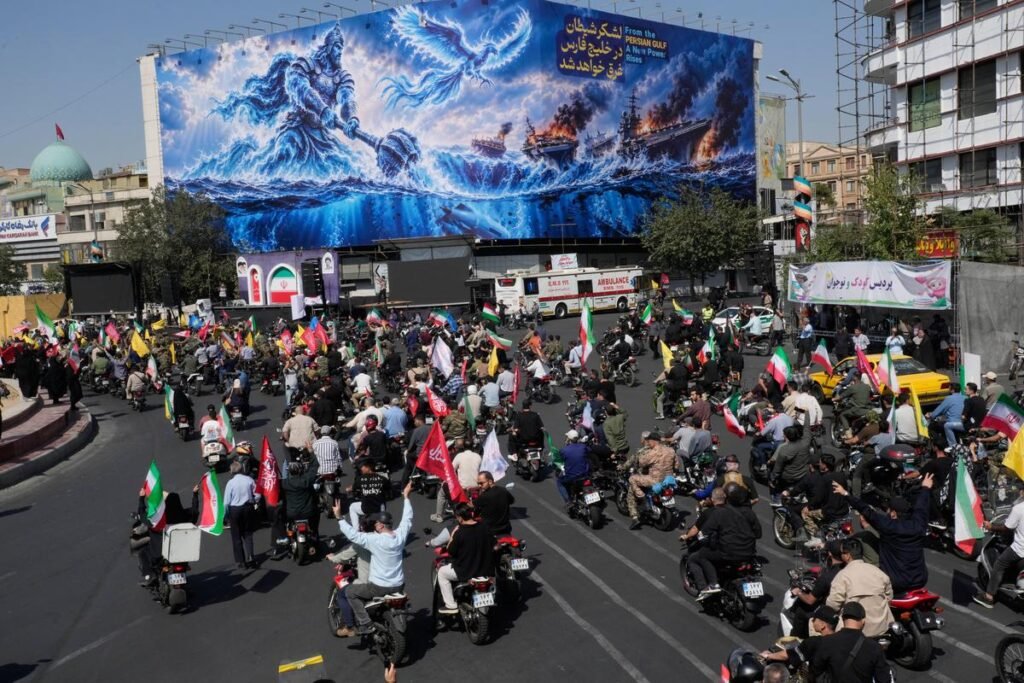
Iran issued an explicit threat of an apocalyptic war in response to any renewed U.S. military strikes, and stated that U.S. warships would not be permitted to operate in the Persian Gulf. The language is maximalist and deliberate — “apocalyptic war” is not diplomatic hedging; it is an explicit escalatory threat designed to deter further U.S. action. The Persian Gulf access threat is operationally significant: the Gulf is a critical waterway for global oil shipments and U.S. naval operations in the region. The threat came amid reports of possible renewed U.S. action, suggesting this is a deterrence statement responding to a perceived real threat.
BREAKING · IRAN · APOCALYPTIC WAR THREAT · PERSIAN GULF · U.S. · WARSHIPS · ESCALATION
TEHRAN / WASHINGTON — Iran issued a threat of apocalyptic war in response to any renewed U.S. military strikes and stated that U.S. warships would not be permitted to enter or operate in the Persian Gulf, according to The Hindu and NYT. The statement came amid reports of possible renewed U.S. military action against Iran — the specific nature of the reported possible action, which U.S. officials or intelligence agencies assessed it, and the Iranian official who issued the apocalyptic war statement were not fully detailed in initial reporting. The threats represent a significant public escalation of Iranian deterrence rhetoric.
Iran’s use of the phrase “apocalyptic war” is a calibrated piece of deterrence communication. Tehran has a long history of issuing maximalist rhetorical threats in response to perceived military pressure — threats that are intended to raise the perceived cost of U.S. action without necessarily committing Iran to specific military retaliation. However, the Persian Gulf access threat is operationally more concrete: the Strait of Hormuz, through which approximately 20 percent of the world’s total oil supply passes, is controlled by Iran in part through its ability to threaten or close the strait. A stated intent to deny U.S. warship access to the Persian Gulf represents a direct challenge to U.S. naval freedom of movement in a critical strategic waterway.
The Persian Gulf Access Threat
Iran’s capability and willingness to threaten U.S. warship access to the Persian Gulf is a recurring element of regional deterrence dynamics. The IRGC Navy operates a large fleet of small fast-attack craft, anti-ship missiles, and sea mines that could impose high costs on U.S. naval operations in the narrow waters of the Gulf. In 2019, Iran shot down a U.S. Navy surveillance drone operating near the Strait of Hormuz. In 2020, IRGC vessels approached U.S. Navy ships in the Gulf in what the Pentagon characterized as dangerous and unprofessional maneuvers. The current threat — a direct statement that warships will not be permitted — is more explicit than prior harassment operations and will require a formal U.S. response posture.
“If America strikes Iran again, what follows will be apocalyptic. Our warships will secure the Gulf. American vessels will not be welcome.” — Iranian military official, via The Hindu/NYT
WHAT HAPPENS NEXT
► U.S. response — State Department and Pentagon response to the apocalyptic war threat.
► Naval positioning — whether U.S. carrier groups adjust posture in response to the Persian Gulf warning.
► Possible U.S. action — what specifically prompted the Iranian deterrence statement.
► Gulf state reaction — Saudi Arabia, UAE, Kuwait, and Bahrain response to Iranian threat.
► Iranian identification — which Iranian official made the apocalyptic war statement.
► Oil market impact — whether the Persian Gulf threat affects crude oil prices.
| CONFIDENCE: HIGH | Iranian apocalyptic war threat confirmed by The Hindu and NYT. Persian Gulf warship access denial statement confirmed. Context of possible renewed U.S. strikes confirmed. Specific Iranian official, specific prior U.S. action prompting statement, and U.S. military repositioning NOT confirmed — flagged. Iranian deterrence history, Strait of Hormuz strategic importance, and IRGC naval capability from established documented record. |
| Bias Check | ||
| Left-Lean | Center | Right-Lean |
| Frames Iranian threat as an understandable deterrence response to U.S. military aggression. | Reports confirmed Iranian apocalyptic war threat and Persian Gulf access denial as stated by The Hindu, NYT. | Frames Iranian threat as proof of rogue state behavior requiring preemptive U.S. action. |
| Assessment | ONYX presents confirmed Iranian threat language and its strategic context. The operational significance of the Persian Gulf access threat is a fact from prior U.S.-Iran naval history. Neither deterrence framing nor aggression framing is adopted editorially. | |
SOURCES
► The Hindu, NYT — Iran vows apocalyptic war if U.S. strikes again; Tehran says U.S. warships will not be permitted in Persian Gulf