A third negotiating session between Iran and the United States has been announced for Muscat, Oman. ONYX has carried ‘Session 3: UNKNOWN’ in every Day status update since August 7 — 38 days. Today the status changes. Session 3 is no longer unknown. It has been announced.
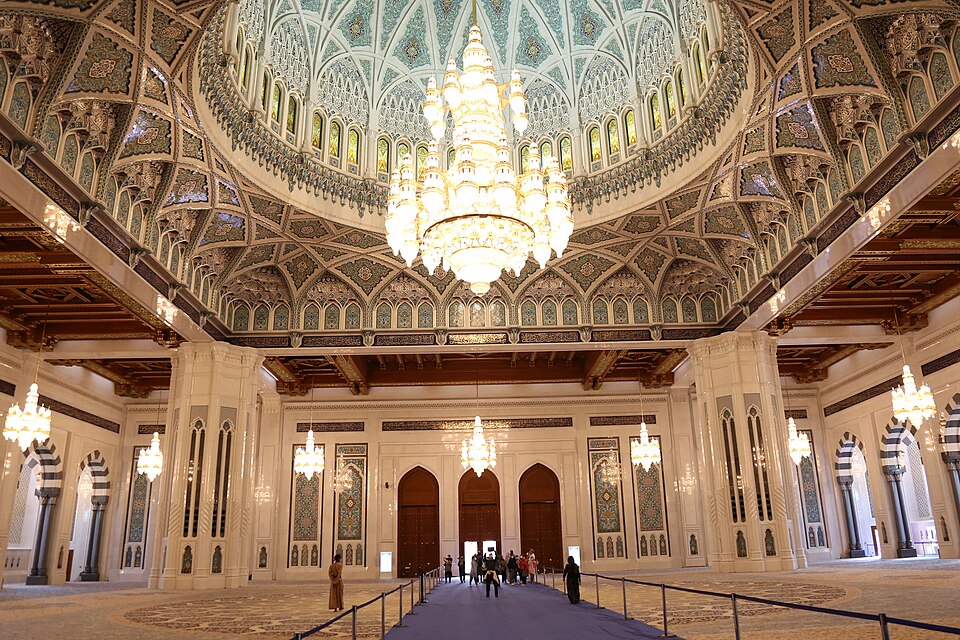
WHY THIS IS THE ARC’S MOST SIGNIFICANT POSITIVE DEVELOPMENT
ONYX’s 38-day documentation has consistently identified Session 3 as the single most important missing variable. The specific reason: without a third session, there is no mechanism by which the ceasefire can be extended before October 6. Sessions 1 and 2 produced the August 7 ceasefire framework. Session 2 (August 31) produced the Araghchi statement that Iran ‘won’t capitulate.’ Session 3 is the only confirmed diplomatic mechanism for producing extension terms. Its announcement means that the mechanism exists.
WHAT THE ANNOUNCEMENT DOES AND DOES NOT CONFIRM
ONYX is precise about what Session 3’s announcement means and does not mean:
▸ CONFIRMED: a session has been announced in Muscat
▸ NOT YET CONFIRMED: the specific date of Session 3
▸ NOT YET CONFIRMED: the agenda or framework for Session 3
▸ NOT YET CONFIRMED: whether the IRGC’s Yemen condition is on the Session 3 agenda
▸ NOT YET CONFIRMED: whether Trump’s stated indifference to an agreement affects US participation
▸ NOT YET CONFIRMED: any extension terms
THE PROBABILITY RECALIBRATION
Session 3’s announcement changes ONYX’s October 6 probability assessment:
▸ Ceasefire extended with full terms: LOW — upgraded from VERY LOW; the session exists but full extension terms require agreement on conditions that have not been met
▸ Ceasefire extended with modified terms: POSSIBLE and UPGRADED — Session 3 is the specific mechanism for producing modified extension terms; its announcement makes this more possible than it was yesterday
▸ Ceasefire expires without replacement: ELEVATED but REDUCED from PROBABLE — Session 3 creates a pathway that did not exist yesterday
▸ Ceasefire collapses before October 6: MODERATE — the dual-base strikes and military escalation are still active; Session 3 does not stop the military track
THE SPECIFIC HURDLES REMAINING
Session 3 being announced does not resolve the specific obstacles ONYX has documented:
▸ Trump indifference: the President stated he does not care about an agreement; whether US negotiators can commit to extension terms without presidential support is the specific constraint
▸ IRGC Yemen condition: the IRGC explicitly named Yemen as a condition for any deal; Session 3 in Muscat was called to discuss the bilateral ceasefire framework; whether Yemen is on the agenda is unknown
▸ Araghchi mandate: after the Deir ez-Zor strike, the IRGC’s subsequent attacks, and the dual-base strikes, whether Araghchi’s negotiating mandate still permits him to agree to extension terms without new authorization is unknown
▸ Military track: the dual-base strikes and ten-ship assault are still in the current escalation sequence; Session 3 does not pause the military track
THE PEZESHKIAN CONNECTION
Pezeshkian’s Islamabad Memorandum readiness signal — stated September 7, publicly unanswered for seven days — is analytically connected to Session 3’s announcement. The most plausible reading: the Pezeshkian signal and the Session 3 announcement are part of the same Iranian dual-track strategy. Iran signals diplomatic readiness publicly; the session gets announced; the pressure on both sides to produce something at the session is real. Whether the same dual-track that produced the announcement can produce extension terms at the session is the next question.
Session 3 is announced for Muscat. 38 days of ‘Session 3: UNKNOWN’ ends today. The session exists. Extension terms do not. The IRGC’s Yemen condition is not resolved. Trump said he doesn’t care about a deal. The dual-base strikes are still in the escalation sequence. Session 3 is the mechanism. The question is whether the mechanism produces something in 22 days.
WHAT HAPPENS NEXT
▸ Session 3 date — the specific scheduling announcement
▸ Session 3 agenda — whether Yemen is on the table
▸ Trump posture — whether the President clarifies US negotiating authority after his indifference statement
▸ Military track — whether the dual-base strike produces US retaliation that affects the session
▸ 22 days
| CONFIDENCE: HIGH | Session 3 announced Muscat Oman from confirmed reporting. |
| ⚖️ BIAS CHECK — WHO IS SAYING WHAT | |
| Iran | The Pezeshkian Islamabad signal and the Session 3 announcement are part of Iran’s documented dual-track strategy; the announcement serves Iranian interests in demonstrating diplomatic engagement regardless of outcome |
| US | Has agreed to a Session 3; whether the Trump indifference statement limits US negotiating authority is the specific uncertainty |
| Oman | Consistent role as the Omani channel host; their facilitation is the stable element of the diplomatic track |
| ONYX | Covering the Session 3 announcement as the arc’s most significant positive development; being precise about what it does and does not confirm; updating the October 6 assessment without overclaiming |
SOURCES
▸ Confirmed reporting — Iran ceasefire Session 3 Muscat announced September 14 2026
Q: What happened at Session 1 and Session 2?
A: Session 1 (date in August 2026, hosted in Muscat by Oman): the initial US-Iran negotiations that produced the August 7 ceasefire framework. The session established the Hormuz commercial transit framework and the IAEA enrichment monitoring provisions. Session 2 (August 31, hosted in Muscat): a follow-up session to assess ceasefire implementation and begin discussions on the path to extension. Iranian Foreign Minister Araghchi stated after Session 2 that Iran “won’t capitulate” — the specific statement ONYX has documented as the last confirmed Iranian diplomatic position before the Pezeshkian Islamabad signal on September 7.
Q: Why is the Omani channel specifically used for these negotiations?
A: Oman has historically served as the diplomatic back-channel between the United States and Iran, hosting secret negotiations on the 2015 Joint Comprehensive Plan of Action (JCPOA) nuclear deal and subsequent communications. Oman maintains diplomatic relations with Iran while also maintaining strong ties to the US and Gulf states; its geographic position on the Arabian Sea, bordering both the Gulf of Oman and the Arabian Sea, gives it specific strategic relationships with both sides. The Muscat channel has been the most productive US-Iran diplomatic mechanism in the modern era; its use for these sessions reflects established practice rather than a new arrangement.
Q: What is the IRGC Yemen condition and does Session 3 address it?
A: The IRGC publicly stated on September 12 that any peace deal with the US must explicitly include Yemen — specifically, an end to Saudi Arabia’s blockade of Houthi-held areas and resumption of Saudi-Houthi negotiations. This condition was not part of the August 7 ceasefire framework. Whether Session 3’s agenda includes Yemen is not confirmed as of this publication. A Session 3 that addresses only the bilateral ceasefire extension without addressing the Yemen condition would satisfy the US-Iran negotiating framework but not the IRGC’s stated requirement for a broader settlement.