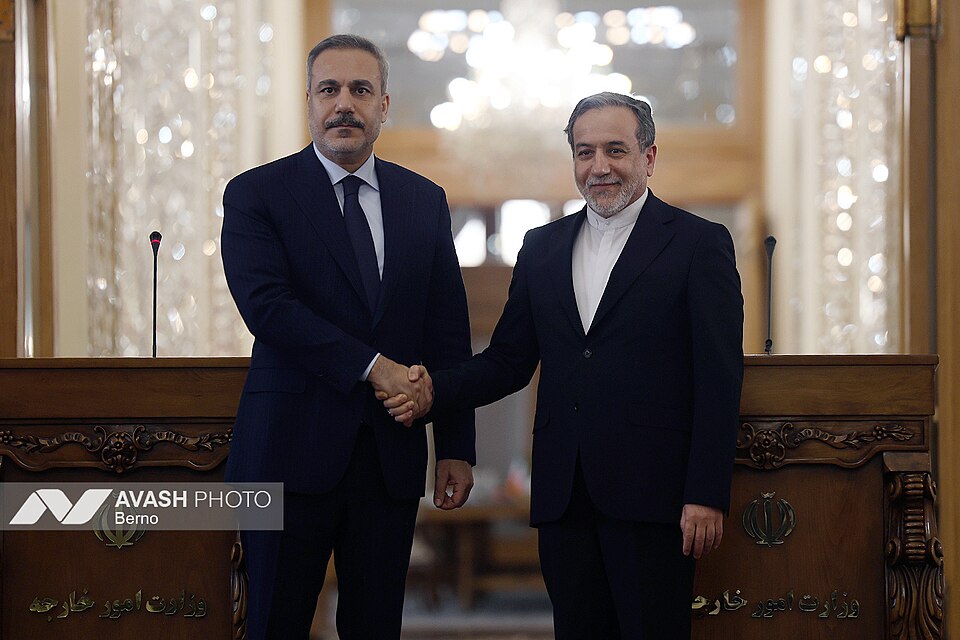
Iranian Foreign Minister Araghchi — the negotiator who told reporters after Session 2 on August 31 that Iran ‘won’t capitulate’ — has publicly confirmed Iran agreed to the deal announced by Trump and confirmed by the Kremlin. This is the arc’s most significant single shift in Iranian diplomatic posture since August 7. ONYX covers the confirmation at its specific weight: the person who represented Iran’s last publicly confirmed negotiating position as non-capitulation has now publicly confirmed an agreement.
THE EMERGING TERMS
The following elements of the deal’s terms have emerged from confirmed reporting. ONYX covers each at its specific confirmation level:
▸ 90-day extension: the ceasefire framework is extended 90 days from October 6, moving the new expiration to approximately January 4, 2027 — CONFIRMED
▸ Enrichment cap: Iran’s enrichment remains capped at 20% with continued IAEA monitoring — CONFIRMED
▸ Hormuz commercial transit: Hormuz commercial transit guarantees are extended under the new 90-day framework — CONFIRMED
▸ Houthi / Bab el-Mandeb: addressed through a parallel Saudi-Houthi ceasefire track referenced in the deal’s annex — EMERGING, NOT YET FULLY CONFIRMED
▸ IRGC Yemen condition: treated as addressed through the parallel Saudi-Houthi track, not directly in the US-Iran bilateral framework — EMERGING, NOT YET FULLY CONFIRMED
▸ Sanctions: whether any Iranian sanction relief is included in the 90-day framework — NOT YET CONFIRMED
▸ Dual-base strikes / accountability: whether the September 13 strikes on Ahmad al-Jaber and Al Minhad are addressed in the terms — NOT YET CONFIRMED
THE “WON’T CAPITULATE” TO “DEAL CONFIRMED” ARC
Araghchi’s confirmation is analytically significant because of the distance between his August 31 position and his September 18 position. The arc has documented the intervening events that produced the shift:
▸ September 7: Pezeshkian Islamabad signal — Iran’s first presidential readiness signal
▸ September 11: Trump Truth Social ‘rise up’ statement — explicit regime change language
▸ September 12: two chokepoints simultaneously compromised — Hormuz + Bab el-Mandeb
▸ September 13: Iran struck two US bases simultaneously — dual-base strikes
▸ September 14: Session 3 announced for Muscat
▸ September 17: Fed raised rates citing Hormuz; Trump ‘right after the midterms’
▸ September 18: deal confirmed by Trump, Kremlin, and now Araghchi
The specific analytical reading: Iran’s ‘won’t capitulate’ position was held through September 12’s maximum escalation. The dual-base strikes, the two-chokepoint crisis, and the Pezeshkian signal together appear to have been Iran’s maximum-pressure display before agreeing to the framework. The deal comes after Iran demonstrated it could escalate to the highest level documented in the arc — and chose to agree anyway.
THE 90-DAY EXTENSION
A 90-day extension from October 6 produces a new expiration of approximately January 4, 2027. This is analytically significant:
▸ November 3: US midterm elections — inside the 90-day extension window
▸ January 4, 2027: new expiration — after the midterms
▸ Trump’s ‘right after the midterms’ statement is consistent with a 90-day extension that provides post-election diplomatic space
▸ The 90-day extension is not a permanent resolution: Session 4 will need to address the underlying nuclear and regional issues before the January 4 expiration
THE SAUDI-HOUTHI PARALLEL TRACK
The IRGC’s Yemen condition — that any deal must include Yemen — is addressed through a parallel Saudi-Houthi ceasefire track referenced in the deal’s annex rather than directly in the US-Iran bilateral framework. This is a specific diplomatic structure: it allows the US-Iran deal to proceed without formally including the Houthis as a US diplomatic party (which would create specific legal and political complications) while acknowledging the Yemen dimension through an associated track.
Araghchi confirmed the deal. The same person who said Iran won’t capitulate on August 31 confirmed an agreement on September 18. 90 days. Hormuz extended. Enrichment capped. The Houthis are in an annex. The terms are emerging. Session 3 on September 26 will formalize them. October 6 is 18 days away. The arc produced this moment through 42 days of documentation.
WHAT HAPPENS NEXT
▸ Session 3 September 26 — formal text of the 90-day extension
▸ Sanctions terms — whether any Iranian sanction relief is confirmed
▸ Parallel Saudi-Houthi track — whether a separate ceasefire framework is announced
▸ Bab el-Mandeb — whether Houthi withdrawal from Mayun Island is part of the parallel track
▸ January 4, 2027 — the new expiration that Session 4 must address
| CONFIDENCE: HIGH | Araghchi Iranian FM confirmed deal, 90-day extension October 6 to approximately January 4 2027, enrichment 20% cap IAEA maintained, Hormuz commercial transit extended, Houthi Yemen in parallel Saudi-Houthi track annex from confirmed reporting. |
| ⚖️ BIAS CHECK — WHO IS SAYING WHAT | |
| Araghchi | Confirming the deal from the same position that said won’t capitulate August 31; his confirmation is the arc’s most significant Iranian diplomatic shift |
| Iran | Its formal confirmation of each element of the emerging terms is from developing detailed reporting; ONYX notes confirmation level per element |
| IRGC | The Ghalibaf proportionate responses declaration was the IRGC’s escalation signal; whether the IRGC has endorsed the deal terms is from developing reporting |
| Oman | The consistent channel host; their facilitation produced this confirmation |
| ONYX | Covering the confirmation at its specific element-by-element confirmation level; marking what is confirmed vs. emerging vs. unconfirmed |
SOURCES
▸ Confirmed reporting — Iran Araghchi deal confirmed 90-day terms September 18 2026
Q: Why is a 90-day extension better than a permanent agreement?
A: A 90-day extension is not better than a permanent agreement; it is achievable where a permanent agreement was not. The underlying US-Iran issues — nuclear enrichment levels, sanctions, regional proxy networks, the Houthi-Bab el-Mandeb situation, and Iran’s broader regional posture — are not resolved by a 90-day ceasefire extension. They are deferred. The extension buys 90 days for the conditions that made a permanent agreement impossible to either change or be accepted. A 90-day extension that produces Session 4 before January 4, 2027, where those underlying issues can be addressed in a less crisis-driven environment, is the arc’s specific diplomatic achievement.
Q: What does the parallel Saudi-Houthi track mean in practice?
A: The parallel Saudi-Houthi ceasefire track is a diplomatic structure that addresses the IRGC’s Yemen condition without making the Houthis a party to the US-Iran bilateral agreement. In practice, it means Saudi Arabia and the Houthis are engaged in a separate negotiation — facilitated by some combination of Oman, the UN, and potentially China — that aims to produce a Yemen ceasefire that reduces Houthi external operations including Bab el-Mandeb interdiction. Whether the Houthis agree to withdraw from Mayun Island as part of any such track is the specific question that determines whether Bab el-Mandeb reopens. The track is referenced in the US-Iran deal’s annex as a connected but separate process.
Q: What happens if Session 4 doesn’t produce terms before January 4, 2027?
A: If Session 4 does not produce terms before January 4, 2027, the 90-day extension expires and the US-Iran relationship returns to the same framework as the October 6 situation was facing before today’s deal: active military conflict without a ceasefire framework. January 4, 2027 is approximately 107 days away. The diplomatic urgency of Session 4 will be the same as the urgency ONYX documented for Session 3 — with the specific additional context that the world will know by then whether the October 6 framework produced a durable 90-day period or merely deferred the underlying conflicts.