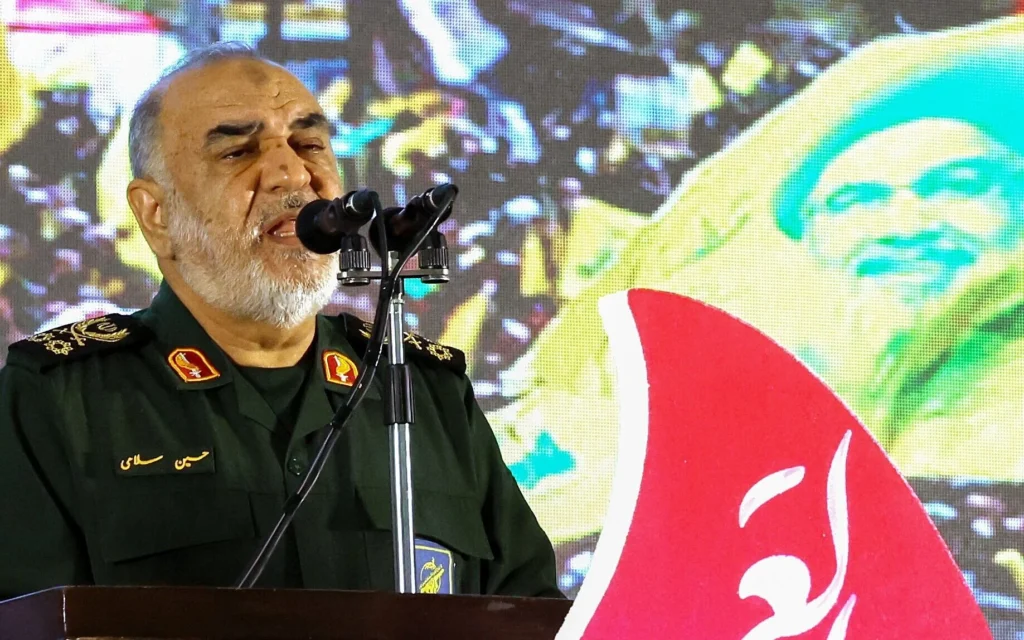
Today is Day 29 of the Iran ceasefire deal. October 6 is 31 days away. Session 2 completed August 31 (Araghchi: ‘will not capitulate’; Session 3 status still unknown). The Kuhestak wedding strike (September 2) has now formally entered the diplomatic equation: Iran’s chief negotiator Qalibaf invoked it alongside Minab and Lamerd as a chain of atrocities.
THE DAY 29 STAT GRID
| Deal day 29 October 6 (Day 60) is 31 days away | Session 2 DONE August 31 — Araghchi ‘won’t capitulate’ |
| Session 3 UNKNOWN No commitment confirmed; critical missing variable | Hormuz OPEN Transit continuing; ~70-80 vessels/day |
| IAEA Active Below 20% enrichment; no violations through Day 28 | October 6 31 days White House no-extension posture: unchanged |
WHAT HAS CHANGED SINCE DAY 28
The developments between Day 28 (September 4) and Day 29 (September 5) that change the deal’s environment:
▸ Kuhestak diplomatic dimension: Iran’s Foreign Ministry formally characterized the strike as a war crime; Qalibaf linked it to the opening-day Minab school and Lamerd sports hall strikes in a chain-of-atrocities framing; the Foreign Policy preliminary US assessment finding the US ‘likely’ responsible for Minab is now part of the public record
▸ UAE drone intercept (September 2): the day after Larak Island, the UAE intercepted another Iranian drone; the Gulf proxy incident failure mode remains elevated
▸ Saudi Arabia cumulative toll update: 2 US servicemembers killed, 29 wounded — the specific American cost of the Gulf front
▸ Germany Russia Bonn mission closure: European escalation against Russia proceeding alongside Iran diplomatic track
▸ SCO summit concluded: Pezeshkian-Putin bilateral deepening the non-Western resilience track Iran is running parallel to Muscat
THE KUHESTAK DIPLOMATIC EFFECT
How Kuhestak enters the October 6 diplomatic equation:
▸ Iran needs a domestic political justification for any October 6 extension: accepting an extension after Kuhestak requires Araghchi to explain to Iranian hardliners why the country is extending a ceasefire with a government that killed 4-year-old Amir Ali Karimi and 16-year-old Mohammad Malahi at a wedding
▸ The ‘won’t capitulate’ statement after Session 2 took on additional resonance after Kuhestak: the public rhetorical posture was already set; Kuhestak has locked it in more firmly
▸ The US has provided no investigation or accountability signal that Araghchi could use as political cover for extension discussions: the CENTCOM ‘never targets civilians’ blanket denial and USPS’s own internal Minab assessment disconnect are the current US posture
▸ Session 3’s political environment: if a Session 3 happens, it will be negotiating an extension under the shadow of Kuhestak, without any accountability signal from the US that would make the extension politically viable for the Iranian government’s domestic audience
THE FIVE FAILURE MODES AT DAY 29
▸ Israeli unilateral strike: SIGNIFICANTLY REDUCED — Israeli caretaker government managing Phase 1 hostage releases; elections scheduled November
▸ Iran enrichment violation: MONITORING — IAEA active; no violations; Session 2 did not produce new enrichment terms; status quo at 20% cap continues
▸ Iranian domestic collapse: ELEVATED — Kuhestak has strengthened hardliner position that diplomacy is pointless against an adversary that strikes weddings and offers no accountability
▸ Gulf proxy incident: ELEVATED — UAE drone intercept Day 27; Saudi Arabia cumulative toll growing; Houthi Red Sea attacks active
▸ 60-day cliff: 31 DAYS AWAY — the most urgent and least resolved failure mode; White House no-extension posture unchanged; Session 3 commitment unknown; Kuhestak has made the diplomatic path harder
Day 29. Hormuz is open. IAEA is monitoring. Kuhestak has not triggered a ceasefire collapse. The deal is still operationally functional. The diplomatic path to October 6 extension is measurably harder than it was on Day 28. Thirty-one days.
WHAT HAPPENS NEXT
▸ Session 3 announcement — the single most important missing variable
▸ US accountability signal — any formal investigation, clarification, or acknowledgment about Kuhestak that could give Araghchi domestic cover for extension
▸ White House posture update — whether the no-extension signal softens in the remaining 31 days
▸ Iran domestic politics — whether Kuhestak strengthens hardliners to the point where extension becomes politically impossible
▸ 31 days to October 6
| CONFIDENCE: HIGH | Day 29 operational status from ONYX cumulative tracking. Kuhestak diplomatic dimension analysis is ONYX editorial based on documented developments from September 2-4. Five failure mode update is ONYX editorial. All specific claims referenced to prior ONYX documentation. |
SOURCES
▸ ONYX August 7 – September 5 — 29-day cumulative Iran deal documentation
Q: Is the deal still alive?
A: Yes, operationally. Hormuz is open, IAEA is monitoring, enrichment remains below 20%, and no party has formally withdrawn from the ceasefire framework. The deal’s operational functions are intact on Day 29. What is deteriorating is the diplomatic environment for an October 6 extension: the political conditions that would allow both sides to commit to extending have become harder, not easier, in the 48 hours since Kuhestak.
Q: What would a US accountability signal look like?
A: A US accountability signal that could help Araghchi domestically would be: a CENTCOM statement that the Kuhestak strike is under review; an announcement of an investigation into the civilian casualties; or a formal acknowledgment that the preliminary Minab assessment (‘likely’ responsible) is being processed through a formal inquiry. None of these would require the US to admit wrongdoing; they would simply demonstrate that the US takes civilian casualty accountability seriously enough to investigate specific incidents. The absence of such a signal is itself the signal.
Q: Can the deal survive Kuhestak?
A: The ceasefire agreement itself has no provision for suspension due to civilian casualty incidents; the deal governs Hormuz transit and nuclear enrichment, not the conduct of military operations outside those specific domains. Kuhestak does not legally trigger a ceasefire collapse. What it threatens is the political will on the Iranian side to extend past October 6 — a political decision, not a legal one. Whether Iran’s political system can authorize an extension after Kuhestak without a US accountability signal is the specific question ONYX cannot answer with certainty.