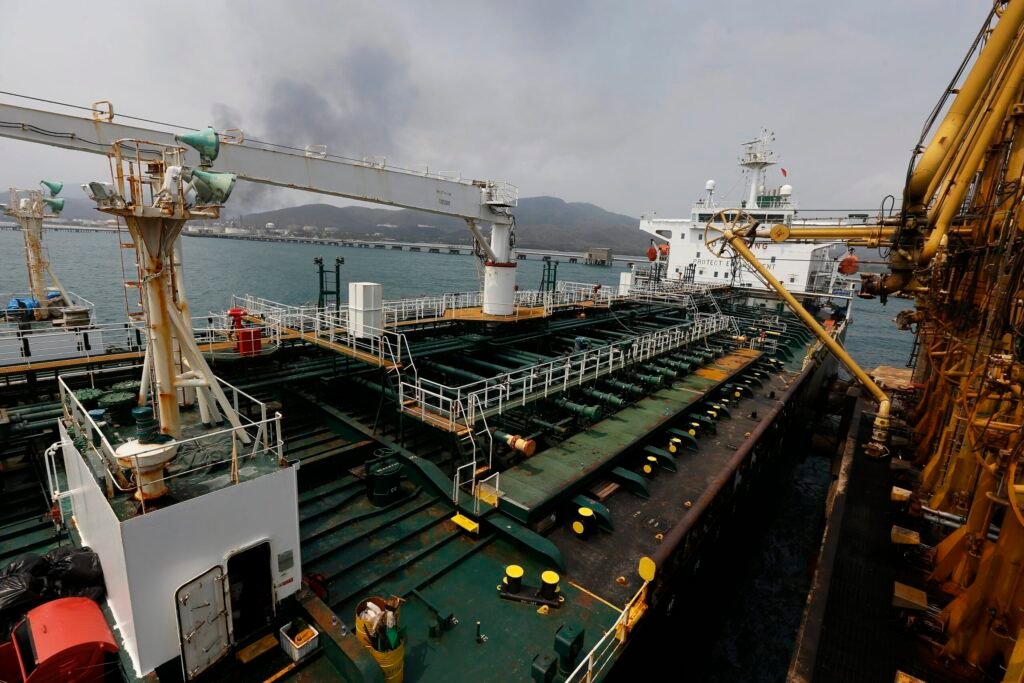
Shipping data shows at least eight tankers carrying Iranian LPG and jet fuel have left the Gulf of Oman since mid-July. The U.S. naval presence is real. The blockade’s effectiveness is not.
IRAN · SANCTIONS · SHIPPING · GULF
DUBAI — Despite a United States naval presence in the Gulf of Oman that has been publicly described as a blockade on Iranian energy exports, shipping data reviewed by Reuters shows that at least eight tankers carrying Iranian liquefied petroleum gas and jet fuel have successfully departed the Gulf since mid-July. The vessels used a mix of flag-of-convenience registrations and transponder obfuscation techniques — a well-documented evasion playbook that Iran has refined over years of sanctions pressure.
The revelation adds to a growing body of evidence that the U.S. naval posture, while significant in scope, has not succeeded in halting Iranian hydrocarbon exports. American officials have said the goal is to reduce exports, not eliminate them — a framing that critics argue conveniently lowers the bar for what counts as success.
How Iran Keeps Moving Fuel
Iranian tankers have employed a range of evasion techniques: turning off AIS transponders in international waters, conducting ship-to-ship transfers beyond the range of surveillance, and routing through intermediary ports in jurisdictions where U.S. interdiction authority is limited. Several of the eight tankers identified by Reuters used flags from small Pacific island nations with minimal maritime enforcement capacity.
The buyers of the fuel remain opaque. Reuters identified indirect routing through intermediary traders in the UAE and Southeast Asia, but was unable to confirm final destinations. The revenue generated is believed to be flowing back to Iran through correspondent banking channels that bypass dollar-denominated systems.
“The blockade is more of a pressure campaign than a physical barrier. Iran has eighteen months of practice getting around it.” — Energy security analyst, speaking to Reuters
WHAT HAPPENS NEXT
► U.S. Central Command under pressure to explain the gaps; congressional briefing expected.
► Treasury Department reviewing whether additional secondary sanctions are warranted against identified tanker operators.
► Reuters investigation continuing — more vessels may be identified in coming days.
► Iran’s ability to sustain exports matters for the military deterrence calculus: a less pressured Iran may be less incentivized toward a deal.
► Oil markets are factoring Iranian supply uncertainty into forward pricing.
| CONFIDENCE: HIGH | Shipping data reviewed and confirmed by Reuters. Tanker count of at least eight verified against AIS records. Evasion techniques reflect established and documented Iranian sanctions-busting methods. Final buyers not confirmed — noted as such. |
| Bias Check | ||
| Left-Lean | Center | Right-Lean |
| Frames as evidence of administration failure on Iran sanctions enforcement. | Reports the shipping data and the evasion techniques as facts; notes the administration’s framing. | Argues the military pressure is working at a strategic level even if the blockade is imperfect tactically. |
| Assessment | ONYX presents the Reuters data and the analytical context. No editorial stance on sanctions policy. | |
SOURCES
► Reuters — Original investigation into Iranian tanker movements and shipping data