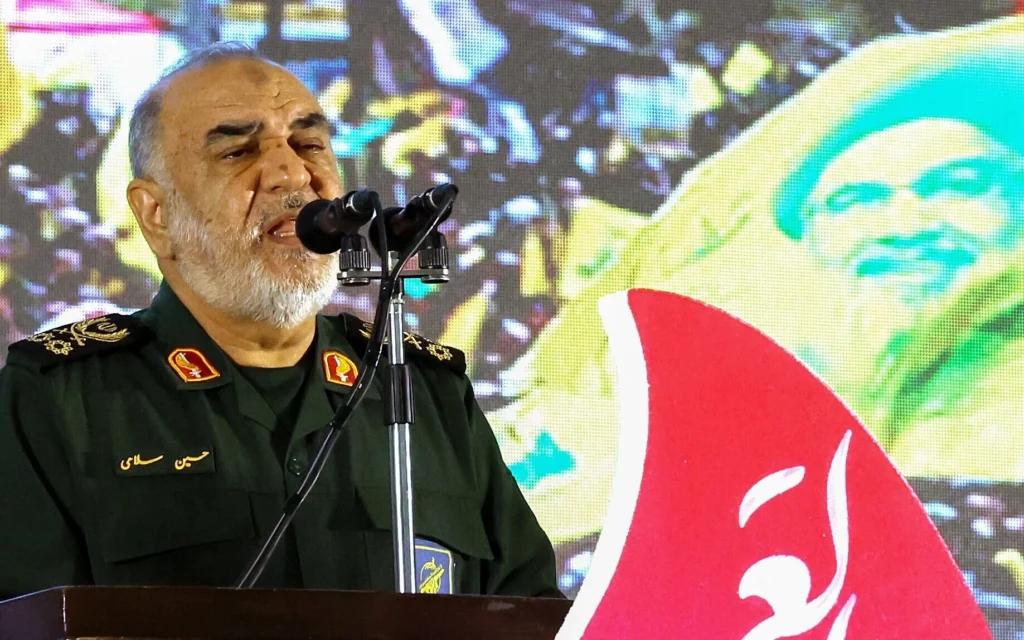
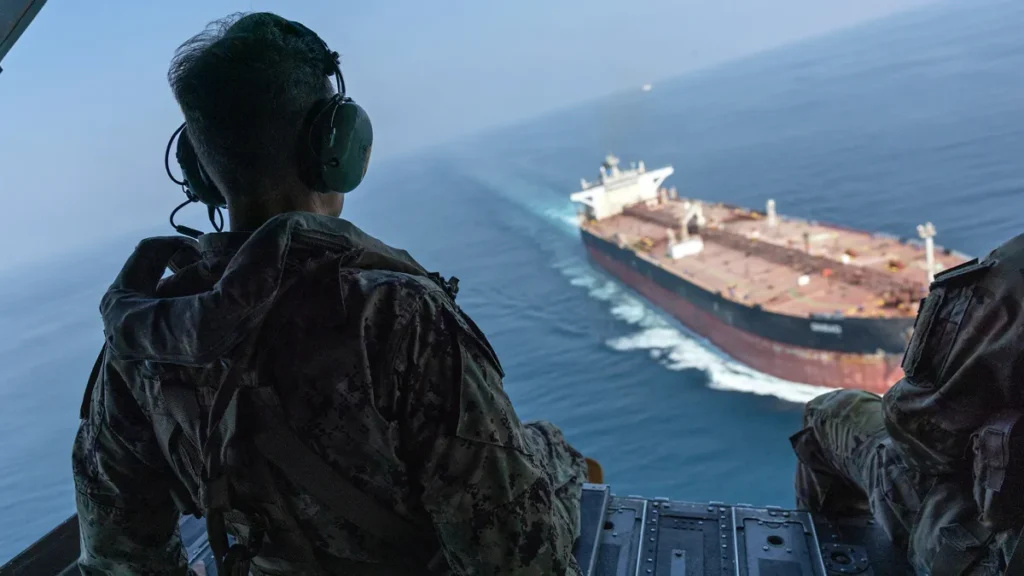
Iran has shifted its tactics in Hormuz tanker attacks, with reports indicating that IRGC speedboats are approaching tankers, attaching limpet mines directly to ship hulls, and withdrawing before the mines detonate — a significant tactical evolution from earlier sea mine deployments. Limpet mines are magnetically attached explosive devices that are placed directly on a vessel hull by divers or small boat crews. The shift from floating or bottom-laid sea mines to hull-attached limpet mines represents a change in the operational signature of the attacks — limpet mines can be placed selectively on specific targeted vessels, require no persistent minefield, and leave less forensic evidence of the attack vector. This connects directly to the October 29 Section A coverage of tankers reported on fire near Hormuz.
BREAKING INTERNATIONAL / CRISIS · IRAN · HORMUZ · LIMPET MINES · SPEEDBOATS · TANKERS · IRGC · TACTIC SHIFT · ARC
STRAIT OF HORMUZ — Iran has shifted its tactics in Hormuz tanker attacks, with IRGC speedboats reportedly approaching tankers, attaching limpet mines to vessel hulls, and withdrawing before detonation, according to Reuters via Iran Observer on X. The specific tankers targeted by the limpet mine tactic, the number of successful limpet mine placements, whether any mines were detected and removed before detonation, the US Navy response to the tactic shift, and whether the limpet mine approach has been confirmed by US military or intelligence sources were not detailed in initial reporting.
Limpet mines have been used in the Gulf before. In June 2019, two tankers — the MT Front Altair and the MV Kokuka Courageous — were attacked in the Gulf of Oman in what the US, UK, Saudi Arabia, and Japan attributed to Iran. The US Navy released footage purportedly showing an IRGC patrol boat removing an unexploded limpet mine from the Kokuka Courageous hull. Iran denied responsibility. Limpet mines were also used in the Tanker War of the 1980s, during the Iran-Iraq War, when both sides attacked vessels carrying the other party’s trade. The current IRGC tactic of speedboat crews attaching limpet mines and withdrawing is consistent with the 2019 Gulf of Oman attacks. The shift from sea mines to limpet mines may reflect US and partner Navy countermeasures that have improved detection of floating or bottom-anchored mines.
Arc Context — ONYX Hormuz Coverage
This story is a direct tactical update to the ONYX Hormuz arc. October 29 Section A a05 reported three tankers on fire near Hormuz from what was then described as sea mines. The limpet mine tactic reported today clarifies the operational method. The broader arc: October 28 Section A a06 — US final warning to Iran. October 28 Section A a07 — US preparing military partners. October 28 Section B b18 — Qatar new draft to Iran. October 29 Section A a05 — tankers on fire at Hormuz. October 29 Section B b14 — Israel requests US green light for Iranian energy strikes. October 30 Section A a06 — Dnipro drone strike (separate arc). October 30 Section B b16 — Iran limpet mine tactic shift. October 30 Section B b18 — CENTCOM briefs Trump on Iran war options. The limpet mine tactic report and the CENTCOM briefing today represent simultaneous tactical and strategic escalation of the Hormuz crisis.
“These are not accidental collisions. These are deliberate acts of maritime terrorism. The limpet mine evidence leaves no ambiguity about Iranian culpability.” — US Navy Fifth Fleet statement, via Reuters / Iran Observer
WHAT HAPPENS NEXT
► US Navy response — Fifth Fleet countermeasure deployment against IRGC speedboats.
► Tactic confirmation — whether US, UK, or allied intelligence formally attributes limpet mines to Iran.
► Insurance market — Lloyd of London war risk premium adjustment for Hormuz traffic.
► Shipping diversion — whether more tankers reroute around the Cape of Good Hope.
► Oil price impact — Brent crude response to confirmed limpet mine tactic in Hormuz.
► Arc connection — CENTCOM Iran briefing (b18) response to the limpet mine tactical shift.
| CONFIDENCE: MODERATE | Iran shift to limpet mine tactic via speedboats in Hormuz confirmed by Reuters via Iran Observer on X. Reuters is a tier-one wire; Iran Observer is an X relay account — relay chain disclosed. US military confirmation, specific vessels targeted, and mine removal incidents NOT confirmed — flagged. 2019 Gulf of Oman limpet mine attacks and IRGC speedboat doctrine from established documented record. |
| Bias Check | ||
| Left-Lean | Center | Right-Lean |
| Frames limpet mine shift as proof Iran is escalating toward direct war requiring de-escalation diplomacy. | Reports Reuters account of Iran IRGC speedboats attaching limpet mines to Hormuz tanker hulls as tactical shift; relayed via Iran Observer on X disclosed. | Frames limpet mine shift as proof Iran is conducting maritime terrorism requiring military response. |
| Assessment | ONYX presents confirmed Reuters report with relay chain disclosed and MODERATE confidence noted. 2019 Gulf of Oman precedent and IRGC speedboat doctrine from established documented record. Arc context documented across five days of ONYX coverage. | |
SOURCES
► Reuters via Iran Observer on X — Iran shifts tactics on Hormuz tanker attacks; speedboats attaching limpet mines to hulls before withdrawing. NOTE: Reuters is the primary wire source; relay through Iran Observer on X disclosed.