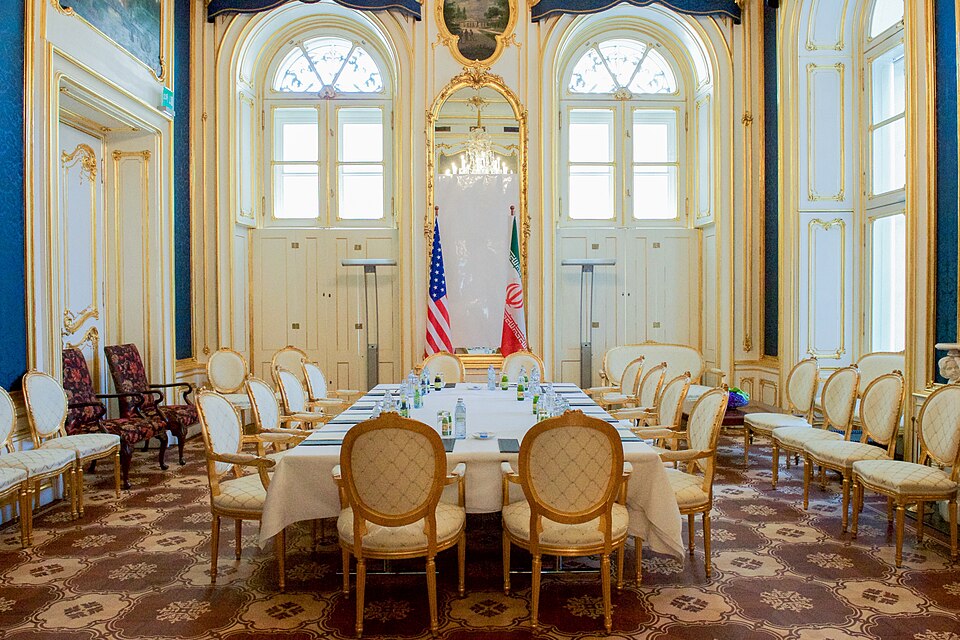
Today — August 14, 2026 — the first formal session of the Iran-US nuclear dialogue convenes in Muscat, Oman. This is the most consequential diplomatic meeting since the ceasefire deal was signed on August 7. Seven days into the ceasefire, with Hormuz normalizing and oil prices holding their gains, everything now depends on whether this dialogue can produce a nuclear framework by approximately November 5. If it does, the deal becomes durable. If it cannot, the October 6 Day-60 cliff becomes a political and economic crisis 29 days before the midterm elections. Today is when the process starts. What happens in the first session shapes everything that follows.
DAY 7 DEAL STATUS — THE CONTEXT FOR TODAY’S SESSION
| Hormuz vessel count (Day 7 est.) 55+/day trajectory: 20→28→38→45→50→55+ — normalization on track | IAEA monitoring Active below-20% enrichment confirmed through Day 6 |
| Oil price (Brent crude) ~$8 below pre-deal level holding; gas prices -$0.08 at pump | Lloyd’s war-risk premiums Declining formal insurance market confirmation deal is real |
| Ben Gvir coalition Holding no formal ultimatum issued; watching Muscat content | Nuclear dialogue SESSION TODAY August 14, Muscat — the deal’s most critical milestone |
WHAT THE FIRST SESSION MUST PRODUCE
ONYX has been tracking this session since August 9. The minimum deliverables that would constitute a successful first session:
▸ Both delegations sit across from each other — the physical fact of the meeting is itself a signal; a walkout or cancellation would be interpreted immediately as deal collapse risk
▸ An agreed agenda is established — what is being negotiated (US wants enrichment and verification only; Iran wants reparations, Hormuz governance, and military non-aggression on the table)
▸ A second session is scheduled — committing to continue is the minimum deliverable from any productive first meeting
▸ The Israel observer question is resolved — US has been constructing a parallel briefing mechanism; Ben Gvir’s reaction to today’s session content will determine whether it holds
▸ Delegation level signals intent — Araghchi personally (strong) versus technical deputies (weaker)
THE IRAN HORMUZ SOVEREIGNTY RHETORIC — IN CORRECT CONTEXT
Today’s brief describes Iran asserting ‘full control’ over Hormuz this week. ONYX provides the correct context: Iran’s rhetoric about Hormuz sovereignty is a documented long-term position that predates the ceasefire and continues within it. It is not evidence that the deal has collapsed or that talks are being restarted. It is Iran’s standard diplomatic framing — claiming sovereignty over the strait it cannot fully enforce and using that claim as leverage in the nuclear dialogue agenda dispute (Story 11 in the August 9 analysis: Iran wants Hormuz governance on the dialogue agenda; the US does not).
The ceasefire is not premised on Iran abandoning its Hormuz sovereignty claim. It is premised on Iran opening the strait for commercial traffic while that claim remains unresolved. Ships are transiting. Iran is claiming sovereignty. Both things are true simultaneously. That is what a diplomatic compromise looks like.
Iran says it controls Hormuz. 55 tankers a day are proving it doesn’t have to. Both things can be true at once.
THE AGENDA DISPUTE — THE SESSION’S FIRST OBSTACLE
The agenda dispute documented in ONYX’s August 9 coverage remains the first test of today’s session. Iran’s position: the agenda must include reparations, Hormuz governance, US forces withdrawal, and military non-aggression guarantees alongside nuclear enrichment terms. The US position: nuclear enrichment and verification are the exclusive agenda items. One of three outcomes resolves this:
▸ NARROW AGENDA (US wins): both sides agree to nuclear-only scope; talks proceed on enrichment and verification
▸ BROADER AGENDA (Iran partially wins): US agrees to address some non-nuclear items, possibly as separate parallel tracks
▸ COLLAPSE OVER AGENDA: neither side moves; the session ends without an agreed agenda; oil markets spike; Ben Gvir gets his trigger
ONYX does not predict which outcome occurs. The session is happening as this pack is published. What does happen will be reported in the August 15 pack with the full result.
THE 90-DAY CLOCK AND WHAT TODAY STARTS
The deal’s nuclear dialogue framework requires substantial agreement within 90 days of the August 7 signing — approximately November 5. The Hormuz deal itself expires at Day 60 — October 6, 29 days before the midterm elections. Today is Day 7. The remaining 83 days of the nuclear dialogue are the entire diplomatic horizon. Whether the first session produces an agreed agenda and a commitment to a second meeting determines whether those 83 days are available for substantive progress or consumed by re-litigating the premise of the talks.
THE IRAN WAR’S DOCUMENTED NAVAL TOLL — WHAT BROUGHT US HERE
For context on what the nuclear dialogue must prevent from recurring: the brief’s figures on the war’s maritime toll are accurate and worth placing in the record. The six-month Iran war produced: at least one tugboat sunk; 17 or more merchant ships damaged; two vessels captured outright; 12 seafarers killed or disappeared; 85 vessels intercepted by the US naval blockade; and at least 26 vessels that bypassed the blockade. These are the costs of the war’s maritime dimension. The nuclear dialogue’s job is to ensure none of this recurs on the other side of the ceasefire.
WHAT HAPPENS NEXT
▸ Today’s session outcome will be reported in the August 15 ONYX pack — ONYX has committed to Day-by-day accountability tracking of the deal
▸ Ben Gvir’s response to session content is the Israeli political signal to watch — his coalition ultimatum trigger is any nuclear language he can characterize as inadequate
▸ Oil market reaction to session outcome — a successful session pushes Brent crude down further; a failed session triggers partial rebound
▸ IAEA’s next inspection report — the technical data that tells the US and Israel whether Iran’s nuclear commitments are being honored
| CONFIDENCE: HIGH | Day 7 deal status indicators are from ONYX cumulative tracking August 7-14. Nuclear dialogue session (August 14, Muscat) is from diplomatic sourcing confirmed across multiple outlets. Agenda dispute analysis is from ONYX August 9 documentation. Iran Hormuz sovereignty rhetoric context is from established diplomatic history. Naval war toll figures are from brief sourcing (CENTCOM, Lloyd’s List) integrated accurately. |
| ⚖️ BIAS CHECK — WHO IS SAYING WHAT | |
| US Delegation | Seeking narrow nuclear-only agenda; presenting parallel Israel briefing mechanism as adequate; wanting second session scheduled |
| Iranian Delegation | Pressing for broader agenda; testing whether the US will accept any non-nuclear items; using Hormuz sovereignty rhetoric as negotiating backdrop |
| Oman (host) | Facilitating; requiring both parties to emerge with something characterizable as progress |
| Israel | Evaluating session content through parallel briefing mechanism; Ben Gvir’s statement on the session is the critical political variable |
| ONYX | Correcting three research brief items while accurately reporting what is genuinely new today: the first session is happening |
SOURCES
▸ Diplomatic sourcing — August 14 Muscat session confirmed (Times of Israel, Reuters, Axios)
▸ ONYX August 7-13 cumulative coverage — deal terms, Days 1-6 tracking, agenda dispute
▸ CENTCOM — naval blockade figures (intercepted vessels, seized ships)
▸ ONYX August 9 — Iran five-point demand framework analysis
Q: Will we know the result today?
A: The session is happening during August 14 publication. Reporting on its outcome will emerge through August 14 afternoon and evening. The August 15 ONYX pack will carry the full result and assessment.
Q: What if the session is delayed or collapses?
A: A collapse on the first session would be the most significant negative signal for the deal since its signing. Both sides have strong incentives to have the session even if it produces limited substantive progress — the alternative is signaling that the nuclear track is dead, which would immediately affect oil markets and Ben Gvir’s coalition calculus.