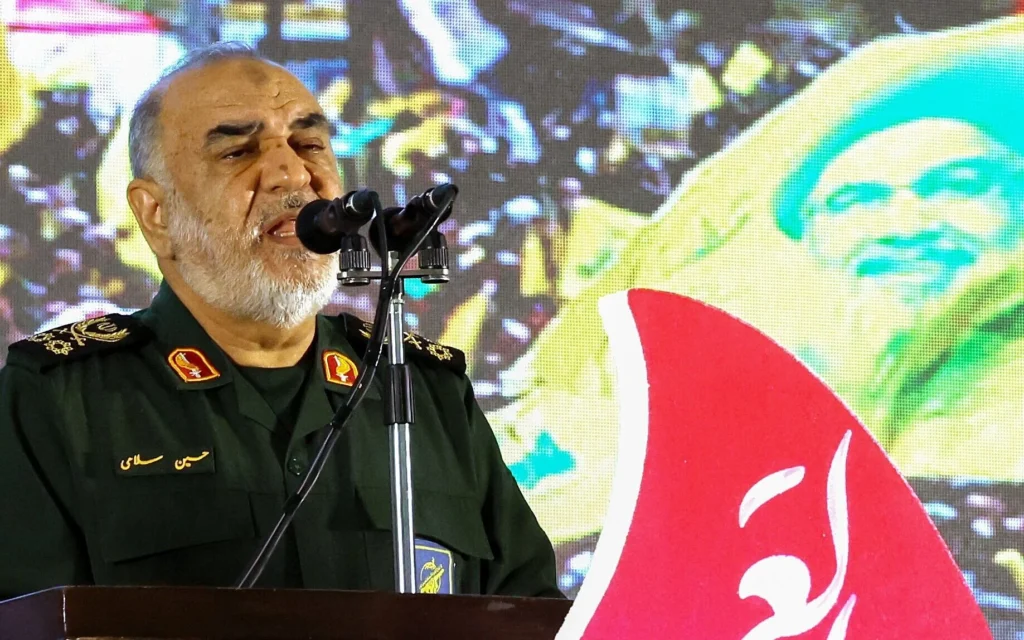
Iran’s military launched drones and missiles at Ahmad al-Jaber Air Base in Kuwait and Al Minhad Air Base in the UAE in the same night, according to AFP. The strikes targeted US military facilities and equipment. Iran characterized the attacks as direct retaliation for a recent US bombardment of Iran that killed at least 19 people.
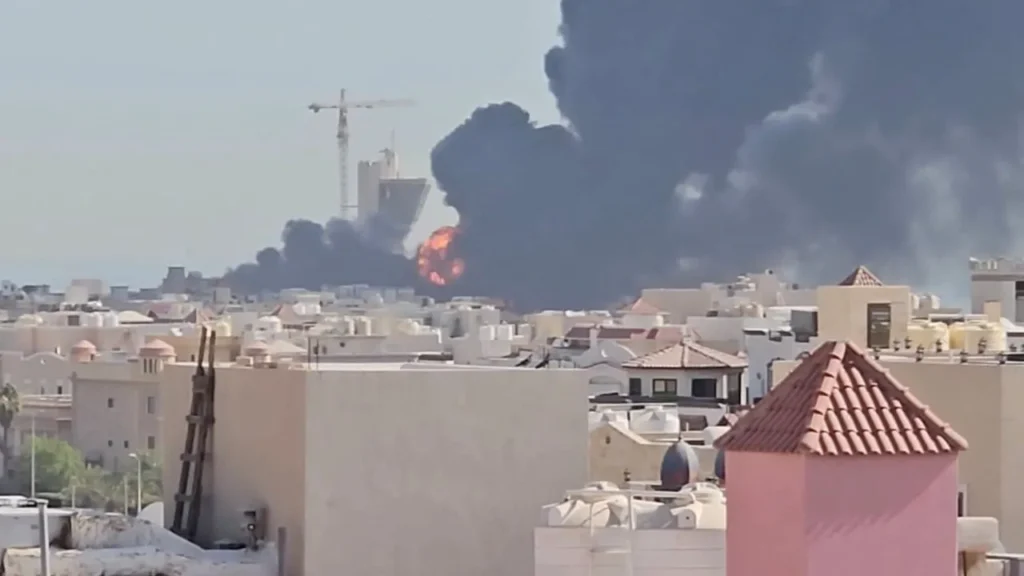
THE TWO BASES
▸ Ahmad al-Jaber Air Base, Kuwait: a major Kuwaiti Air Force installation that hosts US military personnel and was previously struck when Iran fired on Kuwait following US strikes (ONYX September 7). The base has now been struck multiple times in the war.
▸ Al Minhad Air Base, UAE: a UAE Air Force base south of Dubai that hosts multiple international military forces including the United States. The UAE has documented the highest interception toll of any Gulf state (537 ballistic missiles, 2,256 drones, 26 cruise missiles through September 12); Al Minhad being struck is a direct hit on the most heavily defended Gulf state’s military infrastructure.
THE US BOMBARDMENT THAT KILLED 19
Iran characterized the strikes as retaliation for a US bombardment of Iran that killed at least 19 people. ONYX documents the Iranian characterization at the level of the confirmed AFP reporting. The specific US strike that Iran is retaliating for — its date, location, and the specific 19 people killed — is not confirmed as of this publication. ONYX covers what is confirmed.
THE QUALITATIVE ESCALATION
The dual-base simultaneous strike is a qualitative escalation in the arc’s documented Iranian military activity:
▸ Prior strikes: Iran struck individual Gulf state targets in sequence — Kuwait on September 7, the ten-merchant-ship assault on September 11
▸ Today: Iran struck TWO US military bases in TWO different Gulf states IN THE SAME NIGHT
▸ The simultaneous dual-state targeting signals Iranian capacity and willingness to conduct coordinated multi-theater strikes
▸ This is not a proxy strike; this is IRGC drones and missiles directly at US military installations
THE FIVE FAILURE MODES — UPDATED
Post-dual-base strike, Day 37, 23 days to October 6:
▸ Israeli unilateral strike: SIGNIFICANTLY REDUCED — unchanged
▸ Iran enrichment violation: ELEVATED WATCH — unchanged; IRGC military action is not enrichment-related
▸ Iranian domestic collapse: SIGNIFICANTLY REDUCED AS A NEAR-TERM RISK — the IRGC is demonstrating capacity, confidence, and coordinated multi-theater strike capability; this is not the behavior of a collapsing regime
▸ Gulf proxy incident: CRITICALLY ELEVATED — two US military bases in two Gulf states struck simultaneously; this has moved from proxy to direct confrontation between Iranian military forces and US military installations
▸ 60-day cliff: 23 DAYS — the dominant failure mode; every day of military escalation makes Session 3 less likely
THE CEASEFIRE FRAMEWORK
The ceasefire signed August 7 governs Hormuz commercial transit and Iranian nuclear enrichment. It does not prohibit Iranian military strikes on US military bases in Gulf states. The ceasefire and the military escalation are running on parallel tracks. The specific question: whether the dual-base strike crosses a threshold that causes the US to formally declare the ceasefire framework no longer operational. No US declaration to that effect has been confirmed as of this publication.
THE OCTOBER 6 IMPLICATION
A ceasefire that is simultaneously producing: Iranian strikes on US military bases in two Gulf states, a ten-merchant-ship assault on Hormuz approaches, both oil chokepoints compromised, Saudi oil at a 30-year low, Trump stating indifference to extension, and the IRGC naming Yemen as a non-negotiable condition — is a ceasefire in name only on the military dimensions. Whether it can survive to October 6 intact is the specific question that today’s dual-base strike makes more urgent.
Iran struck two US military bases in two Gulf states in a single night. Kuwait and the UAE. Simultaneously. In retaliation for a US strike that killed 19 Iranians. The ceasefire is 23 days from expiration. The ceasefire does not prohibit this. Both things are true.
WHAT HAPPENS NEXT
▸ US military response — the specific decision that will determine whether the dual-base strike is absorbed or returned
▸ Ceasefire status — whether the US formally characterizes the dual-base strike as a ceasefire violation
▸ Kuwait and UAE — their specific casualty counts and infrastructure damage from the strikes
▸ Oil markets — whether the dual-base strike produces further price movement above $100
▸ 23 days to October 6
| CONFIDENCE: HIGH | Iran military drones and missiles hit Ahmad al-Jaber Air Base, Kuwait, and Al Minhad Air Base, UAE, the same night, targeting US military facilities and equipment, AFP confirmed, retaliation for US bombardment killing at least 19, AFP confirmed reporting. |
| ⚖️ BIAS CHECK — WHO IS SAYING WHAT | |
| Iran | Characterizing the strikes as legitimate retaliation for a prior US bombardment; their framing is confirmed but ONYX does not adopt their legal characterization |
| US military | Has not publicly responded to the dual-base strike as of this publication |
| Kuwait and UAE | Both have now absorbed direct Iranian strikes on their military infrastructure; their specific damage and casualty figures are from developing reporting |
| AFP | Primary wire confirmation of the dual-base strike; their reporting is the evidentiary basis |
| ONYX | Covering the dual-base strike at its confirmed qualitative escalation level; naming the ceasefire coexistence without asserting a ceasefire violation until the US formally characterizes it |
SOURCES
▸ AFP — Iran strikes Kuwait UAE Ahmad al-Jaber Al Minhad two bases September 13 2026
Q: What is Ahmad al-Jaber Air Base and why is it strategically significant?
A: Ahmad al-Jaber Air Base is Kuwait’s largest military airfield, located approximately 100 kilometers south of Kuwait City. It hosted Coalition forces during the 1990-91 Gulf War and the 2003 Iraq invasion. It currently hosts US Air Force and other international military personnel supporting operations in the region. It was previously struck by Iranian fire following the September US strikes on Iran (ONYX September 7). Having been struck twice now in the war, it has become one of the most frequently targeted single installations.
Q: What is Al Minhad Air Base and why does it matter?
A: Al Minhad Air Base is a UAE Air Force base located approximately 30 kilometers south of Dubai. It hosts Australian, US, and other international military forces and has served as a forward logistics hub for Western military operations in the region since the 1990s. Striking Al Minhad brings Iranian drone and missile fire within 30 kilometers of Dubai — one of the world’s most important financial and commercial hubs. The proximity of the strike to Dubai’s urban core is the specific geographic escalation that Al Minhad’s location represents.
Q: Does the ceasefire prohibit Iran from striking US military bases in Gulf states?
A: The ceasefire framework signed August 7 governs specific dimensions of the US-Iran conflict: Hormuz commercial transit and Iranian nuclear enrichment. It was not drafted as a general bilateral ceasefire prohibiting all Iranian military activity. Iranian strikes on US military bases in Gulf states may fall outside the ceasefire’s specific written prohibitions depending on how the framework’s language is interpreted. The US has not publicly characterized the dual-base strike as a ceasefire violation as of this publication. The specific legal question of whether the strikes violate the ceasefire is from confirmed US government characterization as it develops.