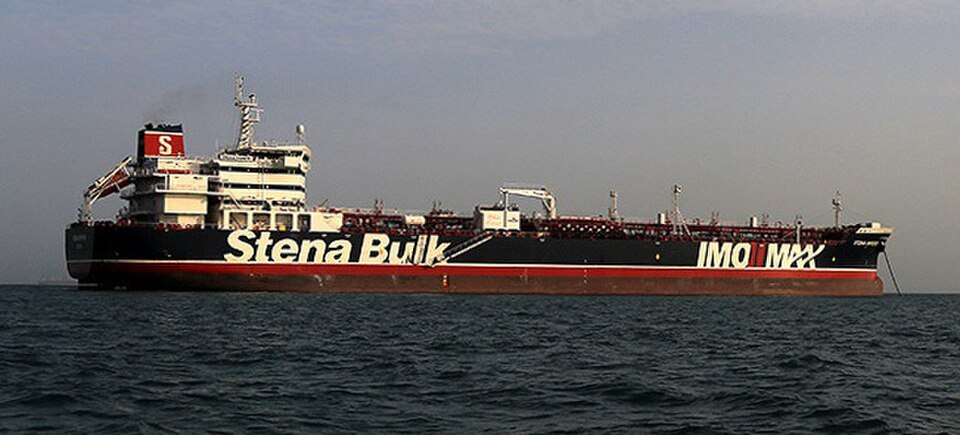
An Iranian tanker is not simply a ship. It is:
▸ A capital asset: a Very Large Crude Carrier (VLCC) or Suezmax tanker costs $80-120 million new; older Iranian tankers are worth less but still represent significant capital
▸ A revenue mechanism: Iranian tankers carry Iranian oil, primarily to Chinese refiners, at discounted prices; each tanker destroyed removes a future revenue stream from Iranian oil exports
▸ A sanctions-circumvention tool: Iranian tankers are the specific mechanism through which Iran moves oil despite Western secondary sanctions; their destruction degrades the infrastructure Iran uses to monetize its oil production
▸ An IRGC asset: many Iranian tankers under current sanctions are operated by or connected to IRGC-controlled entities; their destruction is IRGC force degradation in the economic domain
THE IRANIAN ECONOMIC DIMENSION
Iran’s oil revenues fund approximately 40% of its government budget. The specific effect of losing eight tankers in four days on Iranian oil revenues:
▸ Reduced export capacity: tankers destroyed cannot carry oil; Iranian oil that cannot be moved cannot be sold
▸ Insurance risk premium: surviving tanker operators face higher insurance costs or cannot obtain insurance; this further reduces Iran’s export capacity even for tankers not yet destroyed
▸ Chinese buyer risk: Chinese refiners who purchase Iranian oil via tanker are assessing whether the transit risk makes continued purchases viable
▸ Operation Economic Outcast amplification: the tanker destruction amplifies the secondary sanctions pressure from Operation Economic Outcast by degrading the specific infrastructure Iran uses to circumvent those sanctions
THE GLOBAL OIL MARKET DIMENSION
Eight tankers destroyed in four days affects global oil markets in three simultaneous directions:
▸ Supply signal: the market prices the possibility that Iranian oil becomes increasingly unavailable; less supply means higher prices
▸ Tanker market: the global oil tanker fleet loses eight vessels; tighter tanker supply raises freight rates, which adds to the cost of all oil transport globally
▸ Risk premium: operating any tanker in or near the Persian Gulf carries higher assessed risk; war risk insurance premiums raise the cost of all Gulf oil transit
THE OCTOBER 6 DIMENSION
The tanker doctrine and the October 6 ceasefire clock are running simultaneously. The specific intersection:
▸ The tanker destruction is degrading Iran’s oil export capacity — which is also the specific economic pressure designed to make Iran more willing to extend the ceasefire
▸ But the tanker destruction is also raising oil prices globally — which is the opposite of the ceasefire’s intended oil price benefit for American consumers
▸ And the tanker doctrine is occurring while Iran has signaled readiness to return to the Islamabad Memorandum if the US does the same
▸ Whether the tanker doctrine is a pressure tool designed to accelerate a Session 3, or a military escalation that makes Session 3 impossible, is the specific question 27 days will answer
The US is destroying Iranian tankers to stop Iran from attacking ships. Iran is responding by declaring a restricted zone and firing missiles. Oil is at $100. The ceasefire is 27 days from expiration. The tanker doctrine is the specific military-economic instrument the US is using in the space between ‘the deal is running’ and ‘October 6 is coming.’
WHAT HAPPENS NEXT
▸ Iranian tanker capacity — how many tankers remain in the Iranian fleet after eight losses
▸ Chinese refiner decisions — whether China reduces Iranian oil purchases due to tanker risk
▸ Oil price tracking — whether Brent sustains $100 or rises further
▸ Session 3 — whether the tanker pressure produces diplomatic movement or eliminates it
▸ 27 days to October 6
| CONFIDENCE: HIGH | Eight Iranian tankers destroyed in four days, Rubio tanker-for-attack doctrine from Section A Story 3 confirmed reporting. Iranian tanker economic and market analysis is ONYX editorial. |
SOURCES
▸ ONYX September 9 Section A Story 3 — Rubio tanker doctrine confirmed reporting