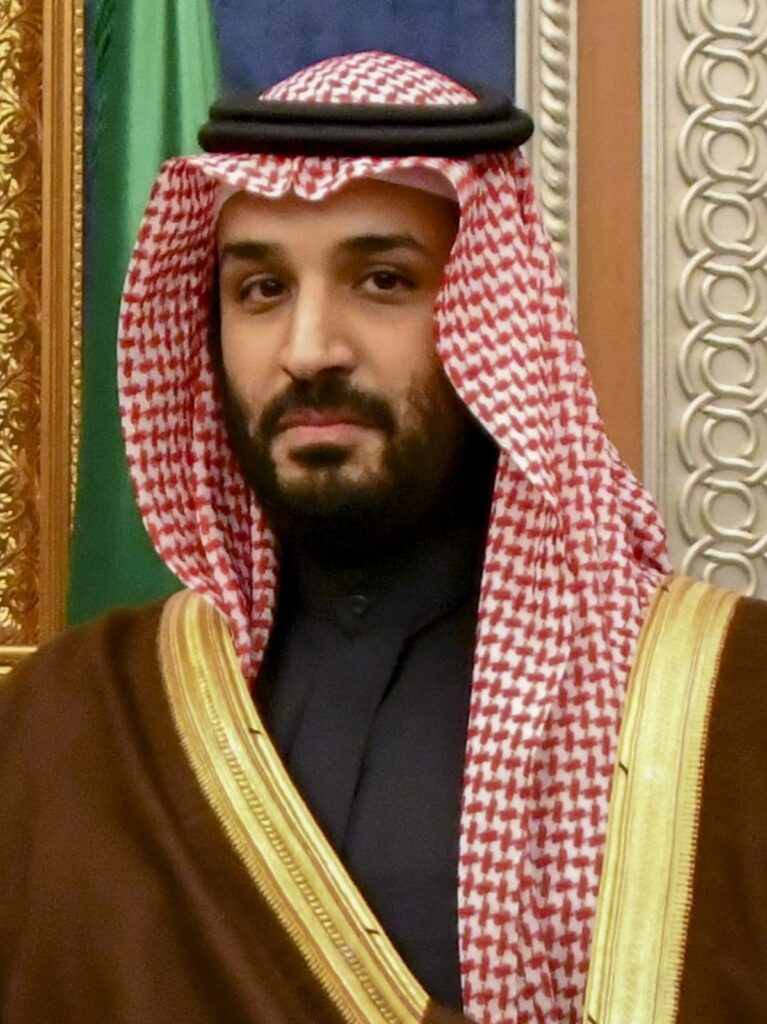
Axios confirmed that Saudi Crown Prince Mohammed bin Salman placed a direct personal call to President Trump expressing serious concern about a planned joint US-Israeli bombing campaign against Iranian energy infrastructure — and that this call took place hours before Trump’s public announcement canceling the operation. The call is one of the most consequential private diplomatic interventions of the entire five-month war, placing MBS at the direct center of a decision that stopped what CBS News described as potentially one of the harshest US military operations of the conflict.
2-MINUTE CONTEXT — WHY MBS WOULD CALL
Saudi Arabia’s exposure to an expanded US-Iran war is direct and immediate. The Kingdom’s oil infrastructure — including Abqaiq, the world’s largest oil processing facility, and the Ras Tanura export terminal — is within range of Iranian ballistic missiles and drones. The 2019 Abqaiq-Khurais attack, which temporarily cut Saudi oil output by 5%, demonstrated this vulnerability concretely.
A US strike on Iranian power plants and oil refineries would have prompted Iranian retaliation. That retaliation would almost certainly include strikes on Saudi energy infrastructure. MBS’s concern was not theoretical or diplomatic — it was about the physical security of the facilities that generate Saudi Arabia’s revenue and fund his entire Vision 2030 reform program.
MBS also holds a specific kind of leverage with Trump that other Gulf leaders do not. The two have a documented personal relationship from Trump’s first term, cemented by major arms deals, the Jared Kushner connection, and Trump’s consistent defense of MBS after the Khashoggi murder. MBS is not just another Gulf monarch calling the White House. He is the person Trump has publicly valued the most in that region.
WHAT THE CALL DEMONSTRATES ABOUT US DECISION-MAKING
The confirmation that a call from MBS — not a formal diplomatic process, not a State Department back-channel, not congressional leadership — was a proximate cause of stopping a major military operation reveals something significant about how US military decisions are actually made at this specific political moment.
The formal process for military decisions involves the National Security Council, the Joint Chiefs, relevant congressional leadership, and established legal review of authorities. The informal process, in this case, appears to have included MBS making a personal call to a president known to respond to personal relationships, hours before a strike was set to launch.
This is not necessarily improper — presidents consult allies, and allied input is a legitimate factor in military decisions. But the specific framing — that MBS’s call hours before launch contributed to the cancellation — suggests that personal diplomacy, rather than institutional process, was the decisive variable.
One phone call. Hours before launch. From a man with whom the president has a personal relationship. The operation did not happen.
WHY THIS MATTERS GEOPOLITICALLY
MBS now knows that a personal phone call to Trump, made at the right moment, can stop a US military operation. That is a demonstration of leverage that will not be forgotten — by MBS, by other Gulf leaders watching, by Iran, and by US adversaries and allies globally who are studying this conflict for lessons about American decision-making.
For Iran: the knowledge that Saudi Arabia has this leverage is significant. If Iran wants to manage US military pressure, cultivating channels through Gulf states — which have their own reasons to de-escalate — is now demonstrated to be more effective than Iranian deterrence messaging alone.
For Israel: if Israel was expecting this to be a joint operation and the US stood it down based on MBS’s intervention, Israel must now recalibrate its understanding of how much independent discretion the US has over joint military decisions. The answer appears to be: more than Israel may have expected.
POLITICAL IMPACT
| WHO GAINS | WHO FACES NEW QUESTIONS |
| MBS — demonstrated extraordinary direct leverage over US military decisions | Trump — relying on personal relationships rather than institutional process for military decisions |
| Saudi Arabia — positioned as essential de-escalation broker in US-Iran conflict | Israel — may not have had equal voice in the US cancellation decision |
| Gulf states collectively — MBS’s intervention validated; their collective concern carries real weight | JCOS / NSC — their role in this decision relative to MBS’s call is unclear |
| Diplomacy advocates — personal diplomacy worked in this case | Iran hawks — a major strike was stopped by a phone call from an oil-dependent Gulf monarchy |
WHAT HAPPENS NEXT
▸ Watch for any public Saudi reaction to Trump’s Truth Social post — MBS was not mentioned by name in the post, which maintains deniability but is noted by everyone watching
▸ Iran’s response to the Saudi role will be significant — does Iran see Saudi Arabia as having helped it, or as having enabled US pressure?
▸ The next time the US prepares a strike, Gulf states will use this precedent — MBS’s call worked once and will be attempted again
▸ Congressional war powers debate will now include questions about who is actually influencing US military decisions
| CONFIDENCE: HIGH | Axios confirmation of MBS call is from sourced reporting. The timing — hours before announcement — is from Axios’s own reporting. Analysis of what the call demonstrates is editorial, clearly labeled. |
| ⚖️ BIAS CHECK — WHO IS SAYING WHAT | |
| Axios | Factual, sourced reporting on the call — treated as significant diplomatic news without political framing |
| Saudi Arabia | Not publicly commenting; MBS’s intervention was private; Saudi officials not confirming or denying |
| Trump / White House | Truth Social post mentions Iran and other “Middle Eastern countries” asking him to hold off; doesn’t specifically name MBS |
| Democrats | Will use this to raise questions about whether personal relationships are substituting for institutional decision-making |
| Republicans | Will frame this as Trump’s allied relationships producing diplomatic results |
| Iran | Watching the Saudi role carefully — does not publicly comment on the call but is aware of the dynamic |
| International Observers | Noting the extraordinary display of personal diplomacy at the highest level, with real military consequence |
SOURCES
▸ Axios — MBS direct call to Trump confirmation, August 2026
▸ Axios — Qatar, UAE, Turkey, Pakistan also pressed both sides
▸ CBS News — strike package description: power plants, oil refineries, Tehran electricity
▸ 2019 Abqaiq-Khurais attack — historical context for Saudi infrastructure vulnerability
QUESTIONS YOU MAY STILL HAVE
Q: Did MBS speak to Iran directly as well?
A: Not reported. The reported intervention was directed at Trump, not at Iran. Qatar and Turkey, which also lobbied for de-escalation, have historically had more direct Iran communication channels.
Q: Is this kind of personal intervention normal?
A: Allied leaders calling US presidents to express concern about military operations is not unusual. What makes this notable is: the specificity of the timing (hours before launch), the confirmation by a major news outlet, and the apparent direct connection between the call and the cancellation.
Q: What did MBS actually say in the call?
A: Not reported. The content of the call has not been disclosed. What is confirmed is that MBS expressed serious concern about the planned strikes.