Israeli Prime Minister Netanyahu has rejected the US-backed 15-point Gaza peace framework, with the IDF stating it will not withdraw from Gaza until Hamas is completely disarmed. Separately, a Gaza militia leader confirmed Hamas will not surrender its weapons. This double rejection leaves the US-brokered Gaza framework in the same position the US-Iran war was in before the Oman mediation: both parties publicly refusing the terms the US is offering, with no functional mediator in position to bridge the gap.
2-MINUTE CONTEXT — WHAT IS THE 15-POINT FRAMEWORK?
The Trump administration’s 15-point Gaza framework has been described in reporting from Haaretz and Times of Israel as a comprehensive proposal addressing: phased IDF withdrawal from Gaza; Hamas governance transition; weapons disarmament timeline; prisoner exchange structure; reconstruction financing; and a political process for Palestinian governance post-conflict. It is the most comprehensive US diplomatic proposal for Gaza since the war began in October 2023.
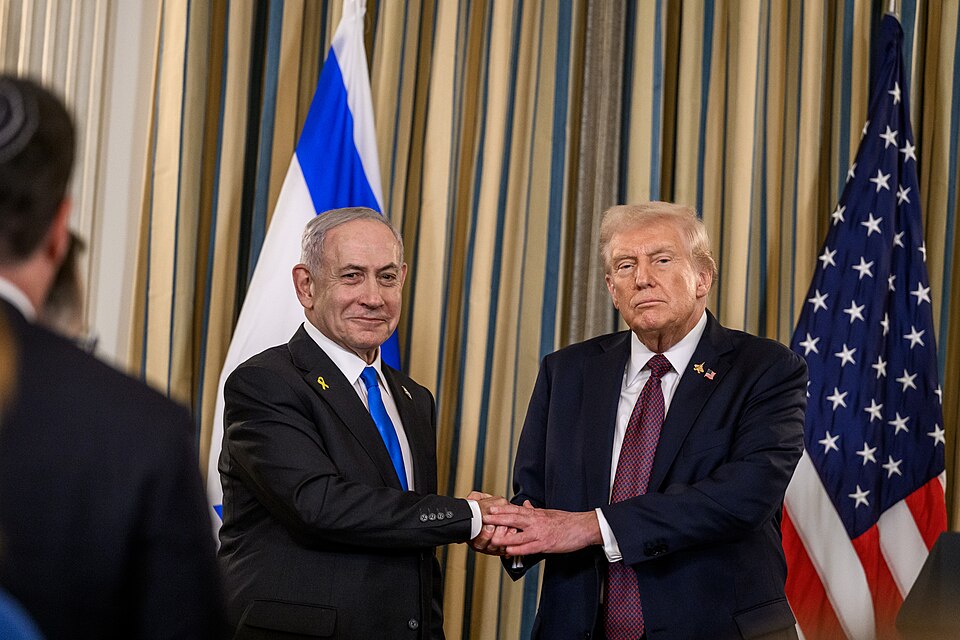
Netanyahu’s rejection rests on two specific objections. First: he will not accept any withdrawal while Hamas retains weapons capability — “we don’t leave until Hamas is disarmed” is the stated IDF condition, and it is non-negotiable in the current Israeli government. Second: his coalition partners (Ben Gvir and Smotrich) have explicitly stated they will bring down the government if Netanyahu agrees to any framework that does not include permanent Israeli military presence in Gaza.
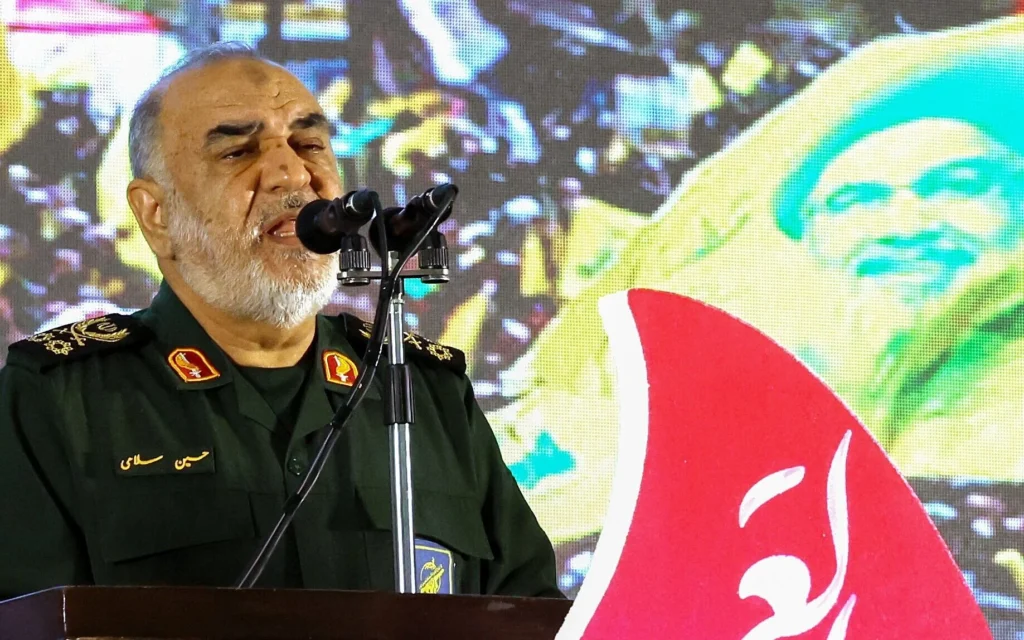
Hamas’s rejection is procedurally simpler: a militia does not disarm as a precondition for negotiations about a framework that would eliminate it as a political and military entity. Hamas is being asked to agree to terms that eliminate Hamas. It has predictably refused.
THE DOUBLE REJECTION AND ITS SIGNIFICANCE
| NETANYAHU’S POSITION | HAMAS’S POSITION |
| Will not withdraw until Hamas is fully disarmed | Will not disarm as a precondition for any negotiation |
| IDF must maintain security presence in Gaza indefinitely | Any Israeli military presence is occupation that Hamas was created to resist |
| Coalition survival requires no Gaza political settlement that legitimizes Hamas | Legitimization is precisely what Hamas requires as the price of any agreement |
| Trump framework accepted in principle but not in its current terms | Trump framework does not guarantee Hamas political survival; not acceptable |
This is not a negotiating gap that creative diplomacy can bridge. It is a structural incompatibility: Netanyahu cannot politically survive accepting Hamas’s survival; Hamas cannot politically survive accepting its elimination. The US framework attempts to find a middle path that neither party’s domestic politics permits.
WHY GAZA IS THE STORY THE IRAN DEAL COVERAGE IS CROWDING OUT
The Iran deal has dominated ONYX coverage and global news coverage for the past three days. It is a genuine, significant diplomatic event. Gaza is also a genuine, significant humanitarian crisis — one that has produced more civilian deaths, more displacement, and more immediate humanitarian suffering than the Iran war. The 270+ journalist deaths documented by the Palestinian Journalists Syndicate since October 2023 are a separate accountability story within the larger crisis.
ONYX’s editorial commitment: we cover what the numbers say matters, not what the political salience of the moment dictates. Gaza has not paused while Iran negotiations proceeded. Netanyahu’s framework rejection is a significant diplomatic event that arrived on the same day as the Iran deal’s Day-3 monitoring. Both deserve coverage.
POLITICAL IMPACT
▸ Trump — having secured the Iran ceasefire, faces the test of whether his Gaza framework has any path forward; Netanyahu’s rejection is an intra-alliance challenge
▸ Netanyahu — preserved his coalition by rejecting the framework; maintained Israeli public support for continued military operations; confirmed the Gaza conflict continues
▸ Hamas — rejects disarmament; its political survival is the central obstacle to any framework the US and Israel could both accept
▸ Palestinian civilians — the framework rejection means the war continues; the IDF maintains its Gaza presence; reconstruction does not begin
▸ Arab states — Saudi Arabia, UAE, Qatar, Jordan, all of whom have expressed support for a two-state framework, face the reality that the US cannot deliver Israeli compliance
WHAT HAPPENS NEXT
▸ US will likely propose a modified framework that addresses Netanyahu’s IDF presence objection while preserving some path to Hamas disarmament
▸ Qatar — which hosts Hamas’s political bureau — is the primary remaining mediator channel; watch for Doha-based negotiations
▸ Palestinian Authority (West Bank) response to the framework rejection will be significant — they are the intended governance successor in any post-Hamas framework
▸ The West Bank settler violence (separate story below) will escalate pressure on any governance framework
| CONFIDENCE: HIGH | Netanyahu’s rejection of the 15-point framework is documented from Haaretz and Times of Israel. IDF’s “won’t withdraw until Hamas is disarmed” position is documented. Hamas militia leader’s weapons non-surrender statement is from confirmed reporting. |
| ⚖️ BIAS CHECK — WHO IS SAYING WHAT | |
| Netanyahu / Israeli Government | Domestic coalition survival requires rejecting frameworks that enable Hamas political survival; the rejection is politically required regardless of US pressure |
| Hamas | Will frame the rejection as Israeli intransigence preventing a ceasefire; will not acknowledge their own disarmament refusal as the symmetric obstacle |
| Trump Administration | Disappointed but not surprised; will attempt to modify the framework; has limited leverage over Netanyahu post-Iran deal (Netanyahu got no quid pro quo for the Iran deal) |
| Arab States | Frustrated; Saudi normalization process with Israel depends on a Gaza framework that Netanyahu has now rejected |
| International Community | Growing impatience; 270+ journalist deaths, hundreds of thousands of civilian casualties, and still no framework |
SOURCES
▸ Haaretz — Netanyahu rejection of 15-point Gaza framework
▸ Times of Israel — IDF withdrawal conditions, Hamas weapons refusal
▸ Palestinian Journalists Syndicate — 270+ journalist deaths since October 2023 (August 2026 update)
QUESTIONS YOU MAY STILL HAVE
Q: What is the 15-point framework specifically?
A: The full text has not been publicly released. Reporting from Haaretz and Times of Israel describes its elements as: phased IDF withdrawal; Hamas governance transition; disarmament timeline; prisoner exchange; reconstruction financing; and political process for Palestinian governance. It is a comprehensive framework, which is also why both parties can find specific elements to reject.
Q: Is there any path to a Gaza ceasefire?
A: The structural incompatibility described above is real. Paths that have been discussed: a “pause” that is not a formal ceasefire (allows humanitarian access without requiring political commitments); a humanitarian corridor agreement separate from political framework; and a phased process in which IDF pulls back to specific areas without full withdrawal. None of these have been accepted by both parties.