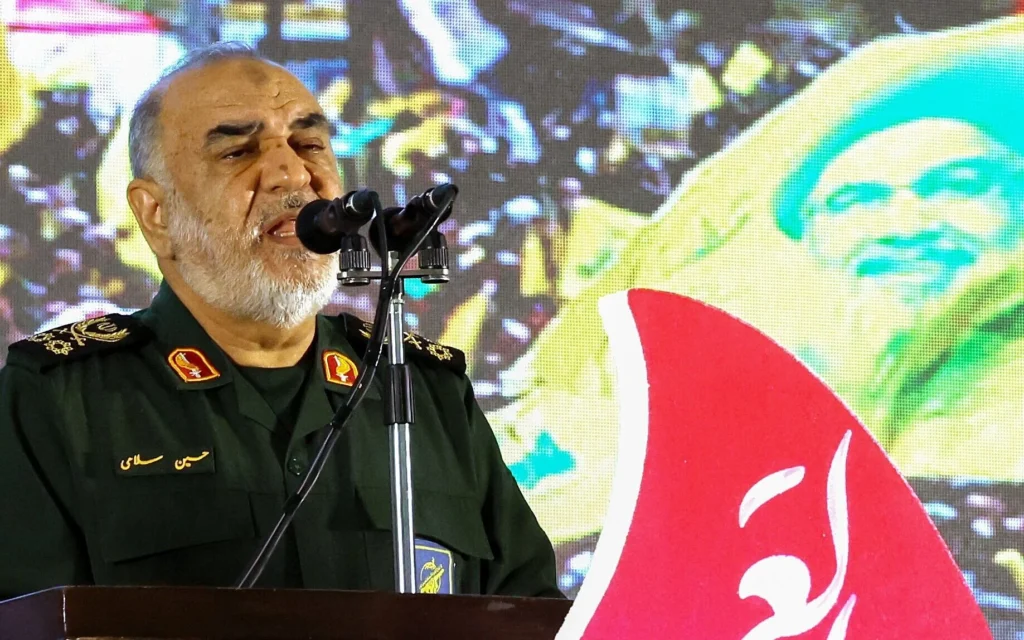
Netanyahu publicly rejected the Trump administration’s 15-point, US-backed Gaza peace roadmap — the first direct, public defiance of Trump’s own administration by Israel’s prime minister since Trump’s return to office. Jared Kushner responded by meeting Hamas chief Khalil al-Hayya in Cairo for more than two hours — accompanied by Board of Peace Director Nickolay Mladenov and former UK Prime Minister Tony Blair — before flying directly to Jerusalem to confront Netanyahu. Saudi Arabia and the UAE issued a joint statement condemning Israel’s rejection before the meeting. A source close to the talks: there can be ‘no ambiguity’ — Hamas must relinquish all governing authority and weapons. Netanyahu is holding.
2-MINUTE CONTEXT — THE 15-POINT ROADMAP
The Trump administration’s 15-point Gaza peace roadmap has not been published in full in available reporting. What is confirmed: it is a phased framework that requires Hamas to relinquish governing authority and weapons; it establishes conditions for a ceasefire and eventual reconstruction; and it involves a governance transition for Gaza that neither Hamas nor current Israeli policy fully accepts in their current forms.
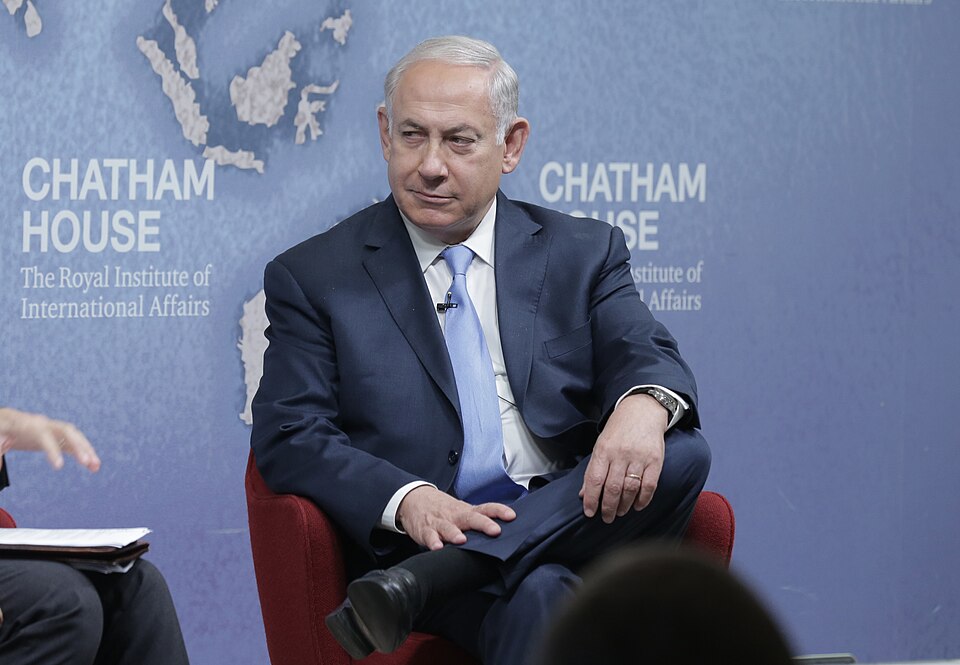
Netanyahu’s specific objection: Israeli forces will not withdraw until Hamas is ‘completely’ and ‘genuinely’ disarmed. This condition, while stated publicly as an Israeli security requirement, functions politically as a veto: Hamas’s complete disarmament before any Israeli withdrawal is not a condition Hamas has accepted or is likely to accept, meaning Netanyahu’s position forecloses the roadmap’s implementation without formally rejecting it on its face.
THE KUSHNER-HAMAS MEETING — WHY IT IS UNPRECEDENTED
Kushner’s two-hour-plus meeting with Hamas chief Khalil al-Hayya in Cairo is unprecedented in US diplomatic practice. The US designated Hamas a Foreign Terrorist Organization in 1997. US officials do not directly negotiate with designated terrorist organizations as a matter of formal policy. Kushner’s meeting — alongside Mladenov and Blair, providing multilateral cover — represents either a formal or de facto suspension of that policy for the specific purpose of advancing the Gaza roadmap.
What the meeting accomplished: Hamas issued a statement directly calling on the Board of Peace to ‘compel’ Israel to approve the roadmap — a formulation that accepts the roadmap’s framework while redirecting the pressure to Israel rather than conceding any of its own demands. Hamas’s strategic position is that the obstacle is Israeli intransigence, not Hamas demands. The Cairo meeting gave Hamas a specific audience for that claim.
THE COALITION ARITHMETIC BEHIND NETANYAHU’S REJECTION
Netanyahu’s rejection is not simply a security judgment. It is a coalition survival calculation. His government depends on far-right coalition partners Ben Gvir and Smotrich, both of whom have threatened to collapse the coalition if Netanyahu accepts any Gaza governance arrangement that does not involve continued Israeli military presence and rejects Hamas governance. Ben Gvir has previously stated that any deal that leaves Hamas in any governing role is unacceptable. Smotrich has made similar statements about Israeli military withdrawal.
The specific political geometry: Netanyahu can accept the roadmap and lose his coalition, triggering elections in which he faces prosecution while out of power. Or he can reject the roadmap and maintain his coalition while absorbing US and Saudi pressure that is uncomfortable but, to this point, has not produced consequences severe enough to change the calculation. He has chosen the latter.
| ACCEPTING THE ROADMAP | REJECTING THE ROADMAP |
| Gaza governance transition begins | Coalition survives; Ben Gvir and Smotrich stay |
| Ben Gvir and Smotrich leave coalition | No immediate election trigger |
| Elections; Netanyahu faces prosecution | Absorbs US and Saudi diplomatic pressure |
| US-Israel relations improve publicly | Saudi normalization deal delayed |
| Reconstruction and hostage release advance | Hostage families’ pressure continues |
| Hamas’s governance role ends on US-set terms | Military operations in Gaza continue |
THE SAUDI-UAE JOINT CONDEMNATION — WHAT MAKES IT UNUSUAL
Saudi Arabia and the UAE issuing a coordinated, public condemnation of Israel ahead of Kushner’s Jerusalem meeting is historically unusual. Both Gulf states have maintained either formal or informal channels with Israel; the Abraham Accords normalized UAE-Israel relations; Saudi normalization has been under active negotiation. Public condemnation of Israel’s policy by both simultaneously — in a coordinated statement, not separately — represents a specific diplomatic signal to both Israel and the Trump administration.
The leverage instrument: Saudi Arabia wants the Abraham Accords-style normalization deal. The Trump administration wants Saudi normalization with Israel as a regional architecture achievement. Netanyahu wants the security guarantees that come with a US-Saudi-Israel alignment. Saudi Arabia is explicitly conditioning its normalization pathway on progress on the Gaza governance question. Netanyahu’s roadmap rejection puts the normalization deal at risk — a consequence he is apparently willing to absorb for coalition survival.
Netanyahu’s coalition math: lose Ben Gvir and Smotrich, call elections, face prosecution out of power. Accept temporary diplomatic pressure from Washington and Riyadh instead. He has chosen the pressure. Washington and Riyadh are now deciding how much pressure to apply.
WHAT KUSHNER’S JERUSALEM CONFRONTATION PRODUCED
The specific outcome of Kushner’s Jerusalem meeting with Netanyahu is not confirmed in available reporting as of this publication. What is confirmed: Kushner flew directly from the Hamas meeting to the Netanyahu confrontation. A source close to the talks characterized the requirement as having ‘no ambiguity’ — Hamas must give up governing authority and weapons entirely. Whether Netanyahu moved from his stated position is the specific unknown that will determine whether the roadmap survives his rejection.
WHAT HAPPENS NEXT
▸ Netanyahu’s formal response to Kushner — whether he modifies or maintains his rejection of the roadmap is the immediate determination
▸ Saudi normalization — whether Riyadh formally suspends normalization talks in response to Israel’s roadmap rejection is the pressure instrument to watch
▸ Ben Gvir and Smotrich — if Netanyahu shows any movement toward the roadmap, they will issue the coalition ultimatum that they have held through the Iran deal period
▸ Hamas — their direct appeal to the Board of Peace is a diplomatic signal; whether the Board responds with any formal pressure on Israel is the institutional test
▸ Board of Peace — Mladenov’s role and the Board’s formal position will clarify in the days following Kushner’s meetings
| CONFIDENCE: HIGH | Netanyahu roadmap rejection, Kushner Cairo meeting (al-Hayya, Mladenov, Blair), ‘no ambiguity’ source characterization, Saudi-UAE joint condemnation, Hamas Board of Peace appeal are all from confirmed reporting. Coalition arithmetic analysis (Ben Gvir, Smotrich) is from established ONYX documentation of Israeli political dynamics. |
| ⚖️ BIAS CHECK — WHO IS SAYING WHAT | |
| Netanyahu | Rejection is a coalition survival calculation as much as a security position; he is absorbing diplomatic pressure rather than triggering elections |
| Kushner / Trump Administration | Committed to the roadmap; the Cairo and Jerusalem shuttle diplomacy reflects genuine investment; the rejection is a direct challenge to Trump’s regional architecture vision |
| Saudi Arabia and UAE | Conditioning normalization on Gaza progress; their joint condemnation is pressure, not rupture; they remain open to normalization if the roadmap advances |
| Hamas | Accepting the roadmap’s framework rhetorically while redirecting pressure to Israel; strategically advantaged by Israeli rejection of a US-backed plan |
| Ben Gvir / Smotrich | Their coalition threat is the specific constraint on Netanyahu’s flexibility; they have not publicly responded to Kushner’s pressure campaign yet |
SOURCES
▸ Confirmed reporting — Netanyahu roadmap rejection, Kushner Cairo/Jerusalem meetings, August 2026
▸ Saudi Arabia-UAE joint condemnation — confirmed reporting
▸ Hamas Board of Peace appeal — confirmed reporting
Q: Has the US ever directly met with Hamas before?
A: The US has held indirect communications with Hamas through intermediaries (Qatar, Egypt, Oman). A direct meeting of this profile — a senior presidential envoy sitting across from the Hamas chief for two hours in Cairo — is without clear precedent in the US diplomatic record during Hamas’s FTO designation.
Q: What does the 15-point roadmap actually require?
A: The full text has not been published. What is confirmed: Hamas disarmament and relinquishment of governing authority; conditions for Israeli military withdrawal; and a Gaza governance transition framework. The specific sequence, timeline, and verification mechanisms are not confirmed in available reporting.
Q: Could Netanyahu be replaced before this is resolved?
A: Israeli coalition politics can move quickly. If Ben Gvir and Smotrich collapse the coalition, new elections would be held; Netanyahu would likely face criminal prosecution while out of office. That specific personal vulnerability shapes his coalition calculus more than any external diplomatic pressure.