The figure covers all public school closures nationwide and reflects mounting enrollment declines, post-pandemic fiscal cliffs, and demographic shifts that are hitting rural and small-city districts especially hard.
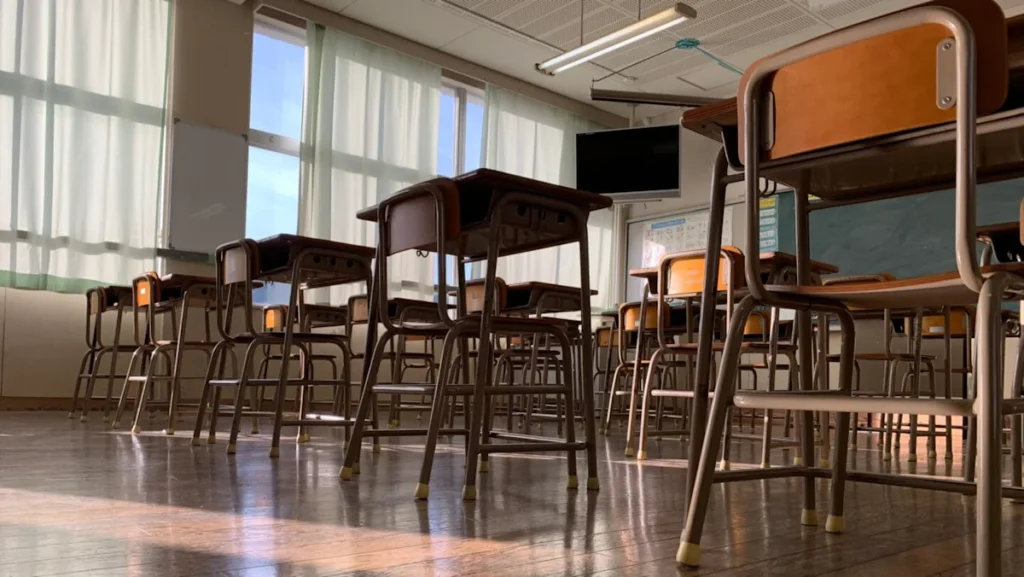
EDUCATION · DOMESTIC · SCHOOL CLOSURES · ENROLLMENT DECLINE
The number of public school closures in the United States reached 1,156 in the 2025-26 academic year, the highest figure since the pandemic period of 2020-21 and reflecting sustained enrollment declines, post-pandemic fiscal pressures, and demographic shifts that have made it financially unsustainable for many districts to maintain their current building inventory, the Christian Science Monitor reported on Monday. The figure covers permanent or indefinite closures of individual school buildings across all public school districts in the country and represents a significant acceleration from the 800 to 900 closures per year that characterized the pre-pandemic period.
The Christian Science Monitor analysis identified three distinct categories of districts driving the closure increase. Rural districts in declining-population areas — particularly in Appalachia, the rural Midwest, and the rural South — are experiencing enrollment declines driven by population loss as younger residents move to metropolitan areas for employment. Small-city districts in post-industrial areas, including sections of Pennsylvania, Ohio, Michigan, and upstate New York, are losing enrollment to suburban charter schools and private school choice programs that have expanded significantly in the post-pandemic period. And even some suburban districts that grew rapidly in the 1990s and 2000s are now experiencing enrollment declines as the families who fueled that growth age out of the school system without being replaced by equivalent numbers of younger families.
The Fiscal Cliff Dynamic
The Christian Science Monitor reporting placed particular emphasis on what education policy analysts call the fiscal cliff dynamic driving the 2025-26 closure spike. During the pandemic period, public schools received extraordinary federal relief funding through the ESSER program — Elementary and Secondary School Emergency Relief — that temporarily masked enrollment-driven revenue declines and allowed districts to maintain staff and facilities at pre-pandemic levels. ESSER funding expired in 2024, and districts that had used it to defer difficult decisions about enrollment-driven consolidations are now facing those decisions simultaneously, producing a concentrated wave of closures that is higher than the underlying enrollment trends alone would predict.
The Christian Science Monitor noted that the 1,156 closure figure includes closures that were formally announced in the current academic year but may not take effect until the beginning of the 2026-27 year. The pipeline of announced future closures suggests the 2026-27 figure may be similarly elevated, meaning the current closure wave is likely to extend across multiple academic years rather than representing a one-time adjustment.
“When a school closes in a small town, it is not just a building. It is the center of the community, the Friday night football game, the place every family has a memory in. The numbers do not capture what is actually being lost.” — Rural superintendent cited by Christian Science Monitor
The Equity Dimension
The Christian Science Monitor analysis highlighted the equity dimension of the school closure pattern. The districts experiencing the most closures are disproportionately those serving lower-income and rural populations, where the community impact of school closure is greatest and where the alternatives — private schools, charter schools, long-distance transport to consolidated facilities — are least accessible. The closure pattern therefore both reflects and reinforces existing educational inequities, concentrating the disruption of school closure in communities that have the fewest resources to absorb it.
WHAT HAPPENS NEXT
► 2026-27 closure announcements to continue through spring budget cycle in affected districts
► Federal education policy debate to address ESSER cliff effect and post-pandemic fiscal structure
► State legislatures in high-closure states to review consolidation funding formulas
► Community organizing in affected districts to challenge planned closures through school board processes
| CONFIDENCE: HIGH | Christian Science Monitor confirmed the 1,156 figure, the pandemic comparison, and the ESSER cliff analysis. The Christian Science Monitor has strong domestic education policy reporting and the closure figure is a specific confirmed statistic from tracked data. |
| Bias Check | ||
| Left-Lean | Center | Right-Lean |
| Closures framed as consequence of inadequate federal investment and charter school competition. | Reports closure figure, district categories, and ESSER cliff analysis factually; notes equity dimension. | Closures framed as necessary consolidation; districts right-sizing to match enrollment reality. |
SOURCES
► Christian Science Monitor — US school closures: 1,156 in 2025-26, highest since pandemic, enrollment decline, ESSER cliff, equity analysis, November 10, 2026