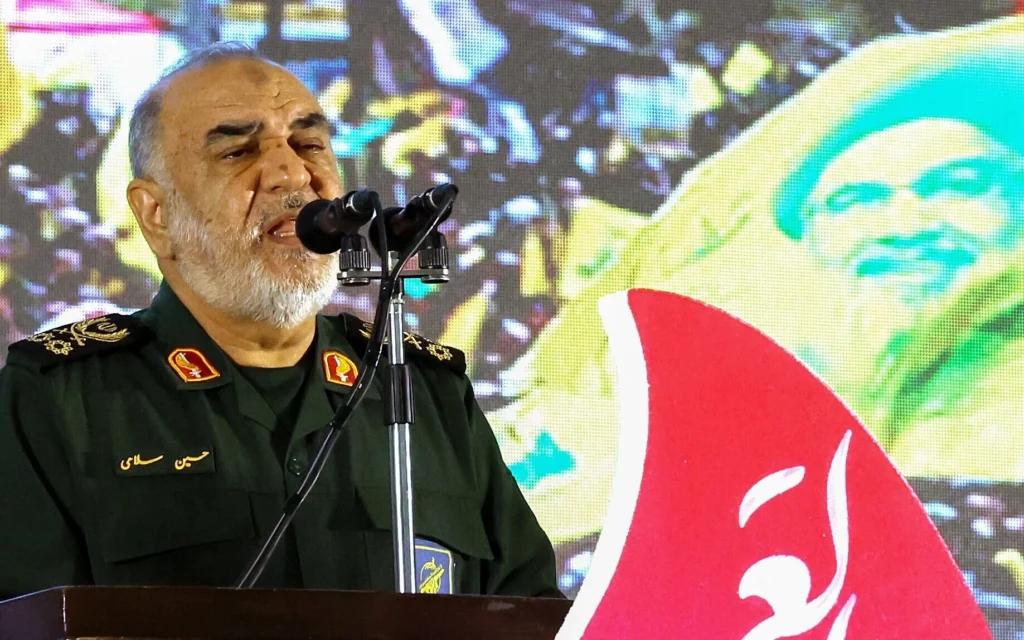
The attacks, attributed to the IRGC, disrupted refrigeration in French supermarkets, spoiling food and costing millions; the allegation represents the first confirmed European civilian infrastructure cyberattack attributed to Iran in the current conflict arc.
CYBERSECURITY · IRAN · IRGC · FRANCE · ARC: IRAN WAR CONTINUES
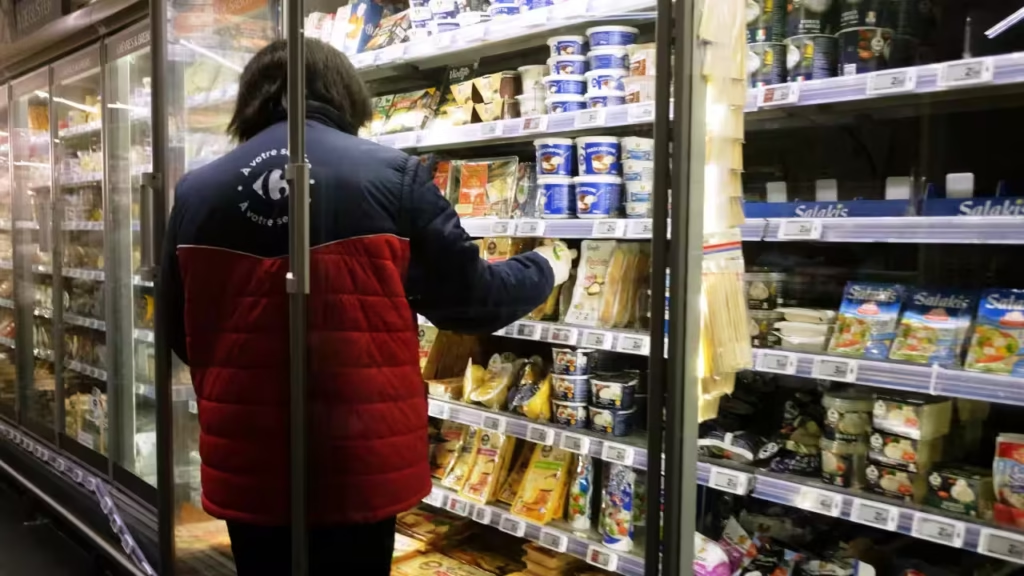
France has formally alleged that the Islamic Revolutionary Guard Corps of Iran was behind a series of cyberattacks targeting supermarket refrigeration systems across France, attacks that disrupted cold chain infrastructure, spoiled food, and caused financial damage estimated at several million euros, NPR and Euronews both confirmed on Monday. The French allegation, made through the national cybersecurity agency ANSSI and the Ministry of Interior, marks the first confirmed European civilian infrastructure cyberattack publicly attributed to Iran in the context of the current conflict arc — an escalation of Iranian cyber operations beyond military and energy sector targets to everyday retail food infrastructure. Iran had not publicly responded to the allegation as of Monday reporting.
The technical nature of the attack — targeting refrigeration management systems in supermarkets rather than military, government, or critical energy infrastructure — is analytically significant. NPR noted that the choice of supermarket refrigeration as a target reflects a specific countervalue strategy: the attacks do not damage French military capacity, disrupt government operations, or create kinetic harm, but they impose direct economic costs, create visible public disruption at a consumer level, and demonstrate an Iranian capability to reach civilian everyday infrastructure in a NATO member state. The refrigeration systems targeted were connected industrial control systems — the same category of industrial operational technology that the Stuxnet attacks on Iranian nuclear centrifuges exploited in reverse a decade and a half earlier.
The IRGC Cyber Capability
Euronews provided context on the IRGC cyber division that France has identified as responsible. The IRGC Cyber Command, formally known as the IRGC Electronic Warfare and Cyber Defense Organization, has been assessed by Western intelligence agencies as having developed substantial offensive cyber capabilities since the Stuxnet period. Its operations have been attributed to attacks on Saudi Aramco (the 2012 Shamoon attack), Israeli water treatment systems, US dam control systems, and multiple European government and financial institution targets. The expansion of its operational portfolio to French retail food infrastructure is consistent with the broader escalatory pattern of IRGC cyber operations following the November 2 Qeshm Island strikes that initiated the current conflict arc.
NPR noted that the timing of the France allegation — coming on the same day that Trump declared the Iran war militarily effective over — creates a significant analytical tension. The Trump declaration suggests the kinetic conflict phase has ended and the status quo is acceptable to both sides. The French allegation suggests Iran cyber operations against European civilian infrastructure are continuing or were queued during the conflict period and are only now being disclosed publicly. The two developments together indicate that the Iran conflict arc is not simply over: a ceasefire in kinetic strikes does not necessarily correspond to a cessation of cyber operations.
“Iran attacked French families through their grocery stores. This is not an abstraction. This is what hybrid warfare looks like in the daily life of a country.” — French Interior Ministry statement cited by NPR
NATO and Alliance Implications
The French attribution of an Iranian cyberattack on civilian infrastructure carries NATO Article 5 implications that NPR addressed directly. NATO has previously indicated that a significant cyberattack on a member state could trigger Article 5 collective defense consideration, though the threshold for what constitutes a qualifying cyberattack has never been formally defined. The French allegation is not framed as an Article 5 invocation, but it places on the record a confirmed Iranian attack on French civilian infrastructure during an active conflict involving a close US ally, creating a legal and political record that could be referenced in future escalation calculations.
WHAT HAPPENS NEXT
► France ANSSI to publish technical indicators of compromise from the refrigeration system attacks
► NATO allies to assess French allegation for Article 5 applicability threshold
► EU cybersecurity agency ENISA to coordinate European response posture on IRGC cyber operations
► Iran to respond or remain silent; silence itself is a diplomatic signal in this context
| CONFIDENCE: HIGH | NPR and Euronews both confirmed the French allegation, the IRGC attribution, the refrigeration system target, and the financial damage estimate. Two-source convergence on a confirmed government attribution with named actor and target category. |
| Bias Check | ||
| Left-Lean | Center | Right-Lean |
| Attack framed as Iran escalating hybrid warfare against European civilians in response to US military strikes. | Reports French allegation, IRGC cyber capability context, and NATO implications factually. | Attack framed as Iran provocation requiring stronger Western cyber deterrence posture. |
SOURCES
► NPR — France alleges IRGC behind supermarket refrigeration cyberattacks, millions in damage, NATO implications, November 10, 2026
► Euronews — Attack details, IRGC cyber capability context, cold chain disruption, food spoilage scale