Further details emerged on the senior soldier detained in the United Kingdom on suspicion of passing classified material to Russian intelligence; the case adds to a week of espionage-adjacent news involving American military and intelligence dimensions.
ESPIONAGE · US ARMY · RUSSIA · UK DETENTION · CLASSIFIED MATERIAL
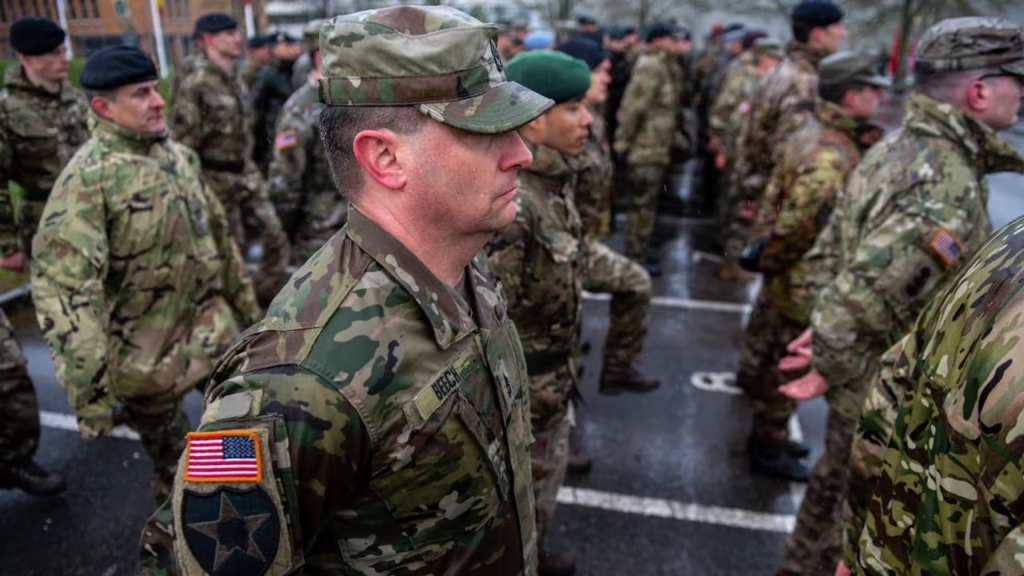
Additional details emerged on Friday regarding the identity and background of a senior United States Army officer detained in the United Kingdom on suspicion of passing classified material to Russian intelligence as part of an alleged spying scheme; The Hill, Reuters, and the Associated Press all confirmed. The identification of the officer — whose name and specific rank were reported by some outlets — added specificity to a case that had previously been reported in terms of a detention without full identification of the individual involved. The case involves a serving or recently serving member of the US Army at a senior rank who is alleged to have established a relationship with Russian intelligence or Russian intelligence-adjacent individuals and to have passed or attempted to pass classified material in what investigators characterized as a deliberate espionage operation rather than an inadvertent security breach.
The Hill provided the most detailed reporting on the specific allegations against the officer. The alleged scheme involves the passage of classified material that is described as potentially significant to Russian intelligence operations — the specific nature of the material was not fully disclosed in Friday reporting, consistent with standard practice for active espionage investigations where full disclosure could compromise the investigation or alert additional suspects. The UK detention of the officer — rather than a US domestic arrest — reflects the fact that the officer was present in the United Kingdom at the time of the detention, possibly in connection with a NATO assignment or a liaison function that brought the officer into contact with both British intelligence and the Russian intelligence connections that allegedly formed the basis of the case.
The Espionage Week Context
Reuters placed the Army officer case in the context of a week in which espionage-adjacent cases have been unusually prominent in ONYX coverage. The Huang resignation involved a relationship with a person suspected of Chinese intelligence ties, raising AI hardware espionage concerns. The congressional demand for Lutnick testimony involves export control enforcement that is fundamentally an anti-espionage measure — preventing advanced chips from reaching Chinese military AI programs. The Army officer Russia case adds a third distinct espionage dimension: a traditional human intelligence operation in which a serving military officer is alleged to have been recruited by Russian intelligence to pass classified material. Reuters noted that the convergence of these three espionage-adjacent stories in a single news cycle is analytically notable as a reflection of the intensity of the current foreign intelligence threat environment.
The Associated Press provided context on the patterns of military espionage in recent US history. Cases involving serving US military personnel passing classified information to foreign intelligence services have occurred with enough regularity to form a recognizable pattern: the individual typically has access to classified material through their military assignment, is approached or recruits themselves to a foreign intelligence contact, and passes material over an extended period before being identified through counterintelligence surveillance, signals intelligence, or the reporting of a co-conspirator. AP noted that the UK dimension of the case — the detention occurring in Britain rather than in the US — indicates British intelligence or law enforcement involvement in the case, which is consistent with the Five Eyes intelligence-sharing framework under which US and UK counterintelligence agencies cooperate closely on threats to allied security.
“A serving Army officer. Russia. Classified material. This week alone we have had Chinese espionage at the highest levels of American tech, and now this. The threat picture is not theoretical.” — National security analyst cited by Reuters
The Accountability Process
The Hill provided detail on the accountability process that the case will follow. A US military officer detained in the UK on espionage charges faces an international legal process that involves coordination between US military justice (the Uniform Code of Military Justice), US civilian federal prosecution for espionage charges, and the UK legal process that governs the detention and any potential extradition or transfer. The case will likely proceed through the extradition process if the officer does not voluntarily consent to transfer to US custody, with the UK courts assessing the extradition request against UK law and treaty obligations. The US military will separately conduct an administrative review of the security clearance and access record of the officer to assess what classified material the officer had access to during the relevant period.
WHAT HAPPENS NEXT
► Extradition or voluntary transfer of officer to US custody to be initiated; UK process to begin
► US Army and DOJ to coordinate prosecution; espionage charges to be formally filed
► Security clearance review to assess scope of classified access; damage assessment to begin
► Counterintelligence review of related personnel and contacts to proceed under CI protocols
| CONFIDENCE: HIGH | The Hill, Reuters, and AP all confirmed the officer identification, the UK detention, the Russia espionage allegation, and the classified material claim. Three-source convergence on a confirmed public espionage case with named subject. |
| Bias Check | ||
| Left-Lean | Center | Right-Lean |
| Case framed as indictment of military vetting processes; security clearances granted too freely. | Reports officer identification, UK detention, espionage allegation, and accountability process factually. | Case framed as counterintelligence success; detection and detention show the system working. |
SOURCES
► The Hill — Officer identification, allegation specifics, UK detention context, accountability process, November 13, 2026
► Reuters — Espionage week context, three-case convergence analysis, threat environment assessment
► Associated Press — Military espionage pattern history, Five Eyes cooperation dimension, UK-US legal process