Climate talks entered a sharper phase with clashing demands on climate finance, adaptation funding, and emissions reduction timelines from major parties; the gap between developed and developing country positions remained wide heading into the final negotiating days.
COP31 · CLIMATE · NEGOTIATIONS · FINANCE · ADAPTATION · EMISSIONS
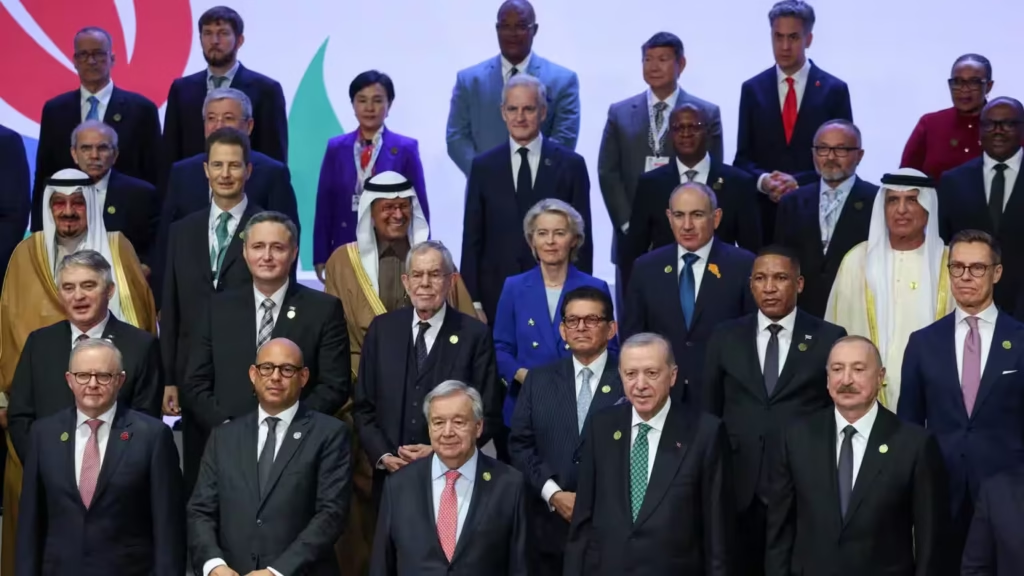
The COP31 climate negotiations intensified on Friday as world leaders and negotiating teams engaged in sharper exchanges over the core contested issues of climate finance, adaptation funding, and emissions reduction timelines, with the gap between the positions of major developed and developing country blocs remaining wide as the talks approached their critical final days, Reuters, the Associated Press, and BBC all confirmed. The sharpening of the negotiations — described by multiple observers as the phase in which the gap between stated positions either begins to close or hardens into the kind of stalemate that has characterized prior COP outcomes — reflects the specific pressure created by the final-days timeline and the political stakes involved for governments that have made commitments to their domestic audiences about COP outcomes. The major fault lines of the negotiations — finance flows, adaptation funding, the loss and damage mechanism, and the emissions reduction ambition gap — remained unresolved.
Reuters provided the most detailed account of the climate finance dimension of the Friday negotiations. The core demand from developing countries — consistent across multiple COP cycles — is that the developed world, which bears primary historical responsibility for the accumulated greenhouse gas concentrations driving climate change, provide sufficient financial flows to developing countries to support both mitigation (reducing their own emissions) and adaptation (adjusting to the climate impacts they are already experiencing). The specific dollar figures being demanded by the developing country bloc and the specific figures being offered by the developed country bloc remained significantly separated, with the developing country group describing the offers on the table as woefully inadequate relative to the scale of climate risk they face.
The Adaptation Funding Gap
BBC provided analysis of the adaptation funding gap as a specific contested dimension of the COP31 negotiations. Adaptation funding — financial flows specifically directed at helping vulnerable countries build resilience to climate impacts including sea level rise, extreme heat, flooding, and agricultural disruption — has historically been treated as secondary to mitigation in the global climate finance architecture. The developing country demand for a substantial increase in adaptation funding reflects the reality that for the most vulnerable countries, adaptation is not a secondary concern but the primary survival question: island nations facing submersion, Sahel countries facing desertification, and coastal communities facing repeated flooding need adaptation finance now, not mitigation finance for emissions reductions that will not affect the climate impacts they are already experiencing.
The Associated Press reported on the emissions reduction timeline tensions that form a third dimension of the COP31 negotiations. The Paris Agreement framework commits countries to nationally determined contributions — self-set emissions reduction targets — with the expectation that each successive round of commitments will be more ambitious than the last. The gap between the emissions reductions actually committed in current NDCs and the reductions scientists say are needed to limit warming to the Paris Agreement targets creates a ratchet mechanism problem: getting countries to increase their ambition requires either pressure from the international community, domestic political will, or the combination of economic transformation and policy incentives that makes higher ambition achievable. AP noted that major emitters, including China, India, and the United States, each face specific domestic political constraints on emissions ambition that the COP process cannot overcome by itself.
“We come to COP with the same demands we have brought for a decade: adequate finance, genuine ambition, real adaptation support. And we leave with the same inadequate offers dressed in new language.” — Lead negotiator for the small island developing states cited by BBC
The COP31 Stakes
Reuters analyzed the specific stakes of COP31 relative to prior climate conferences. COP31 occurs at a moment when the scientific community has been increasingly explicit about the narrowing window for maintaining temperature trajectories consistent with the Paris targets, and when the gap between current policy trajectories and needed emissions reductions has widened rather than closed in the years since the Paris Agreement was adopted. The political pressure on COP31 to produce meaningful outcomes on finance and ambition is therefore higher than at prior conferences, but the structural factors that have produced inadequate outcomes at prior COPs — the consensus requirement, the domestic political constraints of major emitters, and the asymmetry between who bears the costs of action and who bears the costs of inaction — remain unchanged. Reuters noted that the final days of COP negotiations are historically when the decisive moves happen, and the final outcome remains genuinely uncertain.
WHAT HAPPENS NEXT
► Final negotiating days at COP31 to produce draft text; finance and adaptation numbers to be the decisive battles
► Developed country bloc to table revised finance offer; whether it closes the gap to be the key question
► Major emitters to submit revised NDC signals; ambition ratchet outcome to determine Paris trajectory assessment
► COP31 final declaration to be adopted or contested; whether agreement or stalemate to be known by close
| CONFIDENCE: HIGH | Reuters, AP, and BBC all confirmed the COP31 negotiations sharpening, the finance and adaptation gap, the emissions timeline tensions, and the developing-developed country fault lines. Three-source convergence on confirmed ongoing international climate negotiations. |
| Bias Check | ||
| Left-Lean | Center | Right-Lean |
| Negotiations framed as developed world failing its legal and moral obligation to climate-vulnerable nations. | Reports finance gap, adaptation underfunding, emissions ambition problem, and negotiation stakes factually. | Negotiations framed as developing countries demanding unrealistic finance that would burden developed economies. |
SOURCES
► Reuters — Climate finance dimension, negotiation sharpening, final-days stakes, COP31 context, November 13, 2026
► Associated Press — Emissions reduction timeline tensions, NDC ambition gap, major emitter domestic constraints
► BBC — Adaptation funding gap analysis, small island states negotiator quote, vulnerable country position