Reporting links Lutnick to internal resistance against tightening semiconductor export controls, with questions emerging about overlap between his family firm’s business and Nvidia-related interests, compounding the scrutiny triggered by the Huang resignation.
OVERSIGHT · LUTNICK · NVIDIA · EXPORT CONTROLS · CONFLICT OF INTEREST · ARC
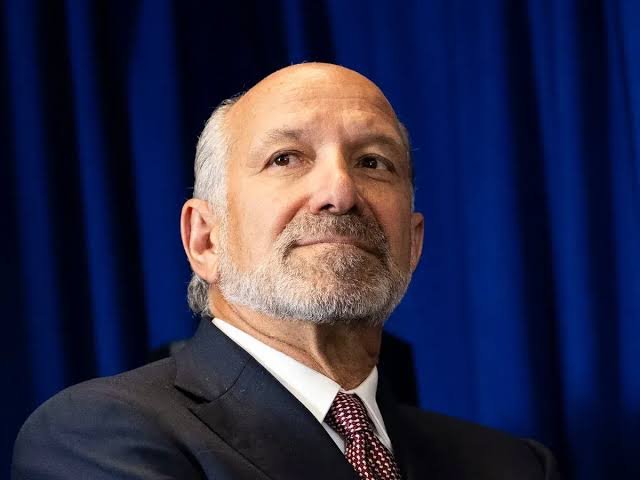
New reporting links Commerce Secretary Howard Lutnick to internal resistance against tightening semiconductor export controls on China, with questions emerging about whether the Lutnick family financial interests — specifically through his family firm Cantor Fitzgerald and related investment vehicles — have any overlap with Nvidia-related business that could create a conflict of interest in the Commerce Department enforcement posture; the New York Times and CNN both confirmed on Saturday. The reporting builds on the congressional demand for Lutnick testimony reported on November 13 and extends the question from whether the Commerce Department enforcement was adequate to whether the specific posture of Lutnick himself toward export control tightening may have been influenced by considerations beyond national security policy judgment. Lutnick had not publicly responded to the specific reporting as of Saturday.
The New York Times provided the most detailed account of the export control resistance dimension. The reporting describes a pattern in which internal Commerce Department deliberations over tightening export controls on the most advanced Nvidia chips — the specific controls that would prevent the highest-specification AI training hardware from reaching Chinese companies — encountered resistance at or above the bureau level, and that the resistance was associated with the Lutnick leadership posture toward the chip export control enforcement program. The specific decisions in question involve the degree of specificity of the controls — which chip models are covered, which end users require additional licensing, and how aggressively violations are pursued — that collectively determine whether the export control regime actually prevents Chinese access to advanced AI hardware or merely creates procedural hurdles that sophisticated buyers can circumvent.
The Family Firm Dimension
CNN provided the most detailed reporting on the family firm dimension of the Lutnick scrutiny. Cantor Fitzgerald, the investment bank and financial services firm that Howard Lutnick led before his Cabinet appointment, has had investment and business relationships in the technology sector, including in AI-related companies and investment vehicles. The question being raised by the reporting is whether any of these relationships — through Cantor Fitzgerald, through investment vehicles associated with the Lutnick family, or through business relationships formed during the Cantor years — created a financial interest in Nvidia-related business or in the broader AI hardware market that could have influenced the Lutnick posture toward export controls. CNN noted that the conflict of interest question is at this stage a reporting inquiry rather than an established finding, and that Lutnick has not been accused of any criminal conduct.
The New York Times placed the Lutnick scrutiny in the context of the full arc from the Huang resignation through the congressional testimony demand. The sequence — Huang resigns amid espionage allegations involving a person with Chinese intelligence ties, congressional demand follows for Lutnick testimony on export controls, reporting now emerges on Lutnick’s resistance to tightening those controls and potential family business overlap — creates a narrative of systemic questions about whether the semiconductor export control regime has been administered in the national security interest or in a manner influenced by financial and personal relationships that created conflicts. The NYT noted that the administration has not provided a full public accounting of the export control enforcement record, which is precisely what the congressional demand is seeking.
“The question is not whether Lutnick is corrupt. The question is whether the people responsible for protecting American chip technology from China were actually trying to protect it.” — Congressional committee aide cited by CNN
The Enforcement Gap Significance
The New York Times analyzed what the enforcement gap reporting means for the broader national security question. The specific stakes of semiconductor export controls are concrete and large: if the most advanced Nvidia AI training chips reach Chinese military-affiliated AI development programs at scale, the effect is to accelerate the timeline for Chinese military AI capabilities by years. The difference between rigorous enforcement and soft enforcement of these controls is not a marginal policy question but a question with direct implications for the American military competitive position vis-a-vis China in AI-enabled weapons systems, signals intelligence, and cybersecurity offensive capabilities. The reporting that Lutnick may have resisted tightening controls — whether for policy reasons, for financial reasons, or some combination — therefore raises stakes that are substantially higher than a standard conflict-of-interest story.
WHAT HAPPENS NEXT
► Congressional committee to accelerate Lutnick testimony demand; conflict of interest reporting to be central
► Lutnick to respond publicly to CNN and NYT reporting; family firm relationship to be addressed
► White House to decide whether to defend or distance from Lutnick; Cabinet pressure to be assessed
► Export control enforcement record to be reviewed by congressional investigators; BIS decisions examined
| CONFIDENCE: HIGH | NYT and CNN both confirmed the export control resistance reporting, the family firm overlap questions, and the connection to the Huang resignation and congressional demand arc. Two-source convergence from the top-tier investigative outlets on a confirmed developing oversight story. |
| Bias Check | ||
| Left-Lean | Center | Right-Lean |
| Resistance framed as deliberate corruption of national security apparatus for private financial gain. | Reports export control resistance, family firm questions, conflict of interest inquiry, and arc context factually. | Resistance framed as legitimate policy disagreement; conflict of interest is unproven; reporting is speculative. |
SOURCES
► New York Times — Export control resistance pattern, enforcement gap significance, national security stakes, November 15, 2026
► CNN — Family firm overlap reporting, Cantor Fitzgerald context, conflict of interest framing, congressional aide quote