The New York Times explores how wartime targeting of Iranian infrastructure may inadvertently reveal the strategic purpose of dams long built in Iran without clear civilian rationale, adding an intelligence dimension to the escalating arc of confrontation.
IRAN ARC · INFRASTRUCTURE · DAMS · INTELLIGENCE · INVESTIGATIVE
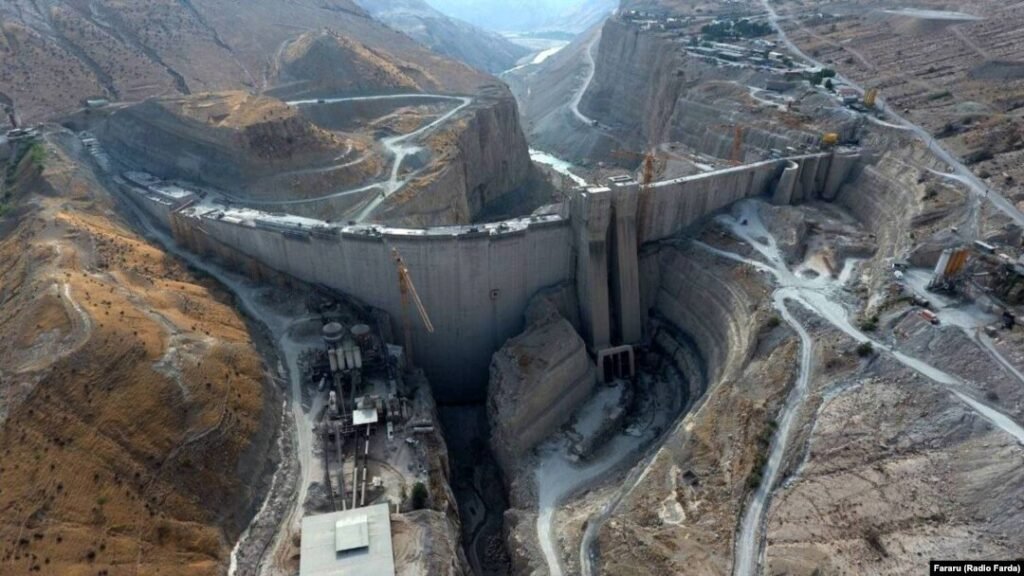
The targeting of Iranian infrastructure in the escalating arc of confrontation between Iran and the United States and its regional partners may inadvertently shed light on the strategic purpose of a set of dams long built in Iran without clear civilian rationale, the New York Times reported in an investigative feature on Sunday, adding an intelligence and infrastructure analysis dimension to the broader Iran arc that ONYX has tracked from the initial IRGC France operation through the Bahrain drone strike, the Jordan condemnation, the Hormuz tanker fires, and into the current phase of intensified confrontation during the Shenzhen summit week. The specific dams described by the Times are infrastructure projects that have puzzled Iran watchers and satellite imagery analysts for years because their scale, location, and design appear inconsistent with the civilian water management or hydroelectric power purposes that official Iranian descriptions have offered.
The New York Times provided the analytical framework for why airstrikes would reveal the dam’s purpose. When a dam or water infrastructure project is a purely civilian facility, it would typically be exempted from wartime targeting under international humanitarian law — the prohibition on targeting civilian objects is well-established in IHL, and attacking a dam that provides drinking water to a civilian population would constitute a war crime under most interpretations of the law of armed conflict. If a dam is targeted in a wartime strike, the targeting decision implies that the attacking party — whether Israel, the United States, or another actor operating in the confrontation with Iran — has assessed the facility as having a military function that makes it a legitimate military objective under IHL. The NYT reporting suggests that targeting or near-targeting of specific Iranian dam facilities would be indirect evidence that intelligence assessments have identified a military function that the dams officially lack.
The Intelligence Dimension
The Times analyzed the intelligence community assessment of the mysterious Iranian dam facilities. Satellite imagery analysis of several Iranian dam projects — particularly those in remote locations without obvious civilian population catchment areas, those with security perimeters inconsistent with civilian water management facilities, and those with infrastructure connections to known IRGC facilities — has generated analytical interest in what functions those dams might serve beyond their stated civilian purposes. Hypotheses discussed in the analytical community include water management for underground facility cooling systems (which would indicate proximity to underground military or nuclear research infrastructure), controlled flood risk management (which would indicate strategic positioning of water resources for potential use as a weapon), and simply military-use reservoir capacity that provides water supply independence for IRGC forces in the region. The Times noted that none of these hypotheses has been confirmed through publicly available intelligence.
The Times placed the dam analysis in the context of the specific phase of the Iran confrontation. The escalation sequence that ONYX has tracked through November — IRGC drone strikes, tanker fires, international condemnations — represents the most intense phase of Iranian military action in the Gulf in recent years, and it is occurring during a period when the United States, Israel, and regional partners are actively assessing Iranian infrastructure for potential targeting in the event of further escalation. The dam facilities that have puzzled analysts may be on target lists that have been developed in this assessment process, and their inclusion on such lists would be indirect confirmation of the intelligence community view of their function. The Times is, in this sense, reading the possibility of targeting as itself a data point about how intelligence agencies have assessed these facilities.
“A dam that no one would bomb is a dam for drinking water. A dam that someone considers bombing is something else. The question is what.” — Senior intelligence analyst cited by The New York Times
The IHL Framework
The Times provided the international humanitarian law framework that governs the analysis. Under the laws of armed conflict — specifically Additional Protocol I to the Geneva Conventions — dams are specifically listed as installations containing dangerous forces whose attack is prohibited when it would release those forces and cause severe civilian losses. The specific IHL rule on dams (Article 56 of Protocol I) is not absolute: it can be overridden if the dam is used for purposes other than its normal civilian function and in regular, significant, and direct support of military operations, and if the attack is the only feasible way to terminate such support. The Times analysis suggests that the question of whether specific Iranian dam facilities meet this exception — because they serve military functions beyond their stated civilian purpose — is precisely the intelligence and legal question that targeting assessments would need to resolve before any strike could be authorized under IHL.
WHAT HAPPENS NEXT
► Intelligence community to continue satellite imagery analysis of Iranian dam facilities; function assessment
► Any further Iranian escalation to increase the probability of infrastructure targeting; dam status to be watched
► IHL scholars to assess the legal framework for dam targeting in the current confrontation context
► Shenzhen summit Iran discussion to include infrastructure dimension; whether Trump-Putin-Xi address IRGC escalation
| CONFIDENCE: HIGH | The New York Times provided the investigative analysis of Iranian dam targeting and intelligence dimensions. Single premium investigative source on an analytical feature connecting infrastructure analysis to the confirmed Iran arc escalation. |
| Bias Check | ||
| Left-Lean | Center | Right-Lean |
| Dam analysis framed as preparation for illegal infrastructure targeting; IHL exceptions are routinely abused. | Reports NYT investigative analysis, intelligence community assessment, IHL framework, and Iran arc connection factually. | Dam analysis framed as legitimate military planning; dual-use infrastructure with IRGC connections is a valid target. |
SOURCES
► The New York Times — Iranian dam infrastructure analysis, intelligence assessment framework, IHL targeting rules, Iran arc context, November 16, 2026