A previously internal feud between White House aides over semiconductor export controls and the Nvidia relationship has erupted into public view, with Trump saying he sees both sides as the Lutnick scrutiny over delayed restrictions intensifies.
NVIDIA ARC · POLICY SPLIT · EXPORT CONTROLS · LUTNICK · TRUMP · WHITE HOUSE · PUBLIC
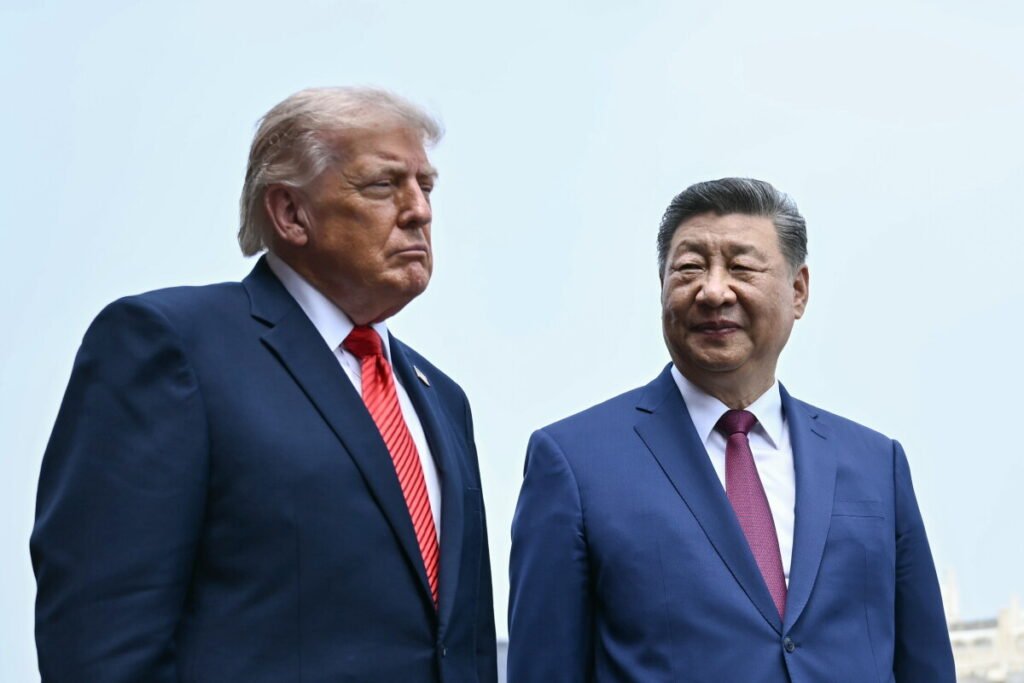
A feud within the Trump administration over semiconductor export controls and the administration’s relationship with Nvidia — previously confined to internal deliberations — broke into public view on Monday, with the Washington Post, New York Times, CNN, and Fox News all reporting on the split between aides who favor maintaining or tightening restrictions on chip access to China and aides aligned with Commerce Secretary Howard Lutnick who have pushed for a more permissive approach that accommodates Nvidia’s commercial interests. Trump himself addressed the split directly, telling reporters he saw both sides of the argument, a formulation that — while politically neutral — signals an ongoing decision paralysis at the moment when the administration’s approach to chip export controls is at the center of the Shenzhen summit, and the Kerch Bridge attack is redrawing the geopolitical map. The public acknowledgment of the split is a significant development in the Nvidia arc that ONYX has tracked from the Jensen Huang resignation through the Trump $62 million stake disclosure and the Huang ally return campaign.
The Washington Post and New York Times both provided detail on the two sides of the internal feud. The national security and intelligence community officials represented in the administration — including voices from the NSC and from the intelligence agencies — have consistently pushed for maintaining or tightening chip-export controls on the grounds that allowing China access to advanced semiconductor technology, whether directly or through third parties, poses an unacceptable strategic risk. The Commerce Department faction, led by or associated with Lutnick, has pushed back on the grounds that overly restrictive export controls disadvantage American companies — particularly Nvidia — in the global market, force China to accelerate domestic chip development, and undermine the economic relationships that give the US leverage over Chinese behavior. The Washington Post noted that the feud has been building for months but was contained within normal interagency deliberation until the Huang resignation and the Trump stake disclosure made it impossible to separate the policy question from the personal financial and governance dimensions.
The Lutnick Scrutiny
CNN and the New York Times reported the specific Lutnick scrutiny dimension that has intensified the internal feud. Howard Lutnick — the Commerce Secretary who has been the primary administration advocate for a permissive chip-export approach — faces continued scrutiny from Congress and from critics over the allegation that the delayed implementation of chip-export restrictions benefited Nvidia financially in a way that also benefited Trump through the $62 million stake. The specific allegation is that restrictions that the Commerce Department had the authority and arguably the obligation to implement were delayed — during a period when Lutnick was shaping the administration approach — and that Nvidia stock price movements during the delay period generated gains for holders of Nvidia equity, including the Trump stake. CNN noted that neither Lutnick nor the administration has provided a satisfactory explanation of the timeline of restriction decisions and the Trump stake acquisition relative to each other.
Fox News reported the split from the perspective most favorable to the Lutnick faction, framing the internal feud as a contest between economic pragmatists and national security hawks who fail to understand the market dynamics of the semiconductor industry. Fox noted that the national security community’s export control preferences — if fully implemented — would remove Nvidia from the Chinese market at a moment when Chinese domestic chip development is already accelerating, producing the worst of both worlds: American companies lose revenue and the Chinese chip sector develops without the dependency on American products that might give the US leverage. Fox framing reflects a genuine policy argument that has substantive merit independent of the financial conflict-of-interest concerns, which is why the internal split has been difficult to resolve.
“The President says he sees both sides. That is not a policy. That is a holding pattern while two factions fight for control of the most consequential technology policy in the world.” — Washington Post White House correspondent
The Shenzhen Connection
The Washington Post and CNN connected the public eruption of the split to the timing of the Shenzhen summit. The Trump-Xi meeting that the summit produced placed chip access and export controls at the center of the bilateral agenda, and the administration was negotiating with China over chip access while simultaneously unable to resolve its internal disagreement about what the American chip policy position should be. The Washington Post noted that Chinese negotiators were aware of the internal split — based on public reporting and their own intelligence — and may have used that knowledge to press for concessions that a united administration might not have offered. CNN reported that the specific outcome of the Shenzhen chip discussions — whether the US offered any modification of export control policy in exchange for other Chinese concessions — will not be fully known until the summit communique is released and analyzed.
WHAT HAPPENS NEXT
► Trump to make a definitive chip policy decision; whether the Lutnick or NSC faction prevails to be determined
► Congressional committees to press Lutnick on the delay timeline and its relationship to the Trump stake
► Shenzhen summit chip discussions outcome to be assessed; whether the US offered any export control modification
► Nvidia earnings announcement to add financial data to the policy and governance complexity
| CONFIDENCE: HIGH | Washington Post, New York Times, CNN, and Fox News all confirmed the administration split, the Lutnick scrutiny, and the Trump both-sides statement. Four-source confirmation across ideologically diverse outlets — including the outlet most favorable to the administration — on a confirmed White House policy dispute. |
| Bias Check | ||
| Left-Lean | Center | Right-Lean |
| Split framed as evidence of corruption; Lutnick’s financial interests are distorting national security chip policy. | Reports administration feud, both factions’ arguments, Lutnick scrutiny, and Shenzhen connection factually. | Split framed as legitimate policy debate; national security hawks are overreaching on export controls at economic cost. |
SOURCES
► The Washington Post — Administration split detail, both factions, Lutnick scrutiny, Shenzhen connection, November 17, 2026
► The New York Times — NSC vs Commerce dynamic, Lutnick timeline scrutiny, Nvidia arc context
► CNN — Lutnick financial conflict-of-interest analysis, Trump stake connection, Shenzhen negotiation implications
► Fox News — Lutnick faction framing, economic pragmatist argument, export control market dynamics