Ongoing Houthi attacks on Saudi Arabian infrastructure are complicating the Senate consideration of a proposed U.S.-Saudi nuclear cooperation pact, as senators question whether the security guarantees the pact requires can be provided in an environment of persistent Houthi strikes.
HOUTHI · SAUDI ARABIA · NUCLEAR PACT · US-SAUDI · SENATE · STRIKES · IRAN ARC · COMPLICATION
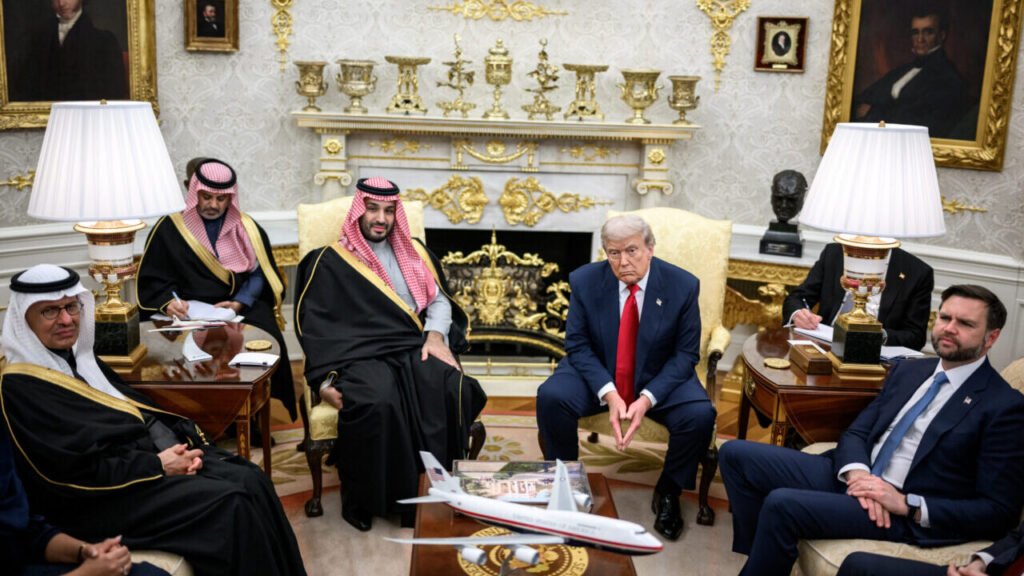
Ongoing Houthi attacks on Saudi Arabian infrastructure are complicating the Senate consideration of a proposed U.S.-Saudi nuclear cooperation pact, with senators from both parties questioning whether the security guarantees that the pact requires can be credibly provided in an environment where Houthi strikes on Saudi territory continue despite the American military presence in the region, Reuters reported on Friday. The proposed U.S.-Saudi nuclear pact — which would provide Saudi Arabia access to civilian nuclear technology and potentially to uranium enrichment capability under specific conditions — has been a component of the broader Saudi-Israeli normalization framework that the administration has been pursuing, and it has been controversial in Congress from the outset because of concerns about nuclear proliferation in the Middle East and about the specific terms under which Saudi Arabia would be allowed to enrich uranium. The Houthi strikes add a new dimension to the congressional concerns: a nuclear pact that includes security guarantees is more difficult to defend when the security environment in which those guarantees would operate is demonstrably deteriorating.
Reuters provided the specific Houthi attack context that is driving the Senate concerns. Houthi attacks on Saudi infrastructure — oil facilities, airports, and other strategic targets — have continued despite the American military deployment in the region (Nov 17 B13) and despite the Houthi designation as a foreign terrorist organization. The specific attacks that are driving the Senate concerns are the most recent strikes on Saudi infrastructure that have occurred in the November period, as the Houthi campaign against Saudi Arabia has continued in parallel with the Houthi Red Sea shipping disruptions that have been the primary international focus of the Houthi military campaign. Reuters noted that the Senate Foreign Relations Committee has been receiving classified briefings on the Houthi threat assessment, and that the briefings have reinforced the concern that the security environment for a U.S.-Saudi nuclear pact is less stable than when the pact was originally negotiated.
The Nuclear Pact Terms
Reuters analyzed the specific terms of the proposed U.S.-Saudi nuclear pact that are most contentious in the Senate context. The central dispute is over the specific enrichment terms: whether Saudi Arabia would be allowed to enrich uranium domestically under the pact, or whether it would be required to source enriched uranium from third-party suppliers (the standard 123 Agreement term that most U.S. nuclear cooperation agreements include). Saudi Arabia has insisted on the right to domestic enrichment as a condition of the pact — Crown Prince Mohammed bin Salman has stated publicly that if Iran has the right to enrich uranium, Saudi Arabia requires the same right — and the administration has been exploring whether specific conditions on the enrichment capability could address congressional proliferation concerns while satisfying the Saudi requirement. Reuters noted that the specific enrichment terms remain the central unresolved issue in the pact negotiations, and that the Houthi strikes add external pressure to an already complicated negotiation.
Reuters analyzed the Iran arc connection. The proposed U.S.-Saudi nuclear pact is embedded in the broader Iran confrontation framework that ONYX has tracked across this edition: the dirty-bomb intelligence, the three-carrier deployment, the Shenzhen summit Iran discussion gap, and now the Houthi attack complication of the Saudi pact. The specific logic of the pact — Saudi Arabia gets civilian nuclear technology and security guarantees in exchange for normalizing with Israel — is an attempt to build a regional security architecture that reduces Iran’s influence, but the Houthi attacks on Saudi Arabia demonstrate that Iran’s proxy capacity remains robust despite the American military posture. Reuters noted that senators are asking whether a pact that promises security guarantees in this environment creates American obligations that the military may be unable to fully deliver.
“We cannot promise Saudi Arabia security while Houthi drones are hitting Saudi airports. The pact terms need to reflect the actual security environment.” — Senate Foreign Relations Committee member cited by Reuters
The Senate Dynamics
Reuters analyzed the specific Senate dynamics around the pact consideration. The U.S.-Saudi nuclear pact requires Senate review under the Atomic Energy Act, and the specific review timeline is determined by the administration submission date and the Senate calendar. Reuters noted that the administration has been hoping to complete the pact and submit it to Congress before the end of the year, but that the Houthi attack concerns add to the existing proliferation concerns in a way that makes a smooth Senate review increasingly difficult. Both Republican and Democratic senators have expressed concerns — Republican concerns focus on the enrichment terms and their implications for the regional nuclear order; Democratic concerns focus on the human rights context of a pact that strengthens Saudi Arabia and on the enrichment terms as well.
WHAT HAPPENS NEXT
► Houthi attacks on Saudi Arabia to continue; whether the military posture can reduce strike frequency
► Senate Foreign Relations Committee to continue pact review; whether Houthi concerns delay or block submission
► Administration to address Senate concerns on enrichment terms; whether a modified pact is possible
► Saudi-Israeli normalization framework to be reassessed; whether the pact delay affects the broader diplomatic effort
| CONFIDENCE: HIGH | Reuters confirmed the Houthi attack concerns, the Senate consideration complication, the nuclear pact terms dispute, and the Iran arc connection. Single wire source with comprehensive diplomatic and policy context on a confirmed congressional complication to a significant diplomatic initiative. |
| Bias Check | ||
| Left-Lean | Center | Right-Lean |
| Pact framed as reckless nuclear proliferation; arming Saudi Arabia with enrichment capability in an unstable security environment is dangerous regardless of the terms. | Reports Houthi attack concerns, Senate complication, pact terms dispute, Iran arc connection, and Senate dynamics factually. | Pact framed as smart Middle East strategy; Saudi nuclear capability balances Iran and the security concerns are manageable with the right guarantees. |
SOURCES
► Reuters — Houthi attack context, Senate complication, pact terms analysis, Iran arc connection, Senate dynamics, November 21, 2026