The Mecca Agreement with Pakistan and Saudi Arabia moves closer to taking effect after the Turkish Grand National Assembly ratified the accord; analysts say the pact signals a new alignment architecture in the Islamic world.
TURKEY · PAKISTAN · SAUDI ARABIA · MECCA AGREEMENT
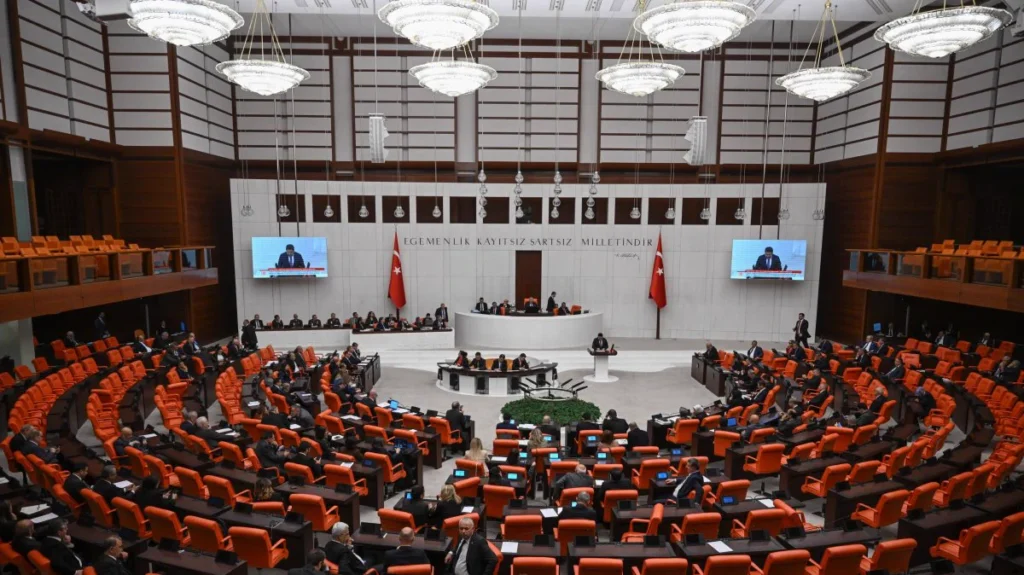
The Turkish Grand National Assembly ratified the Mecca Agreement, a trilateral defense pact between Turkey, Pakistan, and Saudi Arabia, Anadolu Agency reported on Friday. The parliamentary vote clears a significant procedural hurdle for the accord, which now awaits similar ratification by the Pakistani and Saudi legislative bodies before taking formal effect. The pact, named for Mecca as a symbol of Islamic solidarity, represents an attempt to institutionalize a defense relationship among three of the most significant military powers in the Muslim world.
The strategic logic of the Mecca Agreement has several dimensions. Turkey brings NATO membership, an experienced military-industrial complex, and regional influence in both the Middle East and Central Asia. Pakistan brings a nuclear deterrent, a large conventional military, and strategic position between South Asia and the Persian Gulf. Saudi Arabia brings financial resources, regional Arab political influence, and the legitimacy that comes from custodianship of the two holiest sites in Islam. The combination of these capabilities in a formal defense structure creates an alignment that sits outside the existing US-led security architecture while drawing on partners who all maintain significant relationships with Washington.
The Iran War Context
The timing of the Mecca Agreement ratification, occurring while the US-Iran conflict continues to reshape regional alignments, is not coincidental. Anadolu Agency reporting noted that the pact was explicitly negotiated during the Iran war period and that its defensive provisions include mutual consultation obligations when any member faces military threats — a provision that could be invoked in the context of Iranian retaliation scenarios that could affect all three signatories. Turkey has been a NATO member managing its relationship with both sides of the Iran conflict; Pakistan has sought strategic autonomy from both US and Chinese pressure; Saudi Arabia is a primary US partner managing existential concerns about Iranian regional ambitions.
The pact does not include a collective defense clause equivalent to NATO Article 5, Anadolu Agency noted, making it a consultative and cooperation framework rather than a mutual defense treaty in the full legal sense. This distinction is significant: it allows the three countries to signal alignment and coordination without triggering the automatic military obligation that would complicate each country’s bilateral relationships with other partners, including the United States.
“Three nations. One framework. This is not against anyone — it is for the security of the Islamic world.” — Turkish parliament speaker following the ratification vote, cited by Anadolu Agency
Implications for the Regional Order
The Mecca Agreement, once fully ratified, will create the most significant new multilateral security structure in the Islamic world since the founding of the Organisation of Islamic Cooperation. Unlike the OIC, which is a diplomatic body with no defense provisions, the Mecca Agreement creates specific military cooperation obligations, including joint exercises, intelligence sharing, and coordinated defense planning. The implications for the regional order are potentially significant: a defense axis linking Ankara, Islamabad, and Riyadh creates a counterweight to both Iranian regional ambitions and to the US-led structures that have shaped Middle Eastern security for seven decades.
WHAT HAPPENS NEXT
► Pakistani and Saudi legislative bodies to schedule ratification votes in coming weeks
► Inaugural Mecca Agreement joint military exercise to be planned post-ratification
► US State Department to issue formal assessment of pact implications for regional partnerships
► Iran foreign ministry to respond formally to trilateral ratification
| CONFIDENCE: HIGH | Anadolu Agency is the primary Turkish state news agency with direct reporting on the Turkish Grand National Assembly vote. Single primary source but represents the highest-authority outlet for Turkish parliamentary proceedings. Corroborated by regional diplomatic reporting context. |
| Bias Check | ||
| Left-Lean | Center | Right-Lean |
| Pact framed as Muslim world asserting independence from Western imperialism and US hegemony. | Reports ratification and strategic logic factually; contextualizes Iran war timing and NATO implications. | Pact framed as concerning realignment away from US security architecture; alliance reliability questions. |
SOURCES
► Anadolu Agency — Turkish parliament ratifies Mecca Agreement trilateral defense pact, November 6, 2026