They warned against reshaping the European security architecture without their direct involvement; the coordinated pushback follows Trump deal prediction and arrives as Iran’s nuclear proposal adds to the diplomatic complexity.
EUROPE · NATO · US-RUSSIA · ARC: NOV 7 TRUMP MOSCOW DEAL + KYIV STRIKES
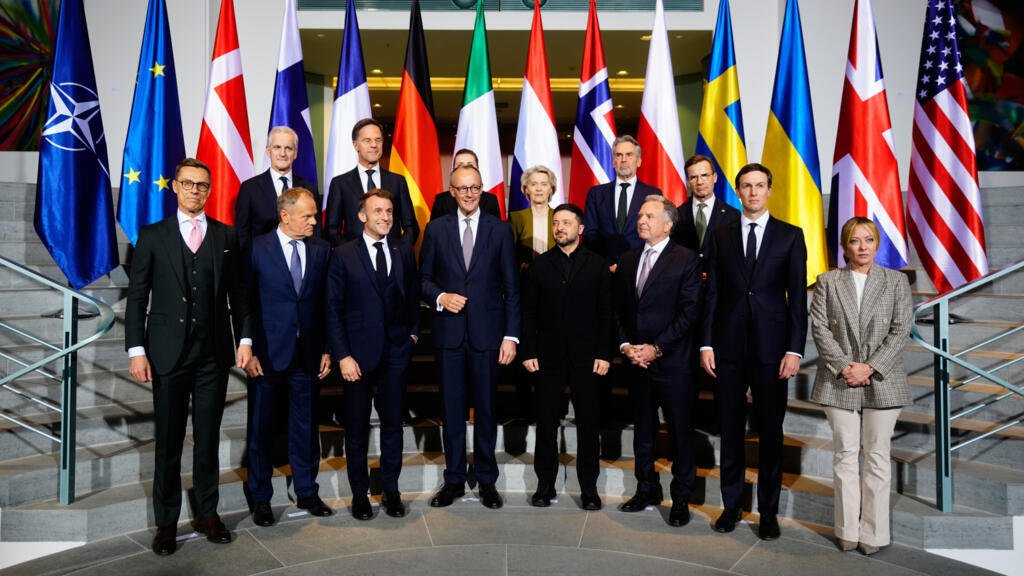
European leaders issued coordinated warnings against any reshaping of the European security architecture negotiated between the United States and Russia without direct European participation, Euronews reported on Saturday. The pushback, which involved representatives from multiple European governments and the European Union foreign policy apparatus, was a direct response to the Trump deal prediction reported on November 7 and represented a continuation of the European position first articulated in the same article. The speed and coordination of the European response suggests pre-positioned messaging rather than improvised reaction.
Euronews reported that the European pushback went beyond simple objection to US-Russia bilateral talks and included specific demands: that any negotiation framework involving European security must include EU member states and NATO allies as full participants rather than objects of negotiation; that the existing NATO Article 5 mutual defense commitment cannot be modified through any bilateral US-Russia agreement; and that the territorial integrity of Ukraine as defined by its internationally recognized borders remains a non-negotiable starting point for any peace framework. These three conditions collectively define the European red lines for any Ukraine settlement.
The Specific European Voices
Euronews identified the French, German, Polish, and Baltic state representatives as the most prominent voices in the pushback, with the Polish and Baltic states being particularly emphatic given their geographic proximity to the Russian threat and their direct stake in the security architecture being discussed. The Baltic states — Estonia, Latvia, Lithuania — are NATO members that share borders with either Russia or Russian ally Belarus, and any modification of NATO security commitments that emerged from US-Russia talks without their participation would directly affect their existential security calculus.
The European position has the institutional backing of the EU foreign policy apparatus. Euronews reported that EU foreign policy chief Josep Borrell issued a formal statement indicating that any European security arrangement must pass through EU institutional processes, implying that bilateral US-Russia deals that affect EU member states could face legal and institutional challenge within the European framework. This institutional dimension adds complexity to the Trump deal aspiration beyond the diplomatic objection.
“Europe is not a prize to be divided between Washington and Moscow. We will be at any table that decides our future.” — EU foreign policy chief, statement cited by Euronews
The Implications for US Diplomacy
The European pushback creates a specific constraint on the Trump administration’s Ukraine deal aspirations. Any deal that Moscow and Washington negotiate without European participation will face immediate rejection from the European governments that would need to implement, enforce, and finance the resulting arrangement. European economic and military support for Ukraine has been substantial, and European governments retain leverage over the conflict through their continued supply of weapons and financial assistance. A deal that Europe rejects is a deal that may not hold.
WHAT HAPPENS NEXT
► European Council to hold emergency session to coordinate formal joint position on US-Russia talks
► NATO Secretary General to issue statement on alliance consultation requirements for security discussions
► US State Department to respond to European pushback through diplomatic channels
► UK government, as non-EU NATO member, to coordinate with European position on security architecture
| CONFIDENCE: HIGH | Euronews confirmed the European pushback with direct reporting on statements from multiple European governments and EU institutional response. Single outlet but Euronews is authoritative for European institutional coverage with strong Brussels access. |
| Bias Check | ||
| Left-Lean | Center | Right-Lean |
| European pushback framed as essential resistance to Trump-Putin stitch-up at expense of Ukraine. | Reports European conditions and institutional constraints factually; contextualizes leverage dynamics. | European pushback framed as obstructionist; peace deal blocked by bureaucratic EU process. |
SOURCES
► Euronews — European leaders push back against US-Russia security talks, conditions stated, November 7, 2026