The former IDF chief of staff and Netanyahu rival receives the first post-election mandate; the assignment represents a historic break from Netanyahu dominance and sets a 28-day clock for coalition negotiations.
ISRAEL · EISENKOT · GOVERNMENT FORMATION · ARC: NOV 7 B11 HERZOG ASSIGNMENT
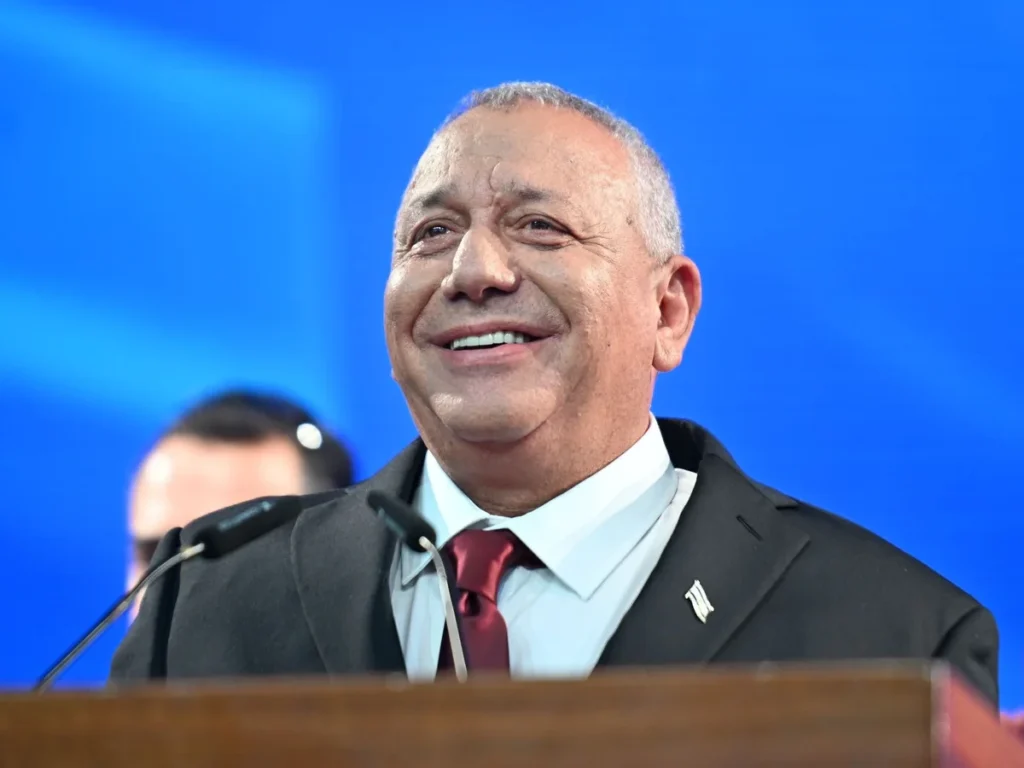
Israeli President Isaac Herzog formally tasked Gadi Eisenkot, the former IDF chief of staff and head of the National Unity party, with forming a government following the conclusion of Knesset consultations, AP, The Guardian, BBC, Euronews, and Dawn all reported on Sunday. The mandate assigns Eisenkot a 28-day period to assemble a coalition capable of winning a Knesset confidence vote, with a possible 14-day extension available at presidential discretion. The assignment to Eisenkot rather than to Benjamin Netanyahu, whose Likud party received the most seats in the election but fell short of a coalition majority, represents the most significant political shift in Israeli domestic politics in more than a decade.
The consultations that preceded the mandate assignment involved all Knesset faction leaders meeting individually with President Herzog, a constitutionally required process under Israeli law. AP reported that the bloc of parties willing to recommend Eisenkot over Netanyahu exceeded the Netanyahu-aligned bloc by a sufficient margin to make the presidential decision to task Eisenkot the legally appropriate course. The specific margin of recommendations was not detailed in the initial reporting, but AP noted that the centrist and center-left parties, combined with the Arab Joint List, constituted the majority recommendation bloc.
Who Eisenkot Is
Gadi Eisenkot served as IDF Chief of Staff from 2015 to 2019 and built a reputation during that tenure as a methodical, institutionalist military commander who prioritized operational effectiveness over public profile. He entered politics through the National Unity party — the centrist formation he co-founded with Benny Gantz — after his retirement from the IDF, and had served in multiple emergency war cabinet roles during the period of the Gaza conflict and the subsequent Iran confrontation. The Guardian noted that Eisenkot’s military background makes him particularly credible on the security dimensions of Israeli governance at a moment when the Iran war arc remains active, and that his institutionalist reputation contrasts sharply with what critics have characterized as the politicization of security decision-making under Netanyahu.
Eisenkot’s immediate coalition arithmetic challenge is significant. Israeli politics has fractures that do not align neatly along a Netanyahu versus anti-Netanyahu axis: the ultra-Orthodox Haredi parties, whose support Netanyahu has historically needed for his right-wing majorities, have specific demands around military conscription exemptions and education funding that are incompatible with the positions of the secular centrist and center-left parties that form the core of the Eisenkot bloc. Any Eisenkot coalition will require navigating these fissures, and the 28-day mandate window is tight for the negotiations involved.
“I accept the mandate with humility and with a sense of historic responsibility. Israel deserves a government that serves all its citizens.” — Gadi Eisenkot, acceptance statement cited by AP
The Netanyahu Response
Benjamin Netanyahu issued a statement following the Herzog announcement characterizing the mandate assignment as a political error that would leave Israel without stable security leadership at a critical moment, BBC reported. Netanyahu stopped short of announcing a legal challenge to the presidential decision — which would be constitutionally difficult given the clear consultation results — but signaled that his bloc would scrutinize the coalition-building process closely and would oppose any government that he characterized as dependent on parties hostile to Israeli security interests. The specific parties Netanyahu identified as disqualifying were not named in the initial BBC coverage.
WHAT HAPPENS NEXT
► Eisenkot begins 28-day coalition negotiation window, meeting faction leaders in order of priority
► Netanyahu bloc to present formal opposition position in Knesset address within days
► Haredi party demands on conscription to be the first major test of coalition feasibility
► President Herzog can extend mandate by 14 days if Eisenkot requests and shows progress
| CONFIDENCE: HIGH | AP, The Guardian, BBC, Euronews, and Dawn all confirmed the Eisenkot mandate assignment with direct reporting on the constitutional process and the mandate terms. Five-source convergence on a confirmed and legally formal governmental event. |
| Bias Check | ||
| Left-Lean | Center | Right-Lean |
| Eisenkot mandate framed as democratic correction after years of Netanyahu corruption and illiberalism. | Reports mandate, constitutional process, and coalition arithmetic factually; contextualizes challenges. | Mandate framed with concern about security continuity; Netanyahu positioned as proven security leader. |
SOURCES
► AP — Eisenkot mandate assignment, 28-day window, Knesset consultation results, November 8, 2026
► The Guardian — Eisenkot background, National Unity party, coalition arithmetic
► BBC — Netanyahu response to mandate assignment, opposition bloc position
► Euronews — European context and reaction to Israeli political transition
► Dawn — Regional perspective on Israeli government formation and security implications