The G7 released 100 million barrels specifically to counter high fuel prices and market volatility. The Houthi Aramco claim in Riyadh on October 4 is the market volatility event the reserves were designed to absorb. Whether the reserve release can offset the upward price pressure from a claimed Saudi capital Aramco strike is the specific documented energy market test.
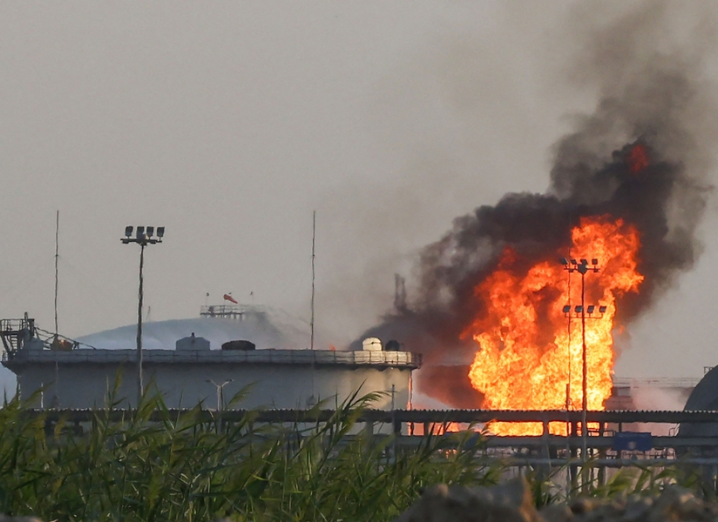
THE THREE-CHOKEPOINT PICTURE
October 4 documents three simultaneous Middle East energy chokepoints:
▸ Hormuz: 58 days disrupted; diplomacy stalled; two days to October 6 expiration
▸ Bab el-Mandeb: Houthi-controlled Mayun Island since September 12; disrupted
▸ Saudi Aramco: Houthi Aramco claim in Riyadh; possible production disruption
Saudi crude is the specific oil production that has been partially replacing Hormuz-dependent Gulf producers’ reduced exports. Attacking Aramco attacks the replacement supply.
THE 2019 ABQAIQ PRECEDENT
The September 2019 Houthi attack on Abqaiq and Khurais — Saudi Aramco’s largest processing facility and a major oil field — temporarily removed approximately 5.7 million barrels per day from production, about 5% of global oil supply. Oil rose 14% in a single day. Saudi Arabia restored production within weeks.
▸ 2019 Abqaiq: peripheral production facility; approximately 5.7 million barrels per day affected temporarily
▸ October 4 Riyadh claim: the capital city; not confirmed; different scale of facility; but higher escalatory significance
▸ Key difference: Saudi confirmation is pending; the Abqaiq attack was immediately apparent from satellite imagery and production data
OPEC+ UNCHANGED
OPEC+ agreed to maintain its November oil-output targets despite continuing supply disruption. The specific significance: OPEC+ producers are watching the same three-chokepoint environment as oil market traders and have decided not to increase production. Their decision not to add supply into a supply-constrained market means any demand or supply disruption has larger price effects than it would with a supply cushion.
G7 RELEASE BEGINS
The G7’s planned release of 100 million barrels over four months is beginning to shape fuel markets. The first releases focus heavily on diesel. The specific tension: diesel reserves entering the market on the same day a Houthi Aramco claim is made in Riyadh produces a price signal war between the G7 reserve downward pressure and the escalation risk upward pressure.
The G7 released 100 million barrels to counter market volatility. The Houthis claimed they struck Aramco in Riyadh on the same day. OPEC+ kept output unchanged. Hormuz is closed. Bab el-Mandeb is restricted. Saudi Aramco may have been struck. The G7 reserve release is entering a market where the three main Middle East energy supply routes are simultaneously under documented pressure. This is the energy picture two days before October 6.
WHAT HAPPENS NEXT
▸ Saudi Aramco confirmation — whether damage and production disruption are confirmed
▸ Oil price opening — whether markets open sharply higher on the Aramco claim
▸ G7 reserve acceleration — whether the Aramco claim produces faster reserve deployment
▸ OPEC+ extraordinary meeting — whether an emergency production decision is called
▸ October 6 — two days
| CONFIDENCE: HIGH | Houthi Saudi Aramco energy infrastructure offset G7 emergency reserve release push prices higher Red Sea Bab el-Mandeb Hormuz major energy security chokepoints from confirmed reporting. |
| ⚖️ BIAS CHECK — WHO IS SAYING WHAT | |
| Oil market | Will price the Aramco claim at a risk premium even before Saudi confirmation; the 2019 precedent shapes the immediate response |
| OPEC+ | Chose not to add supply; their decision amplifies any supply disruption’s price effect |
| G7 | Began releases intended to counter volatility; the Aramco claim is the first significant test of whether the release can absorb a Gulf energy escalation |
| Saudi Arabia | Has not confirmed damage; its production restoration capability is the specific 2019-precedent data point |
| ONYX | Covering the three-chokepoint picture and the reserve-release-vs-Aramco-claim tension; naming the OPEC+ decision’s amplification effect |
SOURCES
▸ Confirmed reporting — oil markets, Aramco G7 reserves, October 4, 2026