Energy markets moved higher Tuesday as the twin drivers of Gulf oil price risk — intensified Iranian mine and missile tactics in the Strait of Hormuz and the Houthi ballistic missile campaign against Saudi energy infrastructure — produced fresh uncertainty about supply continuity. The price movement lands on the same day the September CPI showed gasoline up 9.1 percent and overall inflation at 3.7 percent.
📈 ENERGY MARKETS · OCTOBER 14, 2026 · GULF CONFLICT OIL RISK
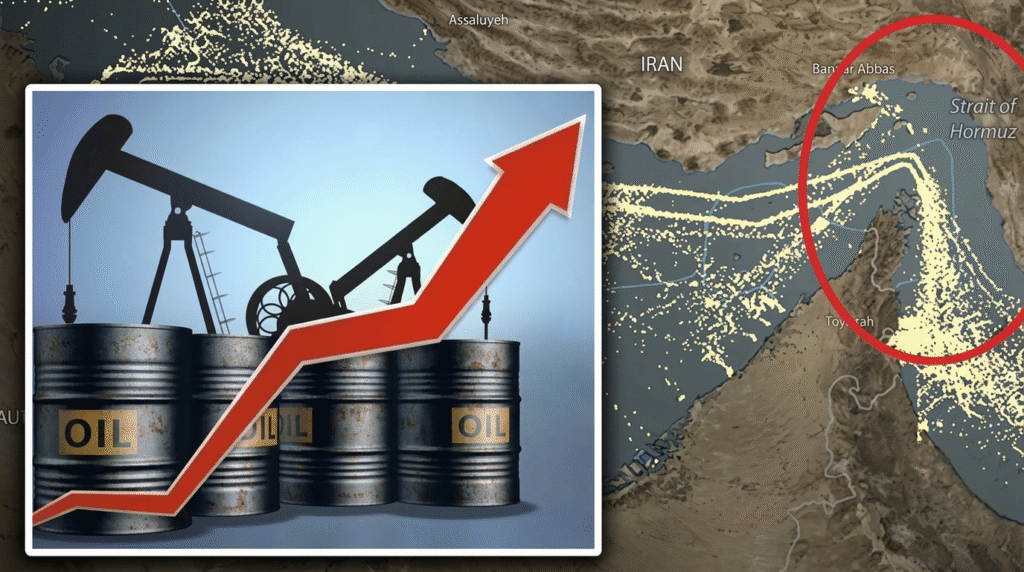
Oil prices moved higher Tuesday as the Gulf conflict produced fresh developments on both its principal axes: Iranian mine and missile tactics in the Strait of Hormuz — including the confirmed sinking of a cargo ship by a mine — and the Houthi ballistic missile campaign against Saudi Arabia, including a missile aimed at Riyadh and Houthi claims of strikes on Aramco facilities. NYT confirmed the market movement and characterized energy markets as volatile in response to the sustained and escalating regional conflict. The specific price levels were not detailed in initial reporting; the direction and volatility characterization were confirmed.
Oil prices have been elevated throughout the Gulf conflict. The Strait of Hormuz is the chokepoint through which approximately twenty percent of globally traded oil passes. Any credible threat to transit through the strait — and the mine sinking reported Tuesday represents a significant upgrade in the credibility of that threat — moves prices. The risk is not primarily about what has already happened. A cargo ship has sunk. Oil continues to flow. The risk premium is about what might happen if the conflict intensifies to the point where transit becomes genuinely unreliable: the insurance withdrawal, the routing changes, the production disruptions that would follow.
THE ARAMCO DIMENSION
Houthi claims of strikes against Aramco facilities are the second track of Gulf oil price risk. Saudi Aramco is the world’s largest oil producer. Successful strikes against its processing infrastructure — as occurred in the 2019 Abqaiq attack, which briefly took out approximately five percent of global oil supply — would produce an immediate and significant price spike. Saudi air defenses have been intercepting most Houthi missiles, but the debris injuries and the sustained launch rate demonstrate that interception is not impenetrable. Markets price the probability of a successful infrastructure strike as a risk premium.
The combination of Hormuz mine risk and Aramco strike risk makes the Gulf energy market picture unusually complex. Either risk alone would be a significant price driver. Both risks operating simultaneously, with the Iranian tactics reportedly adjusting to defeat US and allied countermeasures, create a risk environment that is genuinely elevated. Insurance markets are processing this in real time: Lloyd of London and related marine markets are adjusting their Gulf transit pricing, and some vessels are already rerouting away from Hormuz at high additional cost.
THE CPI CONNECTION
The September CPI report released Tuesday morning showed gasoline up 9.1 percent in a single month. Oil prices above existing levels will feed into October gasoline prices that will show up in the October CPI report, released approximately six weeks before the final pre-midterm economic data snapshot. If the Gulf conflict continues to drive oil prices higher through October, the October CPI will show continued energy inflation — compounding the political difficulty the September print already created for the administration. The energy market is the connecting tissue between foreign policy in the Gulf and domestic political outcomes in November.
“Oil prices rose because a mine sank a ship in Hormuz and Houthis claimed Aramco. September CPI showed gas up 9.1 percent. Oil prices above this level feed the October CPI. The October CPI comes out before the midterms. The Gulf and the American gas pump are the same story.”
WHAT HAPPENS NEXT
► Price level confirmation — specific oil price movements from commodity market close data
► Insurance response — Lloyd of London and marine market pricing adjustments for Gulf transit
► Routing changes — whether commercial shippers begin avoiding Hormuz at scale
► Aramco assessment — Saudi confirmation or denial of facility damage from Houthi claims
► October CPI preview — whether energy market direction through October suggests another hot print
| CONFIDENCE: HIGH | NYT confirmed oil price rise and energy market volatility in response to intensified Hormuz attacks and Houthi-Saudi fighting, October 14, 2026. |
| BIAS CHECK | ASSESSMENT |
| Source weight | NYT — strong for market characterization; specific price levels not yet available at filing time |
| Market framing | Volatility and directional movement cited as reported; risk premium characterized from documented market mechanism |
| CPI connection | September CPI data cited from same-day BLS report; October CPI path characterized as contingent, not certain |
| Political framing | Administration political difficulty described as analytical observation; not used editorially against the administration |
SOURCES
► NYT — Oil prices rise Hormuz attacks Houthi Saudi fighting, energy markets volatile, October 14, 2026