A Russian strike struck a power station in the Dniprovskyi District of Kyiv, cutting heating to more than 1,000 buildings as part of the broader overnight attack package that left 600,000 Ukrainians without electricity. BBC confirmed the specific infrastructure strike and the heating loss. October in Ukraine means temperatures that make heat deprivation dangerous.
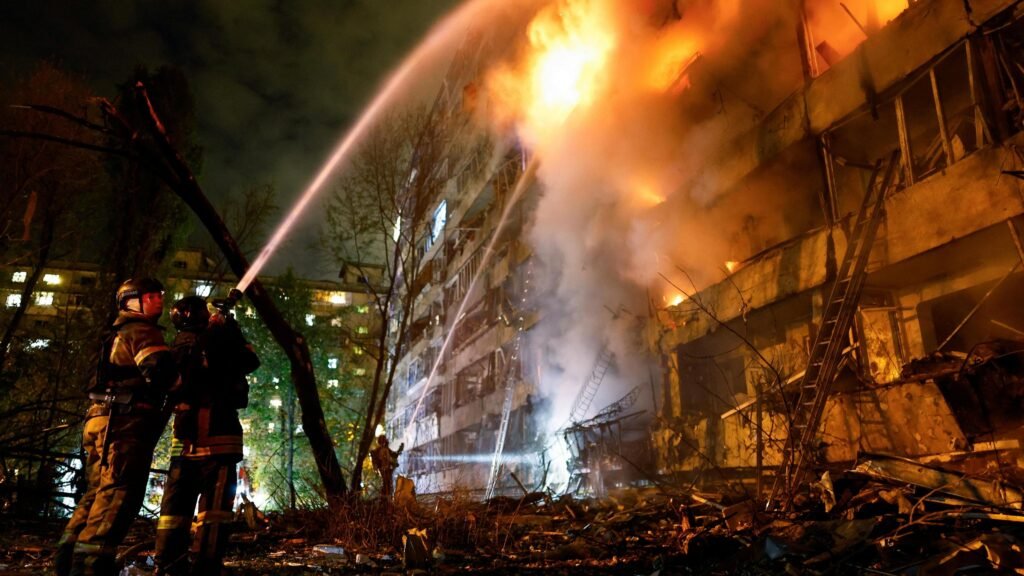
🇺🇦 KYIV — DNIPROVSKYI DISTRICT · OCTOBER 14, 2026 · POWER STATION STRIKE
A Russian missile strike hit a power station in the Dniprovskyi District of Kyiv during the overnight attack package of October 13-14. BBC confirmed the specific strike and its consequences: more than 1,000 buildings in the district lost heating as a direct result. The broader overnight attack — confirmed by CNN, Reuters, CBC, and dpa — left more than 600,000 Ukrainians without electricity across Kyiv and Kharkiv. The Dniprovskyi District strike is the specific residential and infrastructure consequence within Kyiv from that package.
The Dniprovskyi District sits on the left bank of the Dnieper River in Kyiv — a largely residential area of apartment blocks, schools, and local commercial infrastructure. A power station serving that district going offline means the buildings it heats lose their central heating systems. In Ukrainian apartment block infrastructure, central heating is not something residents control individually; it flows from district heating plants through underground pipes to buildings. When the plant is struck and the heating stops, 1,000-plus buildings mean tens of thousands of residents waking to cooling apartments on an October morning when outdoor temperatures in Kyiv are running between 5 and 12 degrees Celsius.
THE OCTOBER TEMPERATURE PROBLEM
October is when the heating season begins in Ukraine. The Russian strategy of targeting energy infrastructure is explicitly calibrated to the heating season — it is more devastating to destroy heating capacity in October than in July because the consequences are immediate and physically dangerous. Ukrainian households that lose heat in October face a deteriorating situation that becomes acute as temperatures fall toward zero in November and December. Repair timelines for damaged power stations can range from days to weeks depending on the severity of the damage and the availability of replacement components, many of which are imported. Ukraine has been managing a systematic depletion of its energy infrastructure spare parts inventory throughout the war.
The Dniprovskyi District strike is one node in a system-level attack. The Russian operational objective is not to inconvenience the residents of one district in Kyiv. It is to create cumulative damage to the Ukrainian energy system — across generating capacity, transmission infrastructure, and distribution points — that exceeds Ukraine’s repair capacity. Each wave of attacks damages facilities that may have been recently repaired. Each repair cycle depletes the available spare parts. The goal is an energy system that simply cannot maintain heat and power through a winter, producing civilian suffering that either breaks public morale or forces a settlement.
REPAIR UNDER FIRE
Ukrainian repair crews began work on the damaged Dniprovskyi power station immediately, as they do every time a facility is struck. Ukrainian energy workers have become some of the most targeted civilian workers in the world — they repair infrastructure under conditions that include continued air raid warnings, the risk of double-tap strikes on repair personnel, and winter conditions. Their work is what prevents the cumulative damage from becoming total collapse. How long the 1,000-plus buildings remain without heating depends on the severity of the damage and how quickly crews can restore the plant.
“A power station in Kyiv was struck. Over 1,000 buildings lost heating. In October in Ukraine, that is not a statistic. It is tens of thousands of people waking up to a cold apartment. It will be colder in November. And in December.”
WHAT HAPPENS NEXT
► Repair timeline — Ukrainian energy operator update on Dniprovskyi power station restoration
► Heating restoration — when the 1,000-plus buildings regain heating service
► Spare parts inventory — Ukrainian energy ministry assessment of replacement component availability
► Broader damage assessment — full accounting of the overnight attack package across Kyiv and Kharkiv
► Winter preparedness — Ukrainian government update on energy system readiness ahead of November-December
| CONFIDENCE: HIGH | BBC confirmed a Russian strike on Kyiv Dniprovskyi District power station, leaving over 1,000 buildings without heating as part of the overnight October 13-14 attack package. |
| BIAS CHECK | ASSESSMENT |
| Source weight | BBC — tier-one international broadcaster; strong for Ukraine infrastructure reporting |
| Temperature framing | October temperatures cited as factual meteorological context; health risk described from documented cold exposure standards |
| Russian strategy | Energy infrastructure targeting described as documented operational approach from established reporting; not characterized editorially beyond the documented strategy |
| Repair crews | Described as performing documented function; characterization as targeted workers based on published incident record |
SOURCES
► BBC via Wikipedia current events — Russia strikes Kyiv Dniprovskyi power station, 1000+ buildings without heating, October 14, 2026