Vladimir Putin publicly stated that any peace process with Ukraine must center on security guarantees for Russia and produce a permanent, final-form settlement rather than a short temporary ceasefire. The distinction matters enormously: a temporary ceasefire would freeze the front lines and allow Ukraine to rearm and reinforce; a final settlement on security guarantees would require Ukraine to make binding commitments on NATO membership and Western military presence — the core demands Russia has held since before the full-scale invasion.
DIPLOMACY · RUSSIA · UKRAINE · PUTIN · SECURITY GUARANTEES · PEACE TALKS
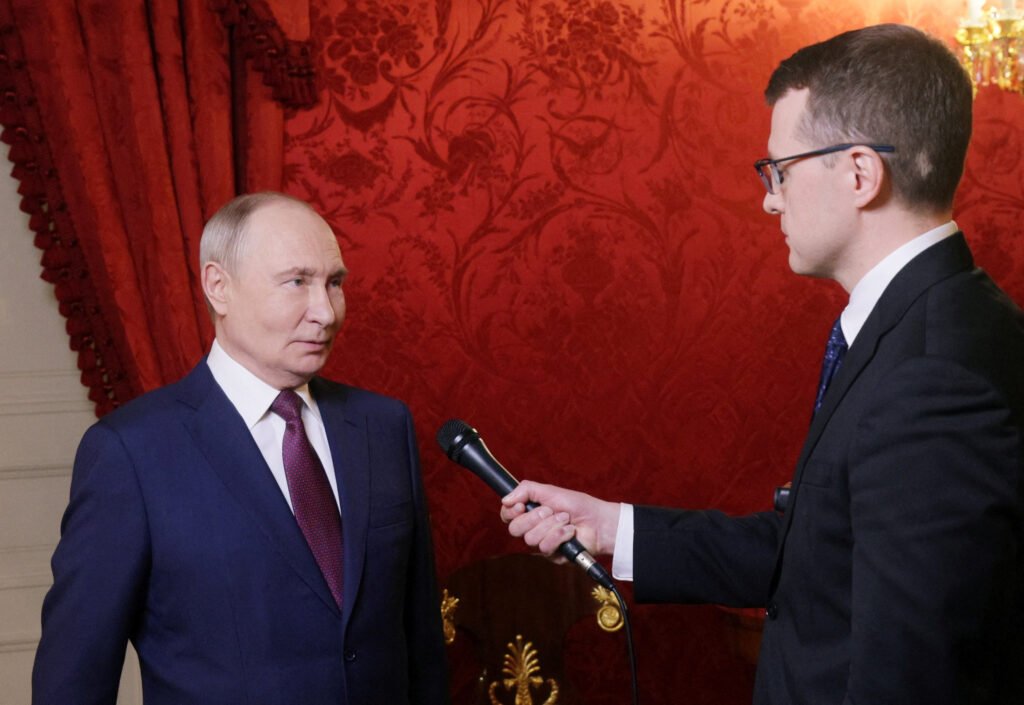
MOSCOW — President Vladimir Putin stated that peace talks with Ukraine must focus on security guarantees for Russia and produce a final settlement rather than a short temporary ceasefire, according to Reuters via Just Security. Putin position — publicly stated and consistent with his documented diplomatic posture since at least the Minsk process — is that Russia will not accept an armistice that leaves Ukraine able to resume fighting from a stronger position after rearming. He has consistently demanded that any settlement include binding commitments on Ukrainian neutrality, limits on Western military presence in Ukraine, and guarantees that Ukraine will not join NATO.
The distinction between a ceasefire and a security-guarantee settlement is the central fault line in current Ukraine peace diplomacy. Western governments and Ukraine have generally been willing to discuss ceasefires as a first step toward broader negotiations. Russia has consistently rejected that sequencing, arguing that a ceasefire without underlying security architecture simply gives Ukraine time to rearm — which Russia views as in the interest of the U.S. and NATO rather than Russia. Putin statement restates that position publicly, presumably directed at the Trump administration, which has expressed interest in a peace process.
What Security Guarantees Mean in Practice
Russian security guarantees demands, as articulated since the December 2021 draft treaties Moscow sent to NATO and the U.S., include: no NATO membership for Ukraine, withdrawal of NATO forces and infrastructure from states that joined the alliance after 1997, limits on weapons systems deployable in countries bordering Russia, and a formal Ukrainian neutrality status. Ukraine and NATO rejected those demands in January 2022, one month before the full-scale invasion. For any settlement to meet Putin stated requirements, some version of those demands would need to be addressed — which would require Ukraine to forgo NATO membership and Western governments to accept constraints on alliance activities.
“A short ceasefire is not peace. Peace requires security guarantees. We know what those must be.” — President Vladimir Putin, statement via Reuters
WHAT HAPPENS NEXT
► Trump administration response — how the U.S. characterizes Putin security guarantee demands.
► Ukrainian reaction — Zelensky and Ukrainian officials responding to Putin final-settlement framing.
► NATO consultation — alliance members assessing what security guarantee demands would mean for Article 5.
► Negotiation format — whether any formal or informal talks are scheduled between parties.
► Battlefield context — ceasefire vs. settlement debate occurring while active fighting continues.
| CONFIDENCE: HIGH | Putin statement on security guarantees and final settlement preference confirmed by Reuters via Just Security. December 2021 draft treaty demands from established documented record. Minsk process history from established prior reporting. Ukrainian and Western rejection of January 2022 demands from established documented record. NATO membership and neutrality as core Russian demands from established diplomatic record. |
| Bias Check | ||
| Left-Lean | Center | Right-Lean |
| Frames Putin security guarantee demands as maximalist; argues Ukraine must not concede NATO aspirations. | Reports confirmed Putin statement and the documented security guarantee framework as established context. | Some framing presents Putin security concerns as legitimate; argues NATO expansion provoked the conflict. |
| Assessment | ONYX presents the confirmed statement and the documented diplomatic history. Both the Russian demand content and the Western rejection record are established facts, not editorial positions. | |
SOURCES
► Reuters via Just Security — Putin statement on security guarantees and final settlement requirement