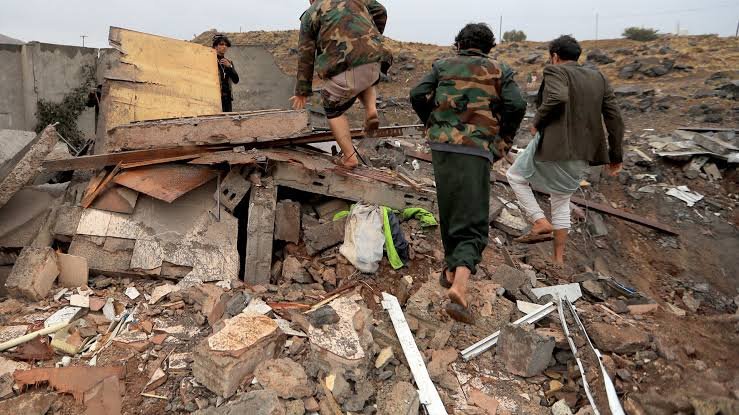
The Saudi-led coalition intercepted Houthi missiles and drones targeting eastern and southern Saudi Arabia, destroying multiple threats before they reached their targets. This is a continuation of the sustained Houthi missile and drone campaign against Saudi Arabia that has characterized the Yemen war through its current phase — and connects directly to the October 25 coverage in which Saudi Arabia briefly closed Riyadh airport. The October 27 interceptions show that the campaign continues despite the airport reopening, confirming that the threat was managed rather than eliminated. Eastern Saudi Arabia is particularly significant as the location of the major oil production and processing infrastructure.
BREAKING INTERNATIONAL · SAUDI ARABIA · HOUTHI · MISSILES · DRONES · INTERCEPTED · EASTERN AND SOUTHERN
RIYADH / SANAA — The Saudi-led coalition intercepted Houthi missiles and drones targeting eastern and southern Saudi Arabia, destroying multiple threats, according to Reuters and Just Security. The specific number of missiles and drones intercepted, the interception mechanism used (Patriot, THAAD, or other systems), whether any threats evaded interception, and any damage from those that may have gotten through were not detailed in initial reporting. The Houthi military media statement on the attacks — typically claiming specific targets and asserting their missiles reached them — was not quoted in initial coverage.
The October 27 interceptions continue a pattern documented in ONYX coverage on October 25, when Houthi attacks on Saudi Arabia included missiles and the Riyadh airport was reopened after weeks of closure. The Houthi campaign has shown no signs of reduction despite Saudi air defense operations, diplomatic pressure, and the broader military context of the Yemen war. Eastern Saudi Arabia is home to the Dhahran and Dammam oil infrastructure complex, Aramco headquarters, and the major oil export terminal at Ras Tanura — making it among the highest-value potential targets in the Arabian Peninsula from both military and economic standpoints.
Coalition Air Defense Architecture
Saudi Arabia operates a layered air defense architecture that includes Patriot PAC-2 and PAC-3 batteries, the THAAD system acquired from the United States, and shorter-range systems. Despite this investment, the Houthi campaign has demonstrated the limits of purely defensive approaches against a high-volume, low-cost drone and missile campaign. Houthi use of inexpensive one-way attack drones forces the coalition to expend costly interceptor missiles to shoot them down — a cost exchange ratio that favors the attacker over time. The October 2019 Abqaiq and Khurais attack demonstrated the potential ceiling of the threat: that coordinated strike temporarily halved Saudi oil production. Whether the ongoing campaign approaches that level of strategic ambition remains the central question of Saudi air defense planning.
“The coalition air defense forces intercepted and destroyed all hostile missiles and drones before they reached their targets. The skies over the Kingdom are defended.” — Saudi-led Coalition spokesman, via Reuters
WHAT HAPPENS NEXT
► Intercept count — full Saudi coalition confirmation of missiles and drones destroyed.
► Damage assessment — whether any threats evaded interception and caused damage.
► Houthi claim — Houthi military media statement on what they targeted and alleged impact.
► Eastern oil infrastructure status — Aramco and Ras Tanura operational confirmation.
► Yemen war status — whether the interception success changes coalition military posture in Yemen.
| CONFIDENCE: HIGH | Saudi coalition interception of Houthi missiles and drones confirmed by Reuters and Just Security. Eastern and southern Saudi Arabia as targets confirmed. Multiple threats destroyed confirmed. Specific intercept count, damage from any that evaded, and Houthi targeting statement NOT confirmed — flagged. Eastern Saudi Arabia oil infrastructure significance and 2019 Abqaiq attack from established documented record. |
| Bias Check | ||
| Left-Lean | Center | Right-Lean |
| Frames Houthi attacks as resistance to Saudi blockade; questions coalition civilian impact in Yemen. | Reports confirmed Saudi coalition Houthi missile and drone intercepts as stated by Reuters and Just Security. | Frames successful intercepts as Saudi defensive success; urges stronger offensive Yemen campaign. |
| Assessment | ONYX presents confirmed interceptions. Eastern Saudi Arabia oil infrastructure context is established geographic fact. Cost-exchange ratio analysis is an established military economics concept. Neither Houthi resistance nor Saudi campaign advocacy adopted editorially. | |
SOURCES
► Reuters, Just Security — Saudi-led coalition intercepts Houthi missiles and drones targeting eastern and southern Saudi Arabia; multiple threats destroyed