
The only total solar eclipse of 2026 is crossing the Northern Hemisphere today — Wednesday, August 12 — with the path of totality sweeping across Greenland, Iceland, the Atlantic Ocean, northern Spain, and a small corner of Portugal, according to NASA. The United States will see only a partial eclipse. NASA is urging anyone viewing domestically to wear certified ISO 12312-2 standard eclipse glasses for the entire event, not just during totality, since partial eclipse phases carry the same retinal damage risk as direct sun viewing.
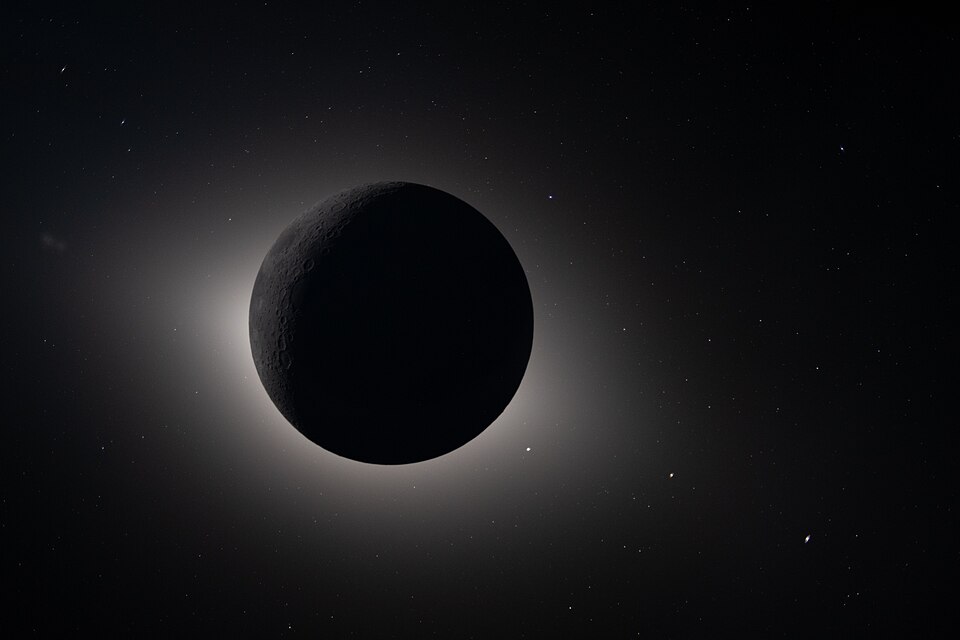
THE PATH OF TOTALITY — WHERE AND WHEN
| LOCATION | LOCAL TOTALITY TIME (approximate) |
| Greenland (southern tip) | Early morning — first major landfall of the path |
| Iceland (Reykjavik area) | Mid-morning — capital within or near totality path |
| North Atlantic Ocean | Sweeps southeast across open ocean |
| Northern Spain (Galicia, Asturias) | Midday local time — primary populated totality zone |
| Small corner of Portugal | Brief totality at the edge of the path |
| United States | Partial eclipse only — glasses required throughout |
WHY THIS ECLIPSE IS UNUSUAL
Most total solar eclipses that cross populated areas track across major continents with large viewership populations. This eclipse’s path is notable for crossing relatively low-population areas (Greenland, open Atlantic) before its most significant populated landfall in northern Spain. The result: spectacular totality conditions for the Galicia and Asturias regions of Spain, which will see roughly 2-3 minutes of totality — the temporary daytime darkness, visible corona, and temperature drop that make total eclipses distinct from partial ones.
For Americans: the partial eclipse is a real astronomical event worth viewing with proper equipment, but it does not produce totality’s dramatic effects. The moon covers only a fraction of the sun’s disk, which remains blinding throughout. This is the specific reason NASA’s glasses warning applies to the entire American viewing experience — there is no ‘safe moment’ during a partial eclipse as there is during totality.
THE SAFETY WARNING — WHAT ISO 12312-2 MEANS
ISO 12312-2 is the international safety standard for eclipse viewing glasses. Lenses meeting this standard filter out 99.99%+ of visible light and block all harmful ultraviolet and infrared radiation. Regular sunglasses — even very dark ones — do not meet this standard and are not safe for eclipse viewing. Improvised viewing methods (exposed film, CDs, smoked glass) are not safe. The damage is irreversible — solar retinopathy can cause permanent vision loss or blindness.
▸ Safe: ISO 12312-2 certified eclipse glasses from reputable manufacturers
▸ Safe: Solar viewing through a telescope or binoculars with properly mounted solar filters
▸ Safe: Pinhole projection (cardboard box or paper) — projects an image of the sun without direct viewing
▸ Not safe: Regular sunglasses of any darkness
▸ Not safe: Looking at the sun during totality if you are not in the path of totality (partial eclipse = no safe direct viewing moment)
THE SCIENCE DIMENSION
Total solar eclipses remain scientifically valuable even in an era of space telescopes and solar observation satellites. The specific value: during totality, the moon blocks the sun’s overwhelming disk, making the solar corona — the outermost layer of the sun’s atmosphere — directly observable. Ground-based observations during totality capture chromatic and spatial information about the corona that orbital instruments cannot fully replicate. The August 12 eclipse will have organized scientific observation teams stationed along the path of totality, particularly in Iceland and Spain.
| CONFIDENCE: HIGH | Eclipse path (Greenland, Iceland, Atlantic, Spain, Portugal) is from NASA documentation. Totality is the only total solar eclipse of 2026 is from NASA eclipse calendar. ISO 12312-2 safety standard is from established international standards documentation. Partial eclipse viewing guidance is from NASA safety recommendations. |
SOURCES
▸ NASA — August 12, 2026 total solar eclipse path and safety guidelines
▸ ISO 12312-2 — international eclipse glasses safety standard
Q: What time does the eclipse hit Spain?
A: Approximately midday local time in the Galicia and Asturias regions of northern Spain. Exact local times by city are available on NASA’s eclipse website and timeanddate.com, which provide location-specific totality times.
Q: When is the next total solar eclipse visible from the United States?
A: The previous major US total solar eclipse was April 8, 2024. The next one visible from parts of the US is August 12, 2026 — today’s eclipse — only as a partial from US territory. A path-of-totality eclipse crossing the continental US is expected in 2033 over Alaska.