
In one Texas county, a quarter of the system’s noncitizen “matches” were people who had already proven they were citizens. The Court allowed it back into use anyway.
ONYX NEWS STAFF — DATELINE: WASHINGTON
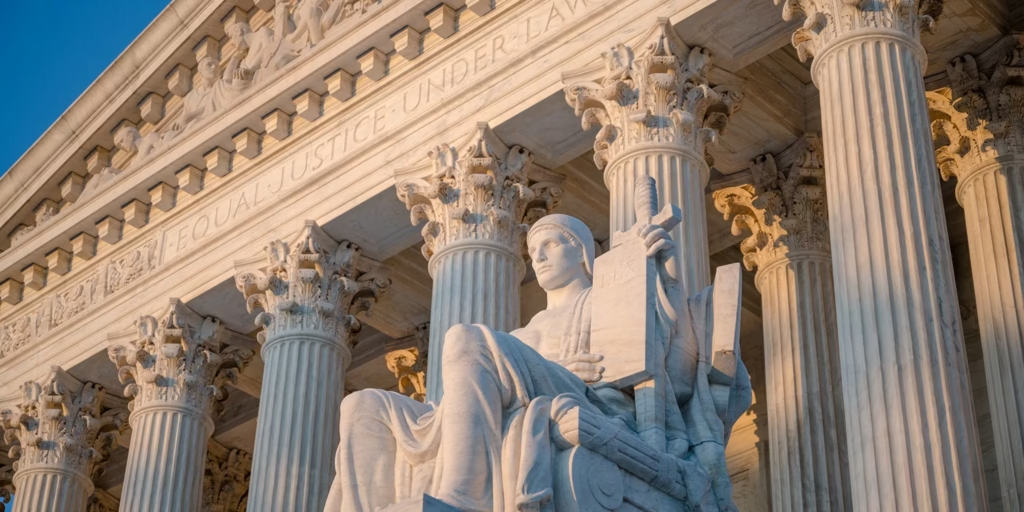
| 2-MINUTE CONTEXT In a 6-3 ruling Friday, the Supreme Court lifted a lower court order that had blocked DHS from expanding the SAVE database for use in state voter-roll reviews. The ruling arrives less than two months before the midterm elections. |
What SAVE Actually Is
The Systematic Alien Verification for Entitlements system is a 40-year-old federal database. The Trump administration revamped it this year to help states screen voter rolls for noncitizens, then encouraged states to run bulk uploads of their entire registration lists through it — waiving any fee to do so. A federal district court blocked the revised system in June, with Judge Sparkle Sooknanan finding it “haphazardly assembled” and containing “unreliable citizenship data.”
The Error Rates the Court Had in Front of It
Advocacy groups challenging the system cited specific documented error rates in their Supreme Court filing: a Travis County, Texas election official reported that 25% of the system’s noncitizen matches involved people who had already proven their US citizenship. Separately, Texas ran its full voter rolls — more than 18 million registrations — through the system last year; the result was three people charged with voting illegally as a noncitizen.
| “The expanded database just makes it easier for states to get federal citizenship data to help them clean up voter rolls.”— Jason Snead, Executive Director, Honest Elections Project |
The Limit the Ruling Actually Includes
The 6-3 majority did not grant DHS unlimited authority. The opinion explicitly preserved a separate federal protection under the National Voter Registration Act: the law bars broad, bulk purges of voter rolls in the weeks immediately before an election. The Court said SAVE can be used for “individualized” citizenship checks in the current cycle, but that existing safeguard, the majority wrote, “limits the potential impact” of the ruling for 2026 specifically. A separate question — whether the system’s bulk-upload use is lawful more broadly — will be decided by the Court in a case this term, but not before voters go to the polls in November.
| WHERE THE NUMBERS AND THE RULING MEET | |
| 6–3 Supreme Court ruling, along ideological lines | 25% Travis County noncitizen “matches” who’d already proven citizenship |
| 18M+ Texas registrations run through the system; 3 people charged | 90 days NVRA’s protected pre-election window the ruling left intact |
| WHY THIS MATTERS: The Court didn’t rule that SAVE’s error rate doesn’t matter — it ruled on a narrower legal question about who gets to authorize the tool’s use, while leaving the broader accuracy dispute and the bulk-purge question for later litigation. That’s a meaningfully different thing than a finding that the system works as intended. |
| SOURCE TRANSPARENCY: CNBC News, CNBC — original Supreme Court coverage and error-rate figures from court filings, September 25; NPR, CNN — analysis of the ruling’s scope and the preserved NVRA protection; The Federalist — additional procedural detail on the stay and pending appeal |