
Earlier this year, Tennessee’s execution of Tony Carruthers was halted by Governor Bill Lee after medical staff spent more than an hour failing to establish a backup IV line — trying his arm, hand, and foot without success. That failure was not a minor procedural issue; it raised specific constitutional questions under the Eighth Amendment about whether the state’s execution protocol was creating unnecessary suffering. When Anthony Hines was executed Thursday, the same transparency question that made the Carruthers case significant remained unresolved: Tennessee declined to confirm whether the same physician who oversaw the failed IV attempt presided over the Hines execution. Without that confirmation or denial, there is no meaningful accountability for what went wrong.
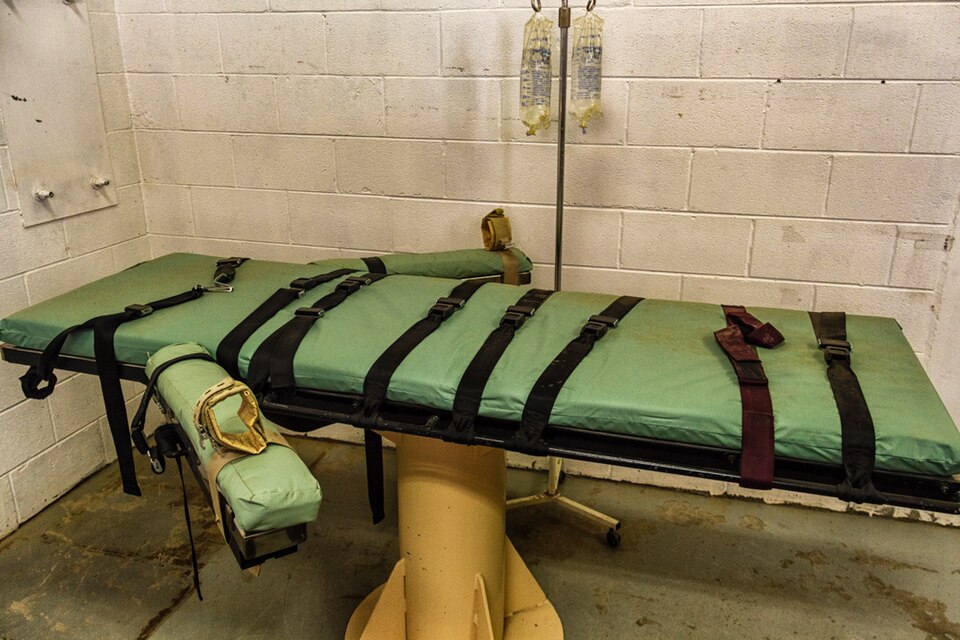
WHAT HAPPENED IN THE CARRUTHERS EXECUTION
The Carruthers execution attempt documented specific failures: medical staff established a primary IV line successfully but then spent over an hour attempting to establish a backup line, trying multiple sites including arm, hand, and foot. During this period, Carruthers was on the gurney in the execution chamber. Governor Lee ultimately granted a one-year reprieve. The specific medical question this raises: if establishing a backup IV line is part of the protocol, and establishing it is failing, the protocol is producing a degrading and potentially painful experience for the condemned before a single drug is administered.
Tennessee’s Supreme Court ultimately ruled that Hines had not proven the overseeing doctor was unqualified — a legal standard that requires the defense to demonstrate specific professional inadequacy. But the ruling addressed the legal threshold, not the transparency question: the state’s refusal to disclose the physician’s identity means neither the court nor the public can independently verify the adequacy of the medical personnel involved.
THE IDENTITY CONFIDENTIALITY FRAMEWORK
Tennessee, like many states, has statutory protections for the identity of execution team members — including the physicians who oversee lethal injection procedures. The stated rationale: disclosure creates safety risks for medical personnel who may face harassment or professional consequences for participating in executions. The American Medical Association’s code of ethics prohibits physician participation in executions, creating a professional incentive for the physicians who do participate to remain unidentified.
The tension: when an execution goes wrong in a documentable way — as the Carruthers attempt did — the identity confidentiality that protects participants from harassment also protects them from accountability. The same person whose IV-line failures produced a documented protocol breakdown may be presiding over subsequent executions. The public cannot know this.
The state won’t say if the doctor who spent an hour failing to insert a needle was in the room Thursday. That sentence is either about accountability or about transparency. Either way, the answer is: you don’t get to know.
THE CONSTITUTIONAL QUESTION
The Eighth Amendment prohibits cruel and unusual punishment. The Supreme Court has ruled that lethal injection protocols do not categorically violate the Eighth Amendment, but has left open challenges to specific protocols that create a substantial risk of serious harm. The Carruthers failed IV attempt is exactly the kind of specific protocol failure that can anchor an Eighth Amendment challenge: if the protocol requires a backup IV that the medical team cannot establish, and if the attempt to establish it causes significant suffering, the protocol may not pass constitutional muster.
That constitutional challenge was not resolved before the Hines execution Thursday. It remains available for future executions in Tennessee — including the rescheduled Carruthers execution when his one-year reprieve expires.
WHAT HAPPENS NEXT
▸ The transparency question will persist: advocates will continue pushing for physician identity disclosure in execution contexts; states will continue resisting
▸ The Carruthers reprieve expires: his execution will be rescheduled; the same IV-line problem will need to be addressed or the same challenge will arise
▸ Eighth Amendment litigation: ongoing; the Carruthers failed attempt provides factual basis for continued constitutional challenges to Tennessee’s protocol
▸ AMA ethics prohibition: physicians who participate in executions are technically violating their professional ethics code; this enforcement gap will continue
| CONFIDENCE: HIGH | Tony Carruthers failed execution (one hour of IV attempts, arm/hand/foot, Governor Lee reprieve) is from confirmed reporting. Tennessee Supreme Court Hines ruling (not proven unqualified) is documented. State’s non-disclosure of physician identity is from reporting on state responses to transparency requests. |
| ⚖️ BIAS CHECK — WHO IS SAYING WHAT | |
| Tennessee Government | Maintaining standard execution protocol and physician confidentiality; the Supreme Court ruling provides legal cover |
| Death Penalty Opponents | Using the Carruthers failure as the most compelling specific evidence of protocol inadequacy in Tennessee |
| Eighth Amendment Litigators | Building the factual record that connects the Carruthers failure to the constitutional standard for cruel and unusual punishment |
| American Medical Association | Maintaining the ethics prohibition on physician participation while having no enforcement mechanism for violations |
| Tony Carruthers | Alive on a one-year reprieve; his case will return; the transparency question will return with it |
SOURCES
▸ Carruthers execution attempt — one hour IV failure, Governor Lee reprieve (confirmed reporting)
▸ Tennessee Supreme Court — Hines ruling on physician qualifications
▸ AMA Code of Ethics — prohibition on physician participation in executions (established)