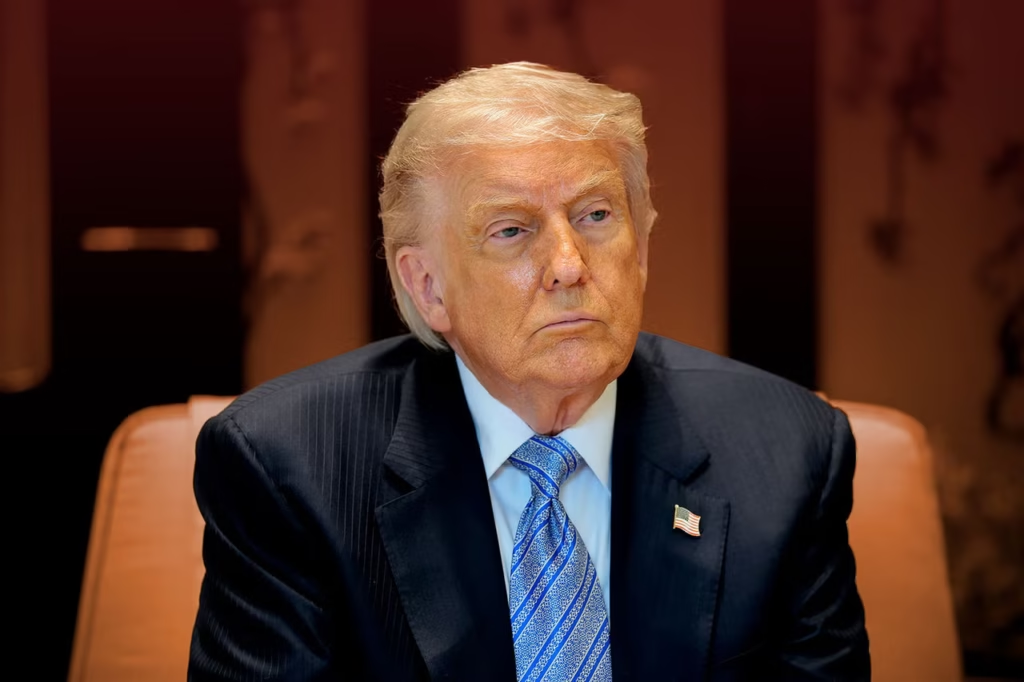
On the same day, two senior officials of the Trump administration made statements about the US-Iran conflict that are in direct tension with each other:
▸ President Trump to reporters: ‘the US is prepared to strike Iran anytime we want’ — a statement asserting ongoing, unlimited military authority against Iran
▸ Vice President Vance: declined to characterize the conflict as a ‘war’ — a characterization that implies limited or uncertain legal authority for military action
THE LEGAL SIGNIFICANCE
The specific legal significance of whether the conflict is a ‘war’:
▸ War Powers Resolution: requires the president to notify Congress within 48 hours of introducing armed forces into hostilities and limits operations to 60 days without Congressional authorization; whether the Iran conflict has been conducted within this framework is a contested legal question since February 28
▸ Laws of Armed Conflict: the specific legal framework governing military targeting, civilian protections, and accountability differs between armed conflict governed by the laws of war and other uses of force; Vance declining to call it a war affects which legal framework applies to incidents like Kuhestak
▸ Congressional AUMF: the Trump administration has claimed existing Authorization for Use of Military Force authority for the Iran operations; ‘not a war’ and ‘anytime we want’ can coexist legally only if a specific AUMF covers the specific operations
THE POLITICAL SIGNIFICANCE
Trump’s ‘anytime we want’ statement asserts presidential military authority that is not constrained by the conflict’s legal characterization. Vance’s ‘not a war’ characterization reduces the political accountability framework for that authority. The combination — maximum military authority claimed, minimum political accountability framework applied — is the specific governance posture that war-powers critics have identified as the core risk of undeclared military operations.
Trump says the US can strike Iran anytime it wants. Vance says it is not a war. Both statements are from the same administration on the same day. The tension between them is not accidental — it is the specific governance posture of maximum authority and minimum accountability simultaneously.
WHAT HAPPENS NEXT
▸ Congressional response — whether any members formally invoke War Powers Resolution
▸ Legal challenge — whether any legal challenge to the war’s AUMF authorization is filed
▸ Kuhestak accountability — whether the ‘not a war’ framing affects how the wedding strike accusation is legally processed
| CONFIDENCE: HIGH | Trump ‘anytime we want’ and Vance ‘extremely skeptical’ / ‘not a war’ are from CBS News confirmed reporting. War Powers Resolution legal framework is from established law. |
| ⚖️ BIAS CHECK — WHO IS SAYING WHAT | |
| Trump | Asserting maximum presidential military authority; the “anytime we want” framing is the most expansive possible statement of military freedom of action |
| Vance | Declining to call it a war reduces the political and legal accountability framework; consistent with an administration that has not sought formal Congressional war authorization |
| Congressional War Powers advocates | Will cite both statements as evidence that the administration is conducting unauthorized warfare while evading the legal framework that would require authorization |
| ONYX | Documenting the contradiction between the two statements and its legal significance without adjudicating the constitutional question |
SOURCES
▸ CBS News — Trump anytime we want Iran Vance not war September 4, 2026