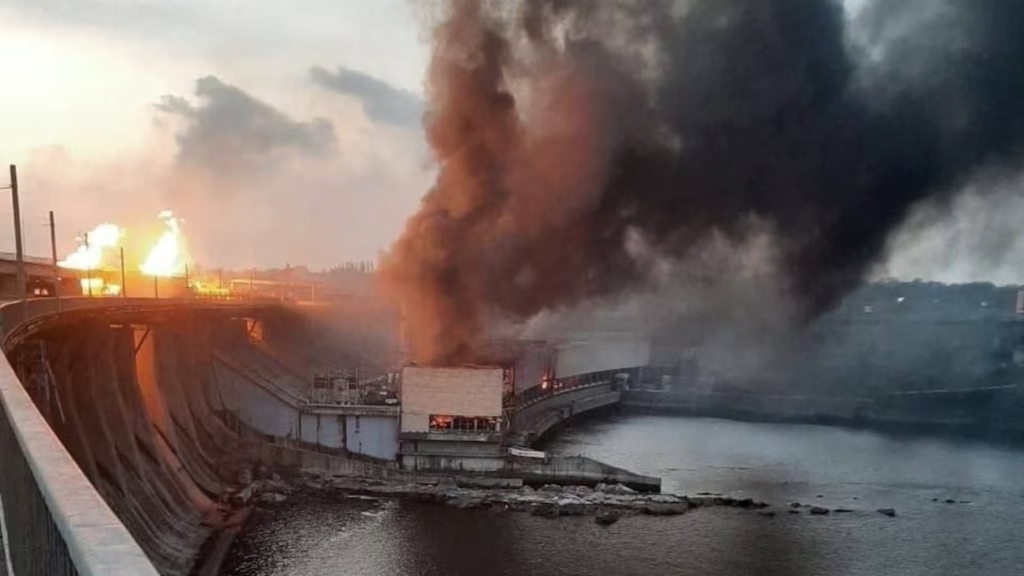
Russia launched what Ukrainian authorities described as the largest single attack on the Kirovohrad region in central Ukraine, killing three people and striking infrastructure, transportation assets, and residential buildings. Just Security and the local governor confirmed the attack and the casualty count. The scale and the location — a region that has not previously been among the primary Russian strike targets — are both significant.
🇺🇦 KIROVOHRAD, UKRAINE · OCTOBER 15, 2026 · LARGEST REGIONAL ATTACK
Russia launched the largest attack on record against the Kirovohrad region of central Ukraine on Wednesday, killing three people and striking infrastructure, transportation assets, and residential buildings across the region. Just Security and the local governor’s reports confirmed the scale of the attack and the casualty count. The Kirovohrad region — named for the city of Kropyvnytskyi, which was historically called Kirovohrad — is in central Ukraine, roughly equidistant from the front lines to the east and the western cities that have been primary targets of Russian long-range strikes. Its distinction as a record-scale attack target is notable because it suggests either a deliberate expansion of the Russian strike geography or a significant tactical shift in targeting priorities.
Russia’s long-range strike campaign against Ukrainian territory has been calibrated to hit maximum economic and psychological effect. Power generation, heating infrastructure, transportation hubs, grain storage, and industrial capacity have all been targeted. The October campaign — beginning shortly after the ceasefire pause ended and continuing through the week — has been hitting regions that provide energy and infrastructure resilience to areas closer to the front. Kirovohrad serves as a logistics corridor and a region whose infrastructure affects central and western Ukraine supply lines. A record attack there is consistent with a campaign aimed at degrading Ukrainian logistical depth before winter.
THREE KILLED IN THE CENTRAL REGION
Three people killed in a single Russian attack is the human scale of what record-setting looks like in a war that has produced casualties in the hundreds of thousands. The three who died in Kirovohrad on Wednesday had their deaths made possible by decisions made in Moscow, delivered by Russian munitions that Ukraine could not fully intercept, affecting a region that had not previously been a primary target. Ukrainian air defenses are resource-constrained: intercepting every Russian strike package simultaneously across a large geographic area is not possible with available interceptor inventory. The central region may have lower air defense density than the capital or the front-line east, which creates an opening that Russian planners can and apparently did exploit.
Infrastructure damage creates cascading effects. A transportation hub damaged in Kirovohrad affects the movement of supplies, equipment, and personnel across a broader network. Homes destroyed in a central city create internal displacement and a demand for shelter and support services. Infrastructure strikes are not simply events at a point in space; they propagate effects through the systems they disrupt. The Ukrainian government will assess the damage and prioritize repair resources under conditions of sustained Russian targeting.
THE WEEK IN CONTEXT
Ukraine declared the end of the energy ceasefire pause on Wednesday, citing continued Russian attacks on Ukrainian energy infrastructure as one of the three reasons. The Kirovohrad attack is the same-day illustration of that point: Russia was attacking Ukrainian energy and infrastructure throughout the pause. The record attack on Kirovohrad — also on the day Zelensky declared the pause over — is part of the sustained Russian offensive pressure that Zelensky cited as the first reason for ending Ukrainian restraint. The sequence of events on Wednesday, taken together, describes a conflict that is escalating simultaneously from both sides.
“Russia hit Kirovohrad harder than it has ever hit that region before. Three people died. Infrastructure and transport were struck. The same day, Zelensky said the ceasefire pause is over because Russia never stopped attacking. Both of those things happened on Wednesday.”
WHAT HAPPENS NEXT
► Damage assessment — full scope of infrastructure and transport damage in Kirovohrad region
► Air defense redeployment — whether Ukraine repositions air defense assets to cover central region
► Russian follow-on — whether Russia continues record-scale attacks on previously lower-priority regions
► Civilian displacement — number of people displaced by the residential building strikes
► International response — whether the Kirovohrad attack triggers additional aid or weapons delivery discussions
| CONFIDENCE: HIGH | Just Security and local governor reports confirmed the largest-ever Russian attack on the Kirovohrad region, with three killed and infrastructure and homes struck. |
| BIAS CHECK | ASSESSMENT |
| Source weight | Just Security, local governor reports — confirmed attack scale and casualties from Ukrainian official and analysis sources |
| Record-scale characterization | Described as Ukrainian authorities characterized it; record designation attributed to official statement |
| Casualty framing | Three killed cited as confirmed; additional casualties possible but not confirmed at filing |
| Conflict context | Kirovohrad attack linked to same-day Zelensky statement from documented reporting; not editorially used to assign blame |
SOURCES
► Just Security — Ukraine Kirovohrad region largest Russian attack, three killed, October 15, 2026
► Local governor reports — Kirovohrad infrastructure, transport, and homes struck, October 15, 2026