August 7: A ceasefire was signed. September 18: Trump confirmed a deal. September 19: Khamenei blessed it. September 28: Trump rejected Iran’s Hormuz proposal; stalemate documented. September 29: Iran activated the Qatar channel. September 30-October 1: sequence dispute confirmed across four consecutive days; mediators working; five days remaining. October 2: the United States is deploying roughly 9,000 additional troops aboard a naval force that includes a third aircraft carrier and additional Marine Corps ships. Trump is considering whether to resume strikes against Iran. Four days to October 6.
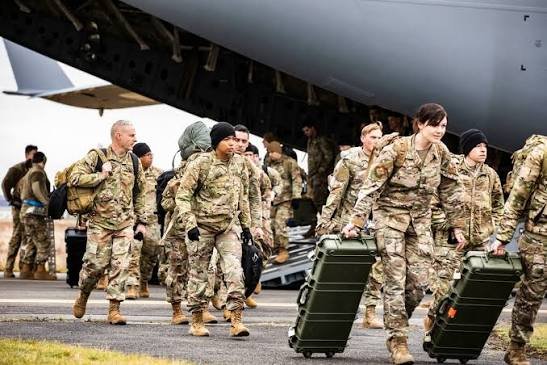
WHAT IS BEING DEPLOYED
The specific confirmed deployment:
▸ Approximately 9,000 additional troops
▸ A third aircraft carrier — the US now has three carrier strike groups in or deploying to the region
▸ Additional Marine Corps ships
▸ This is a naval force, not just a carrier group: the Marine Corps ships signal amphibious assault capability alongside the carrier air power
WHAT THREE AIRCRAFT CARRIERS MEANS
The United States has eleven aircraft carriers. Having three simultaneously in or deploying to a single regional theater is a documented signal of maximum naval pressure. The specific operational capability of three carrier strike groups:
▸ Each carrier strike group includes a carrier, cruisers, destroyers, submarines, and supply ships
▸ Three carriers provide approximately 270 aircraft for strike, air defense, and reconnaissance missions
▸ The strike capacity of three carriers is sufficient to conduct sustained operations against Iranian air defense, naval, and military infrastructure simultaneously
▸ Marine Corps ships add the specific capability of amphibious assault — the ability to land ground forces on a coast
Two carriers in a region signal a serious military option. Three carriers signal that the military option is being actively prepared.
TRUMP CONSIDERING RESUMING STRIKES
The confirmed reporting: Trump is considering whether to resume strikes against Iran. ONYX covers this as the arc’s most significant single decision variable since the ceasefire signing on August 7. ‘Considering’ means the decision has not been made. But deployment of three carriers and 9,000 additional troops in the same week as ‘considering’ resumes strikes is the documented operational preparation for a decision, not a hypothetical one.
THE DUAL TRACK: MILITARY BUILDUP + SANCTIONS + QATAR CHANNEL
October 2 documents three simultaneous US postures toward Iran:
▸ Military: deploying 9,000 troops and third carrier; Trump considering strike resumption
▸ Economic: new sanctions on Iran Khodro, SAIPA, and the state railway; A7 payment network sanctioned for sanctions evasion
▸ Diplomatic: Qatar channel remains active; sequence dispute ongoing
This is maximum pressure diplomacy: the US is simultaneously building military force, imposing new economic sanctions, and maintaining diplomatic engagement. The strategy’s internal logic: Iran must decide whether to resolve the sequence dispute before the military option becomes an operational reality, or face resumed strikes and intensified economic pressure.
WHAT THIS MEANS FOR THE SEQUENCE DISPUTE
The sequence dispute — who goes first: sanctions or Hormuz — is now operating under a completely changed military context. On September 29-30, Iran had a diplomatic incentive to resolve the sequence problem. On October 2, Iran has a military incentive: three carriers and 9,000 troops are deploying; resumed strikes are being considered. Whether this military pressure accelerates a sequence resolution or causes Iran to harden its position is the specific analytical question the next 48-96 hours will answer.
THE OCTOBER 6 WINDOW WITH MILITARY BUILDUP
October 6 is four days away. The deployment of 9,000 troops and a third carrier requires days to position. The military buildup and the diplomatic deadline are on the same four-day clock. If the sequence dispute resolves before October 6, the buildup provides Trump with a military force he can claim as leverage that produced the diplomatic resolution. If October 6 passes without resolution, the buildup provides Trump with a positioned force for resumed strikes.
THE UPDATED PROBABILITY ASSESSMENT
▸ Ceasefire extended with modified terms: STILL POSSIBLE — military buildup as leverage could accelerate Iranian willingness to resolve sequencing
▸ Ceasefire expires without replacement: ELEVATED — four days; sequence dispute unresolved; military buildup suggesting October 6 expiration is being prepared for
▸ Resumed strikes after October 6: NOW ELEVATED — three carriers; 9,000 troops; Trump considering; this is the arc’s first documented evidence of resumed strike preparation
▸ Deal restored before October 6: POSSIBLE BUT URGENT — Iran must decide whether military pressure accelerates or hardens its position
▸ Ceasefire collapse before October 6: ELEVATED from LOW — military buildup creates conditions for pre-October-6 incident
A third aircraft carrier. Nine thousand additional troops. Marine Corps ships. Trump considering resuming strikes. Four days to October 6. The ceasefire that was signed on August 7 is now in the shadow of the largest US military buildup of the arc. The Qatar channel is still open. New sanctions hit Iran Khodro today. The dual track is documented: military buildup, economic pressure, diplomatic channel. All three active simultaneously. Four days.
WHAT HAPPENS NEXT
▸ Iran response to military buildup — whether Tehran hardens or accelerates its sequence position
▸ Qatar channel — whether the buildup produces an urgent Iranian counter-proposal
▸ Trump strike decision — whether the consideration becomes a decision before October 6
▸ Carrier positioning — when the third carrier reaches operational range
▸ October 6 — 4 days; the arc’s most critical single remaining date
| CONFIDENCE: HIGH | Washington is deploying roughly 9,000 troops, a naval force, and a, third aircraft carrier, and additional Marine Corps ships;; Trump considers whether to resume strikes Iran, according to confirmed reporting. |
| ⚖️ BIAS CHECK — WHO IS SAYING WHAT | |
| Trump administration | Simultaneously deploying military force, imposing new sanctions, and maintaining diplomatic channels; maximum pressure strategy as documented |
| Iran | Receiving simultaneous military, economic, and diplomatic signals from Washington; its response to military buildup is the arc’s most critical near-term variable |
| Qatar | Channel host; the Qatar channel’s viability with 9,000 troops deploying is the specific diplomatic question |
| ONYX | Covering the military deployment at its confirmed scope; naming the dual-track strategy; updating the probability assessment to reflect the military escalation |
SOURCES
▸ Confirmed reporting — US troops carrier Iran strikes October 2 2026
Q: What does it mean operationally to have three aircraft carriers in a theater?
A: A carrier strike group (CSG) is the US Navy’s primary power-projection unit: a carrier with 60-70 aircraft, cruisers, destroyers, attack submarines, and supply ships. One CSG in a theater signals serious military capability. Two signals active operational planning. Three is the documented maximum sustainable regional deployment. Three carriers with 270 aircraft, their escort ships, their submarine screens, and Marine Corps amphibious ships represent the full weight of the US naval power-projection capability short of nuclear weapons. The last time the US deployed three carriers to a single region simultaneously was in 2004 during the Iraq War buildup and 2012 during Iran tensions. A three-carrier deployment is not routine presence; it is documented preparation for sustained large-scale operations.
Q: What does “Trump is considering whether to resume strikes” mean?
A: Considering means the decision has not been made. The decision to resume strikes against Iran would be one of the most significant US military decisions since the 2003 Iraq invasion. The president has the constitutional authority to order limited strikes without congressional approval for 60 days under the War Powers Resolution. A resumed strike campaign against Iran would face: congressional debate about scope and authorization; allied consultation requirements given that Iran-adjacent states host US forces and diplomatic missions; oil market response (oil would rise sharply on resumed strikes); and Iranian retaliation response. “Considering” is a documented public posture that itself functions as leverage: Iran knows the decision is on the table, which changes its negotiating calculus even before a decision is made.
Q: How does this change the diplomatic calculus on the sequence dispute?
A: The sequence dispute — who acts first, sanctions or Hormuz — was a diplomatic standoff with a four-day deadline before the military buildup. Now it is a diplomatic standoff with a four-day deadline and three aircraft carriers deploying. Theoretically, military pressure changes Iran’s calculus in one of two directions: it could accelerate resolution (Iran decides the military risk of not resolving the sequence dispute is higher than the cost of going first), or it could harden Iran’s position (Iran decides it cannot be seen as capitulating under military threat, because domestic IRGC pressure prevents yielding under force). The JCPOA was negotiated under sanctions pressure, not military threat. Whether this military pressure helps or hurts the diplomatic track is the arc’s most analytically uncertain question.