Volodymyr Zelensky said Ukraine received no early warning from partner intelligence services before a recent Russian missile strike on Kyiv. In the same statement, he noted that Russian attacks on energy infrastructure continued despite Trump’s claim of an energy ceasefire. Two data points that together describe the gap between what the Trump administration has claimed about its Russia diplomacy and what is actually happening on the ground.
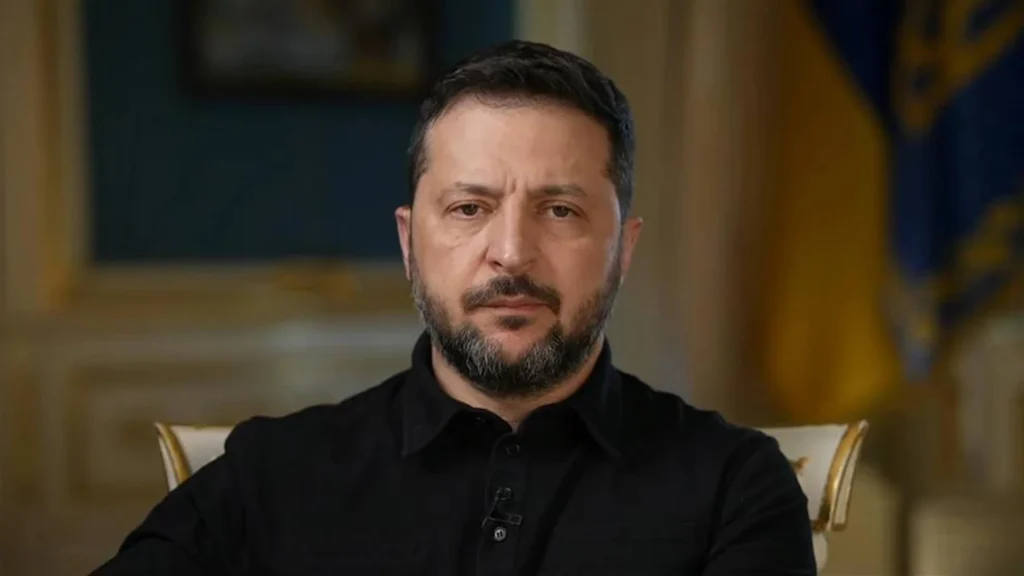
🇺🇦 KYIV · OCTOBER 13, 2026 · NO WARNING / CEASEFIRE FAILURE
Zelensky said Ukraine received no early warning from partner intelligence services before Russia struck Kyiv. He stressed the value of such intelligence — meaning he was saying, in the diplomatic register available to a wartime leader who needs to preserve alliances, that his partners did not provide it in time for this attack, and that the absence of that intelligence had consequences. AP and CBC confirmed the statement. The Kyiv strike was not a hypothetical — it happened, it caused damage and casualties, and it happened without the advance warning that might have allowed civilian protection and air defense preparation.
In the same statement, Zelensky returned to the energy infrastructure theme: Russian attacks on Ukrainian energy sites have continued despite Trump’s claim that Moscow and Kyiv agreed to stop targeting energy infrastructure. That claim, which Trump made with confidence and which Zelensky immediately complicated with his own account, has now been further undermined by continued Russian strikes on the specific category of infrastructure that the supposed ceasefire was meant to protect. The gap between what Trump announced and what is happening is not narrowing. It is widening.
WHAT NO WARNING MEANS
The United States and its NATO allies maintain significant signals intelligence, satellite surveillance, and human intelligence capabilities that are relevant to the Ukrainian theater. A Russian missile strike on Kyiv involves missile launchers that can be observed, flight preparation that can be detected, and launch events that can be tracked from the moment of launch. If Ukraine received no early warning before the strike, one of several things is true: the intelligence was not collected; it was collected but not shared; it was collected and shared but too late to be actionable; or the specific strike was conducted in a way that defeated detection. Each of those possibilities has different implications for the intelligence-sharing relationship between Ukraine and its partners.
Zelensky’s public statement about the missing warning is a form of pressure. He is not filing an internal complaint through classified channels — he is saying publicly that his country was struck without warning, and that partner intelligence should have been available. That is a public call for accountability directed at the United States and NATO allies. Whether it produces a private response, a policy adjustment, or a public commitment to improved intelligence sharing in the months ahead is a question that the allied intelligence communities will now have to address.
THE ENERGY CEASEFIRE SCOREBOARD
The running count of Russian attacks on Ukrainian energy infrastructure since Trump announced the ceasefire is the clearest empirical measure of whether the diplomatic claim reflects reality. Every confirmed strike on a Ukrainian power plant, substation, or transmission line after the announcement date is a data point against the ceasefire narrative. Zelensky is maintaining a public record of those data points, and the record is not supporting the announcement. The Trump administration has not, in available reporting, provided a detailed response to the continuing strikes that squares with the original ceasefire claim.
“Zelensky said Ukraine got no warning before Kyiv was hit. He also said Russia kept bombing energy infrastructure after the ceasefire Trump announced. These are not abstract political disputes. They are measurable facts.”
WHAT HAPPENS NEXT
► Intelligence sharing review — whether US and NATO partners address the warning gap
► Energy strike count — continued tracking of Russian energy infrastructure attacks after ceasefire announcement
► Trump administration response — whether the White House addresses the ceasefire failure publicly
► Kyiv damage assessment — full accounting of the missile strike that preceded the warning complaint
| CONFIDENCE: HIGH | AP and CBC confirmed Zelensky’s statement on the absence of early warning for the Kyiv missile strike, emphasized the value of partner intelligence, and continued Russian energy infrastructure attacks after Trump energy ceasefire announcement. |
| BIAS CHECK | ASSESSMENT |
| Source weight | AP, CBC — two international outlets; Zelensky direct statement reported accurately |
| Ceasefire framing | Continued strikes characterized as empirical record; Trump claim characterized as claim, not fact |
| Warning interpretation | Four possible explanations for missing warning noted; none asserted as definitive |
| Zelensky characterization | Public statement as pressure framing noted; not editorialized as accusation beyond what he stated |
SOURCES
► AP — Zelensky Ukraine no early warning Kyiv missile strike, October 13, 2026
► CBC — Zelensky partner intelligence statement, energy attacks continue, October 13, 2026