ONYX covered Fedorov’s wartime election challenge on August 23: the nine-minute video, CNN’s ‘biggest internal challenge to Zelenskyy since the invasion’ characterization, Fedorov’s second-place polling behind Zaluzhny, and the simultaneous corruption scandal in Zelenskyy’s office. One day later, Zelenskyy has still not formally responded, according to Reuters tracking.
THE SILENCE AND WHAT IT MIGHT MEAN
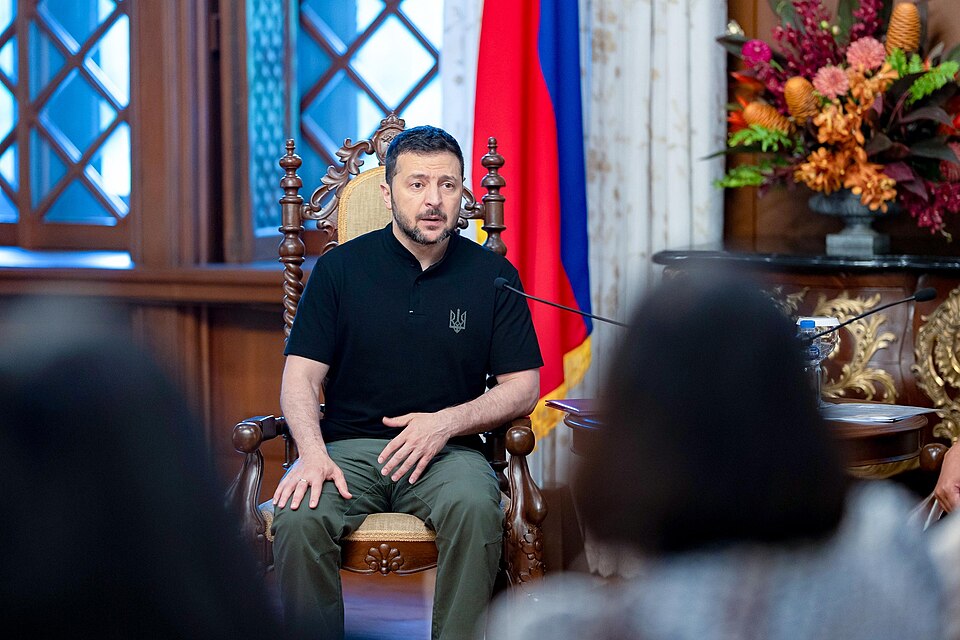
Zelenskyy is typically quick to address political challenges directly, according to Reuters. A president who normally responds rapidly to significant domestic political challenges choosing not to respond to the ‘biggest internal challenge since the invasion’ is itself analytically significant. The specific analytical possibilities:
▸ Calculating the response: Zelenskyy’s communications team may be assessing which response approach minimizes political damage; an angry rebuttal risks inflaming the story; a dismissive response risks appearing arrogant; a substantive engagement legitimizes Fedorov’s platform
▸ Waiting for Turkey to provide cover: the Zelenskyy-Putin Turkey meeting (August 23) may provide a diplomatic achievement that frames the domestic challenge differently; ‘I just met Putin directly for the first time since the invasion’ is a response to ‘you’ve lost democratic legitimacy’
▸ Gauging coalition reaction: Zelenskyy may be assessing whether his own political allies will defend him against Fedorov before he commits to a response strategy
▸ Genuine uncertainty: the challenge may be landing harder than expected internally, and the silence reflects genuine deliberation about how to handle a situation without obvious good options
Zelenskyy is normally quick to respond to political challenges. He hasn’t responded to this one. The silence is either strategy or difficulty. Both matter.
THE COMPOUNDING VULNERABILITIES
ONYX documented Zelenskyy’s simultaneous vulnerabilities on August 23: sliding approval ratings; flip-flopping on key personnel decisions; a formal probe into senior officials in his own office; and an adviser sacked for money laundering. Fedorov’s challenge arrived at the specific moment when these vulnerabilities have converged. Zelenskyy’s silence may reflect the calculation that any response to Fedorov calls attention to all of these vulnerabilities simultaneously.
THE WARTIME ELECTIONS LEGAL REALITY
Time’s analysis (ONYX August 23) documented the specific legal and logistical obstacles to wartime elections: martial law prohibits elections under Ukrainian law; even Fedorov is calling only for a mechanism to eventually restore elections, not an immediate vote. The legal framework is on Zelenskyy’s side; what is not on his side is the political optics of refusing to even discuss democratic accountability during a war that has lasted over four years.
WHAT HAPPENS NEXT
▸ Zelenskyy’s formal response — when it comes, the tone and content will reveal his political calculation
▸ Turkey diplomatic framing — whether the Putin meeting success is used as counter-narrative to the domestic challenge
▸ Fedorov’s follow-up — whether he maintains pressure with additional public statements
▸ Ukrainian public opinion — whether polling shows Fedorov’s challenge gaining traction beyond the political class
| CONFIDENCE: HIGH | Zelenskyy non-response to Fedorov challenge after 24+ hours, Reuters tracking, and Zelenskyy normally quick to respond characterization are from Reuters confirmed reporting. Analysis of silence possibilities is ONYX editorial. Compound vulnerabilities are from ONYX August 23 Section B documentation. |
SOURCES
▸ Reuters — Zelenskyy no response to Fedorov wartime election demand, August 24, 2026
▸ ONYX August 23 Stories — Fedorov challenge documentation