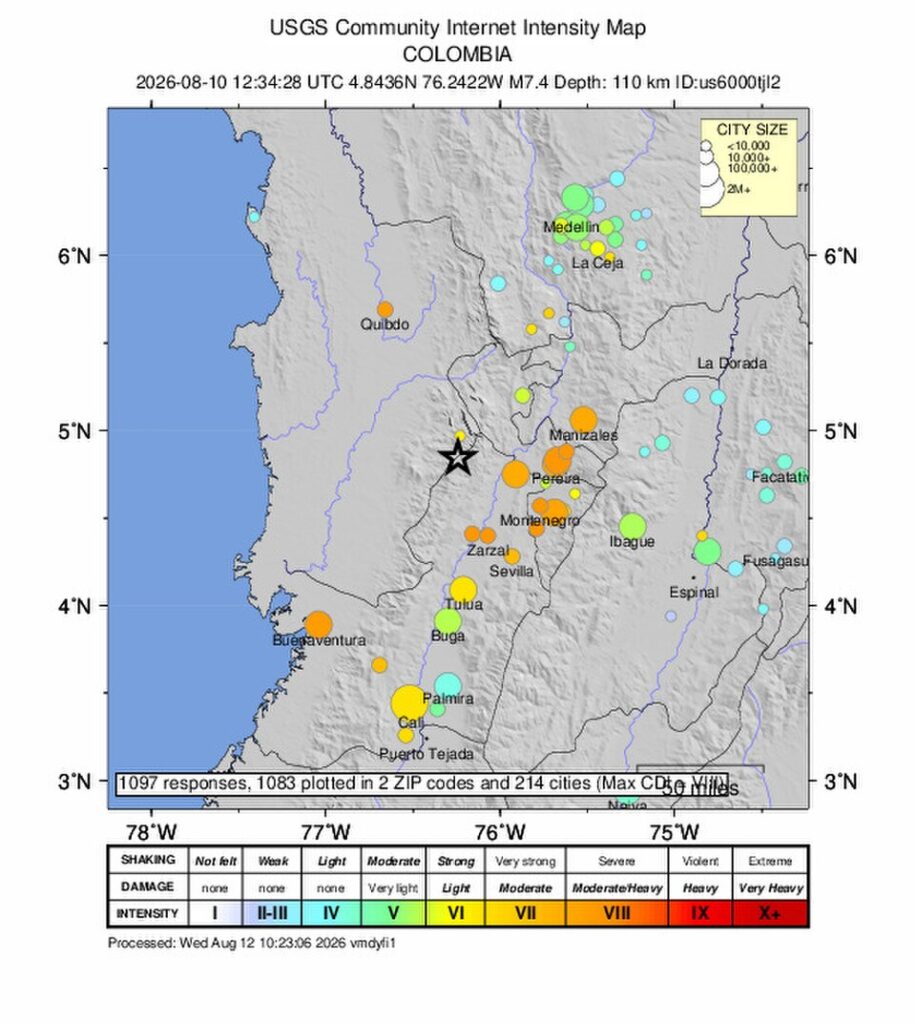
The discrepancy between Colombia’s official missing-persons count (195) and the civilian database tracking approximately 4,000 unaccounted-for people is not primarily evidence of government deception — it is evidence of two fundamentally different information systems producing fundamentally different outputs. Understanding which is closer to ground truth, and why that matters, is the analytical task this article addresses separately from Story 11’s full disaster narrative.
HOW DISASTER MISSING-PERSONS COUNTS WORK
Official missing-persons counts in disasters are produced through formal government systems: police reports, emergency management registrations, military census operations. They are legally precise and administratively documented. Their specific limitation in a disaster context: they require a family member to (a) know their relative is missing rather than dead or displaced; (b) have access to functioning communication infrastructure; and (c) successfully navigate whatever formal reporting process is in place.
In a disaster that has knocked out telecommunications, damaged roads, and disrupted government offices, each of these requirements is harder to meet. In Chocó specifically — where the earthquake struck hardest, where communication relies on limited infrastructure, and where some communities are reachable only by boat — many families cannot file official reports because the official system is as disrupted as everything else.
HOW CIVILIAN DATABASES WORK
Civilian missing-persons databases in disasters operate through social networks: WhatsApp groups, Facebook pages, Google forms, locally organized community coordination. Any family member with a working phone can post a name. They spread faster than official systems, reach rural and remote communities more effectively, and capture scale more accurately. Their limitation: they include significant false positives — people who are safe but have no working phone to report in, people in hospitals who haven’t been identified yet, people who evacuated to a shelter without contacting family.
In prior disasters with well-studied discrepancies — the 2010 Haiti earthquake, Hurricane Maria in Puerto Rico — civilian missing counts eventually reconciled downward as communications restored and formal systems caught up. But those reconciliations revealed that the official initial counts were severe undercounts: Puerto Rico’s official Hurricane Maria death toll was initially 64, later revised to 2,975 when a Harvard study used population-based methods. Colombia faces this same reconciliation challenge.
Official count: precise but incomplete. Civilian count: comprehensive but imprecise. The truth is somewhere between 195 and 4,000. Where exactly determines the scale of the disaster Colombia is actually managing.
WHY THIS MATTERS FOR DISASTER RESPONSE
Resource allocation in disaster response is based on estimated need. If officials believe 195 people are missing, the search operation is calibrated for that scale. If the true number is closer to 4,000, the operation is fundamentally undersized. Search and rescue teams, medical resources, family coordination centers, and international assistance requests are all scaled to the missing-persons estimate. An order-of-magnitude undercount produces a response that is an order of magnitude too small.
THE RECONCILIATION PROCESS
As the earthquake disaster moves from rescue to recovery phase, the missing count reconciliation will begin: communications restore, people in hospitals are identified and matched to family reports, evacuees in shelters are counted. The civilian 4,000 figure will move downward as false positives resolve. The official 195 will move upward as formal reports are filed. They will meet somewhere. That meeting point is the earthquake’s true scale.
| CONFIDENCE: HIGH | Official count (195) and civilian database count (~4,000) are from NPR reporting. Puerto Rico Hurricane Maria comparison (64 official, 2,975 Harvard estimate) is from established documented record. Disaster missing-persons methodology analysis is ONYX editorial based on established emergency management literature. |
SOURCES
▸ NPR — Colombia missing persons discrepancy, August 2026
▸ Hurricane Maria Puerto Rico death toll comparison — documented (Harvard study, 2018)
▸ Emergency management literature — disaster missing-persons count methodology