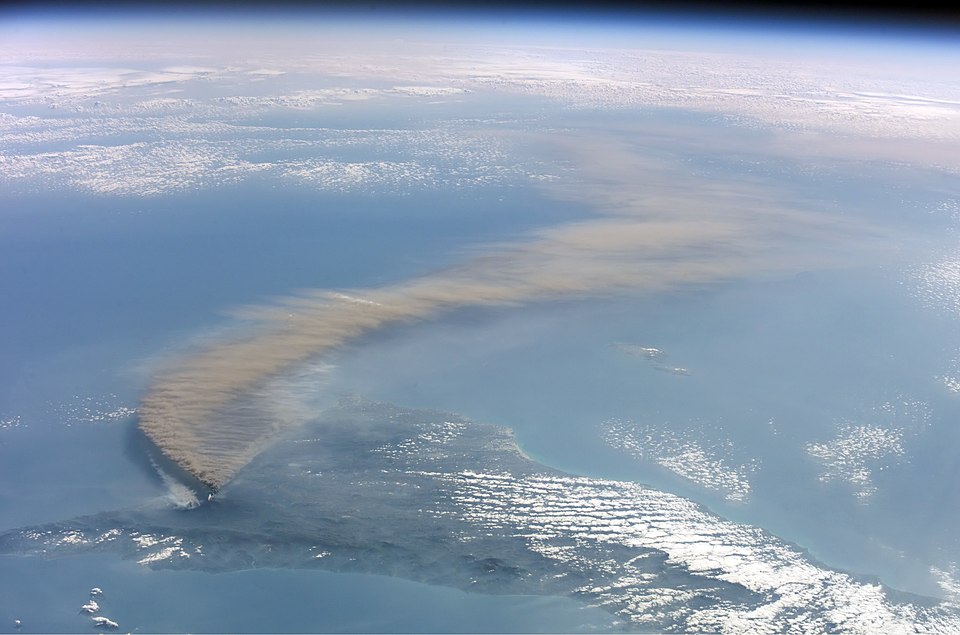
Ongoing ash emissions from Mount Etna’s eruption have continued disrupting operations at Catania Fontanarossa Airport through August 13 — now seven days into the eruption. Airlines serving one of Sicily’s busiest travel hubs are operating under continuous ash monitoring protocols, adjusting schedules, routes, and approaches based on real-time INGV ash concentration reports. The sustained disruption during peak Mediterranean summer season represents a significant economic impact on both airlines and Sicily’s tourism industry.
HOW VOLCANIC ASH DISRUPTS AVIATION
Volcanic ash is specifically hazardous to aircraft in ways that are not obvious from the term ‘ash.’ The particles are silicate-based — the same material as glass — and at high altitude, where temperatures are extreme, they can melt in jet engine combustion chambers and re-solidify on cooler turbine components, coating and potentially clogging the precision mechanisms that keep engines running. Even relatively low ash concentrations at flight altitude can cause engine flame-out, navigation instrument damage, and windshield abrasion that reduces pilot visibility.
The specific threshold for safe flight varies by aircraft type, ash particle concentration, and ash particle size. Airlines use SIGMET (Significant Meteorological) warnings issued by volcanic ash advisory centers — specifically the London and Toulouse VAACsfor European airspace — to determine when and whether to fly. These warnings are updated continuously during an active eruption.
WHAT AIRLINES ACTUALLY DO
▸ Route deviation: flights are rerouted around the highest ash concentration areas, adding distance and fuel cost
▸ Altitude adjustment: flying below or above ash cloud layers when concentration is highest at specific altitudes
▸ Schedule adjustment: delaying departures and arrivals during peak ash emission periods, typically during the day when Etna’s thermal convection lifts ash higher
▸ Airport closure: if ash concentration at the airport surface level exceeds safe thresholds for ground operations, the airport closes entirely; Catania has experienced partial and full closures during this eruption
▸ Diversion planning: flights to Catania have contingency plans to divert to Palermo or the Italian mainland if conditions deteriorate
THE TOURISM ECONOMIC IMPACT
August is Sicily’s peak tourist month. Catania airport is the primary entry point for tourists visiting eastern Sicily, Mount Etna itself (pre-eruption, a major tourist draw), Taormina, and the Ionian coast. Seven days of sustained aviation disruption affects not just flights but the downstream hotel, restaurant, and activity economy of the entire eastern Sicily tourism corridor. The economic cost accumulates daily as the ‘protracted event’ INGV describes continues.
| CONFIDENCE: HIGH | Catania airport ash disruption is documented from current reporting. Volcanic ash aviation hazard mechanism is from established aviation safety literature (EASA, FAA ash guidance). SIGMET and VAAC system descriptions are from established aviation regulatory documentation. |
SOURCES
▸ INGV — Etna ash emission reports, August 2026
▸ Aviation ash guidance — EASA, FAA (established regulatory documentation)
▸ VAAC (Volcanic Ash Advisory Center) London and Toulouse — European ash advisory system